Langjökull and the Into the Glacier Tour
We joined Into the Glacier, a tour that took us out in a snow bus with huge tires. Our minibus was hardly going to manage that. (I had actually expected a tracked snow vehicle.)
We joined Into the Glacier, a tour that took us out in a snow bus with huge tires. Our minibus was hardly going to manage that. (I had actually expected a tracked snow vehicle.)
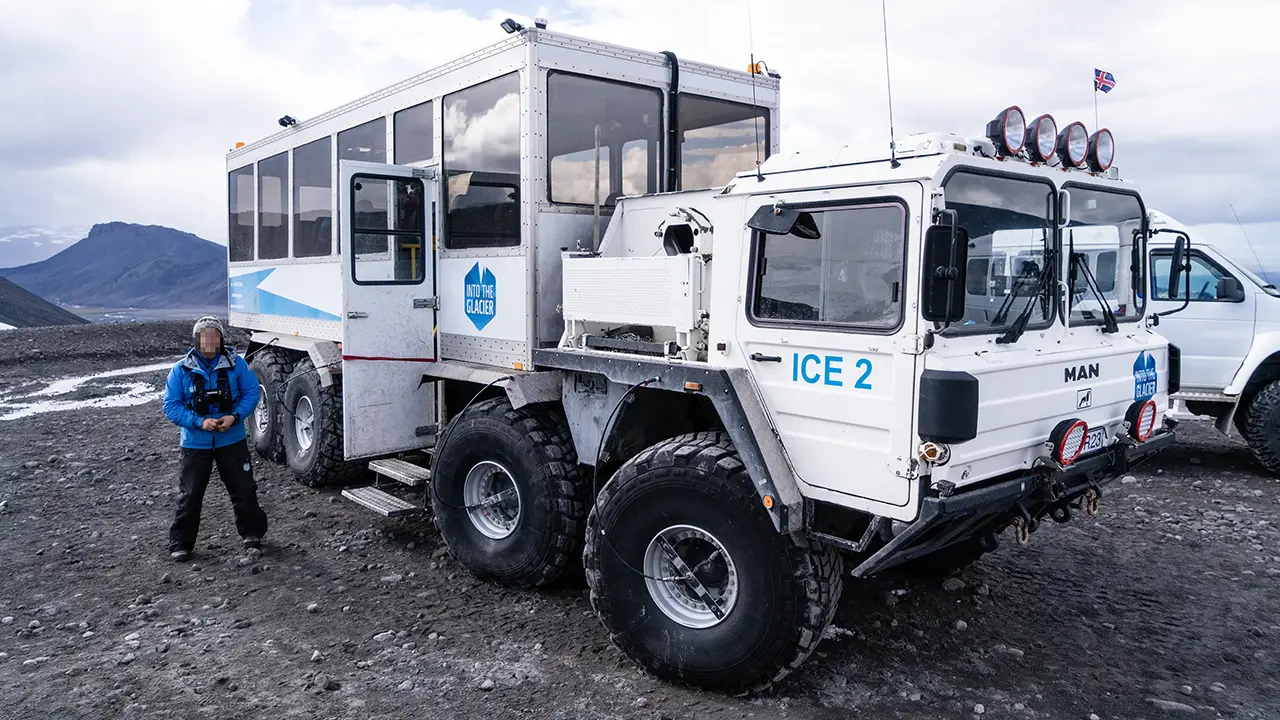
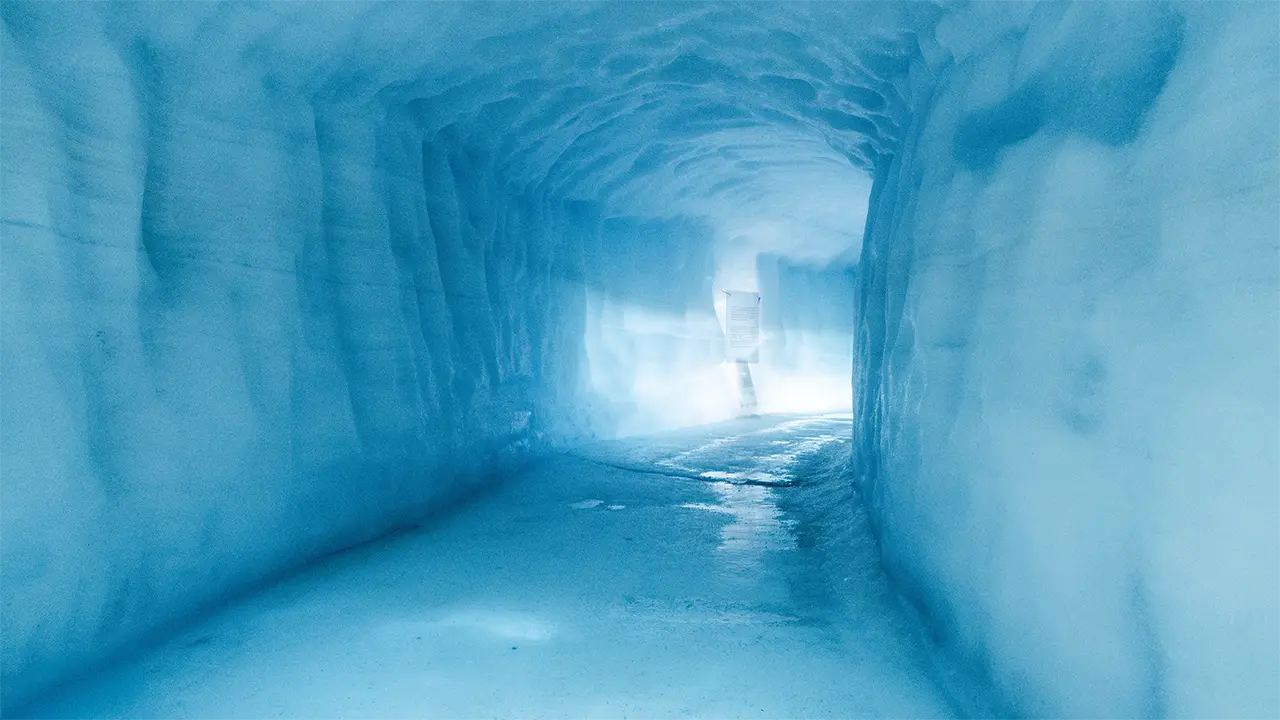
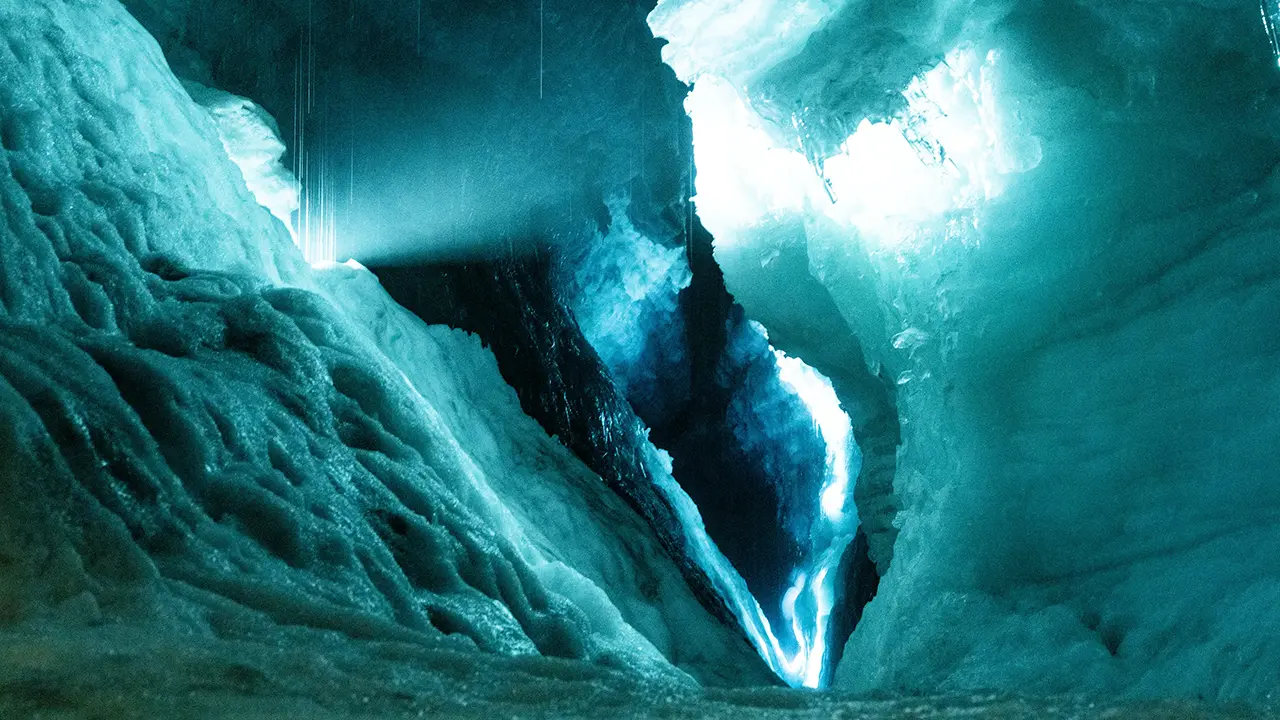
On this tour, we explored a man-made tunnel inside Langjökull glacier—an attraction, I suppose you could call it. An eight-wheel-drive monster truck converted from a military vehicle took us from base camp over dirt roads and ice to the tunnel entrance, about 5.6 km away on the glacier. We then walked a circuit through the tunnel. It was all a bit touristy, but along the way the tunnel crossed a natural crevasse, giving us a look into the cracks inside the glacier. The best part was the scenery out on the glacier.
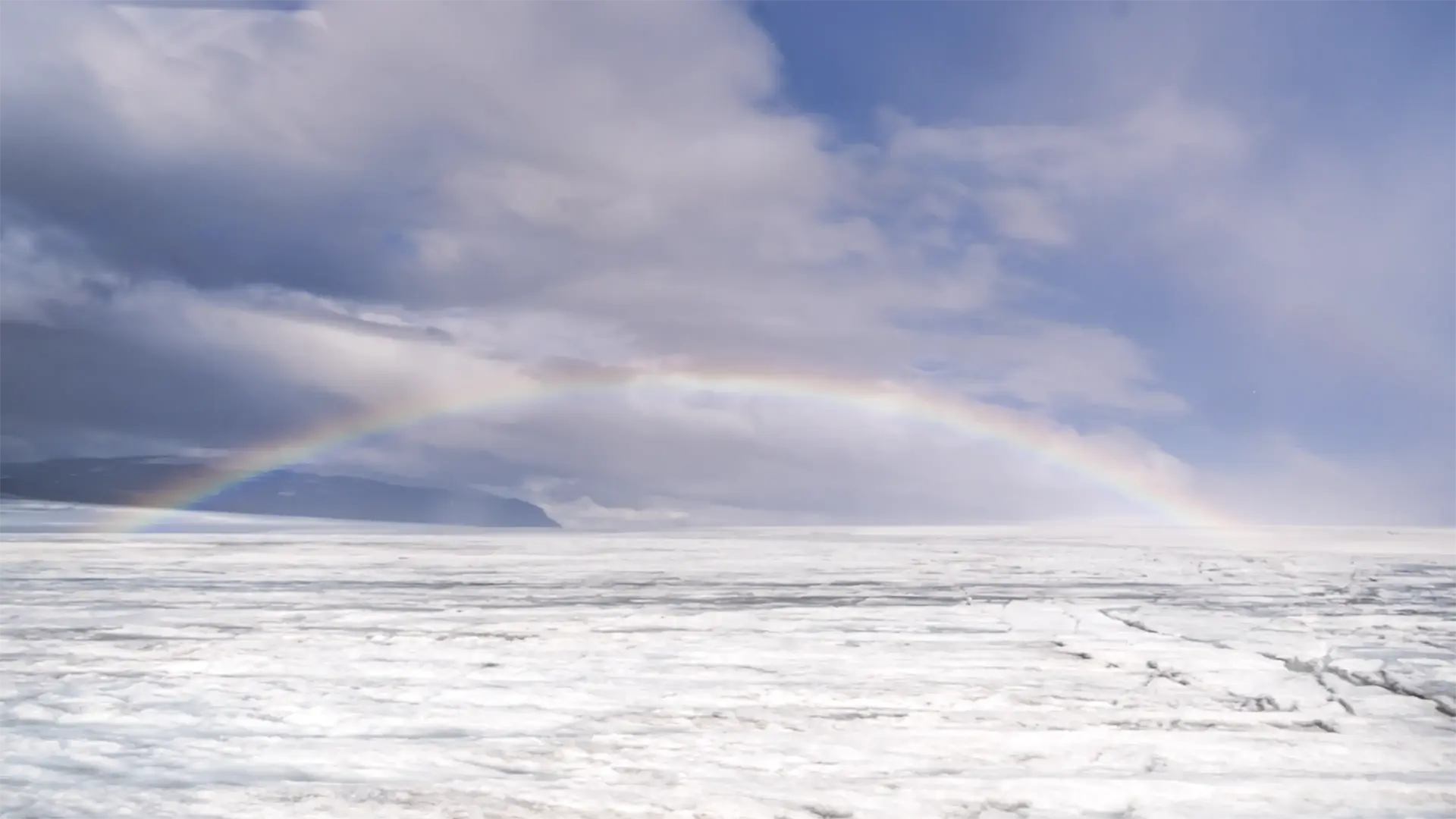
There were a few brown patches, but otherwise it was dazzlingly white. The rainbow earned it a few extra points, too. I took this photograph from inside the monster truck, through the window. I would have liked to take it outside, but that was not an option.
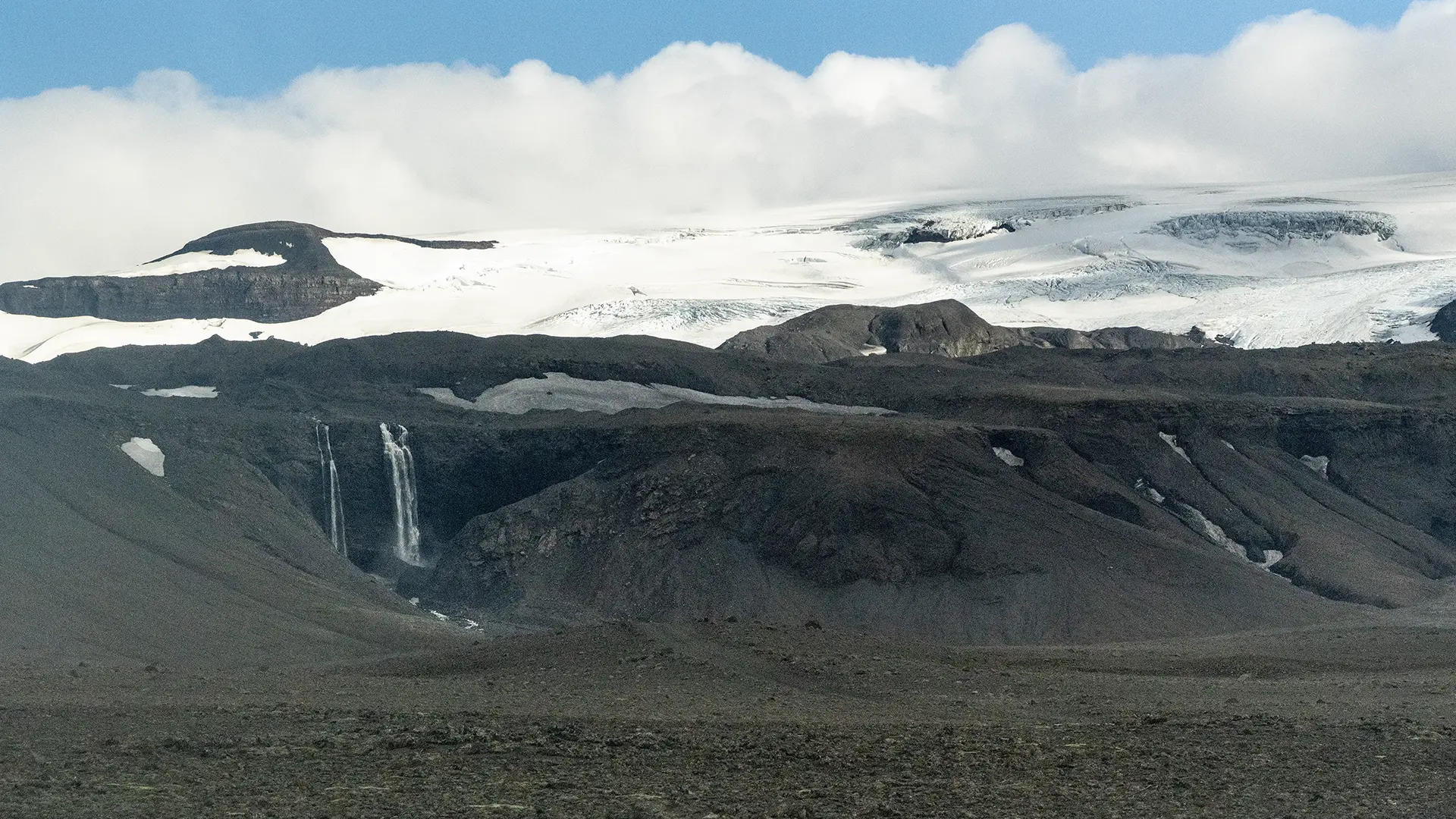
I took this photograph from the parking area where we changed to the monster truck. At the foot of the glacier, meltwater came down in a series of waterfalls. In places, it looked as though the water was seeping out between the rocks and falling straight down. Yet the river nearby was little more than a stream. It hardly seemed large enough to carry all that water. Perhaps some of it was finding its way underground through the volcanic rock.
That brought our two-and-a-half-hour glacier tour to an end. We had certainly played the tourist. Looking back, it was the only attraction of this kind on the trip.
At the Hraunfossar car park, an information board headed "Hraunfossar & Barnafoss" described the two waterfalls.
According to the board, Hraunfossar is formed by countless clear springs that emerge along the edge of the Hallmundarhraun lava field and flow into the Hvítá River. The board described Hallmundarhraun as a field of pillow lava, thought to have formed around AD 800, shortly before the first recorded settlers arrived in Iceland. It takes its name from Hallmundur, who is said in Grettis saga to have lived in this area. Surface water and glacial meltwater make their way between the layers of lava, then emerge to form Hraunfossar. The falls stretch for about a kilometer, flowing all year round between rocks and birch shrubs into the Hvítá River. No wonder they looked so different from the other waterfalls we had seen in Iceland. The board also explained that the Hvítá River has an average flow of 80 cubic meters per second, rising to as much as 500 during floods. At those times, the river can spill out of its narrow channel and flood the surrounding area.
Back at Langjökull, I wrote that perhaps some of the meltwater was finding its way underground through the volcanic rock. That was actually meant to set up this part of the story. And here was the board explaining that surface water and glacial meltwater pass between layers of lava, then emerge as Hraunfossar. Aha, that ties things up nicely—or so I thought. It probably did not mean that the very water we had just seen had flowed all the way here. Still, it was interesting to see the two places one after the other: meltwater finding its way into volcanic rock, then coming back to the surface somewhere else.
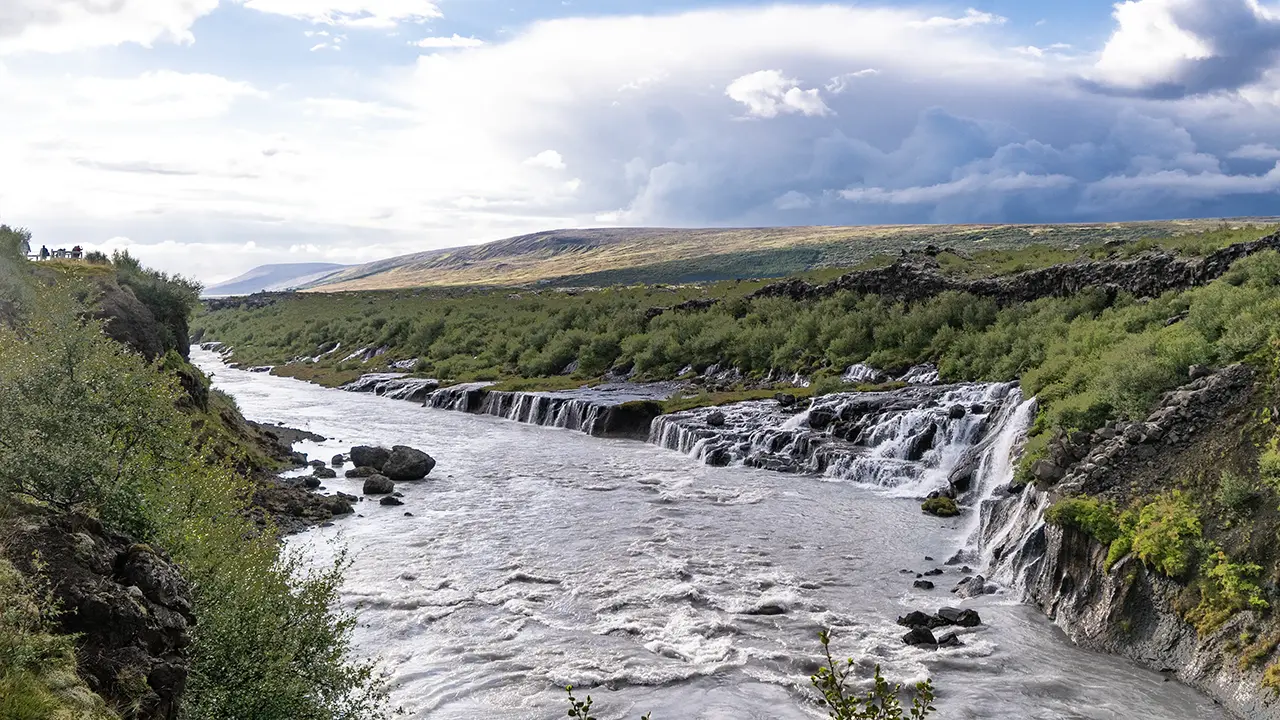
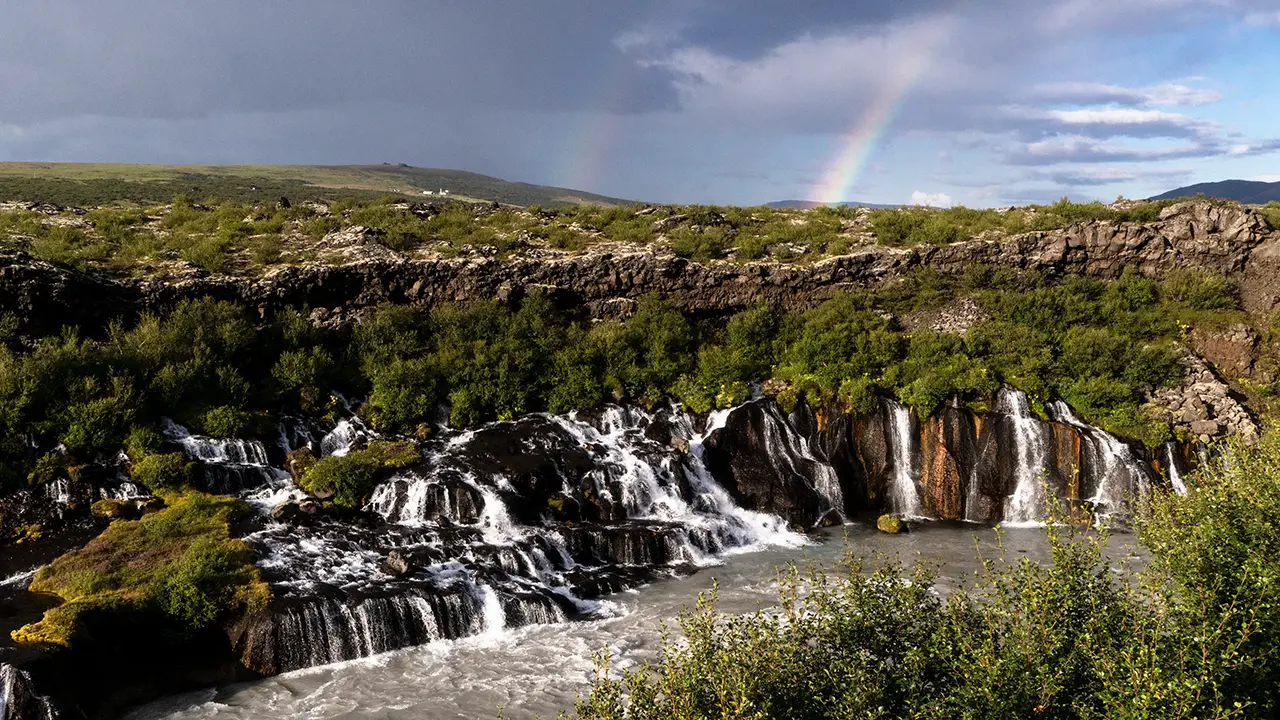
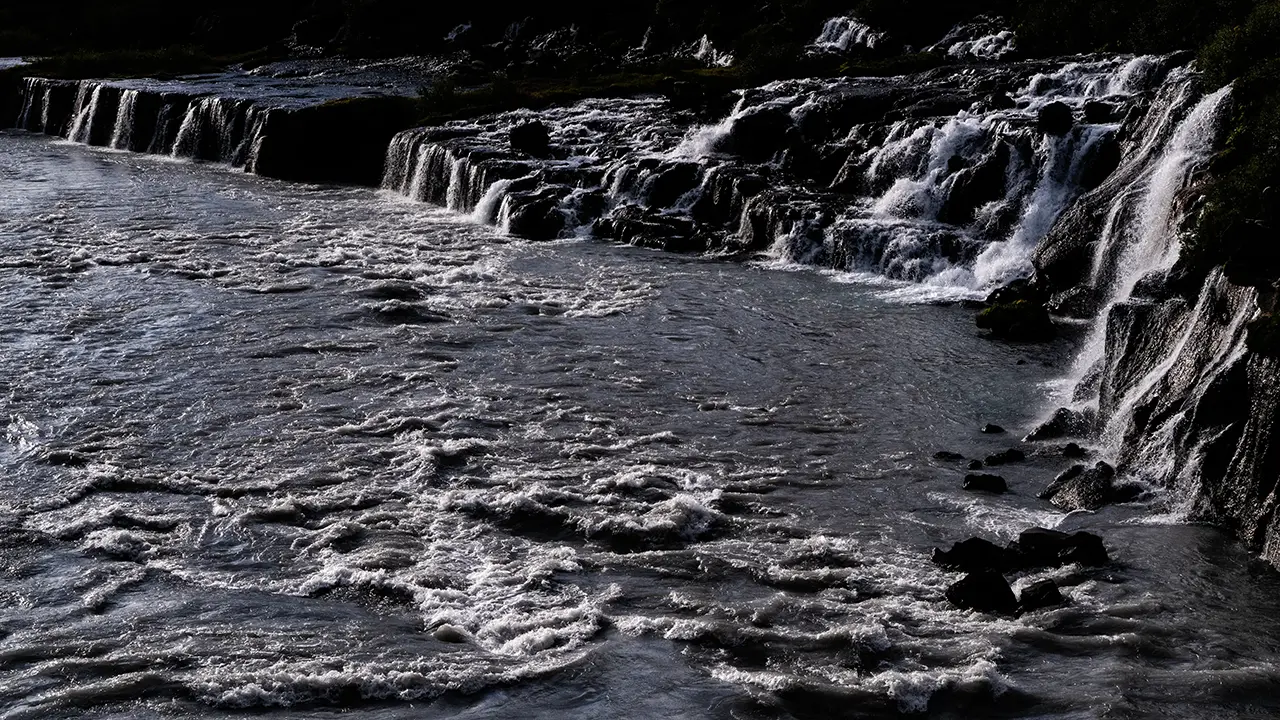
The path was narrow, and nobody seemed to be going that way, so we did not go on to Barnafoss. Looking at Google Maps now, the paths and facilities seem to have been improved considerably. Apparently, work on paths, steps, drainage, wheelchair access and railings was carried out in 2017, the year after our visit, with further improvements made in stages since then. If the paths and facilities had been as good then as they are now, we would probably have gone on to Barnafoss.
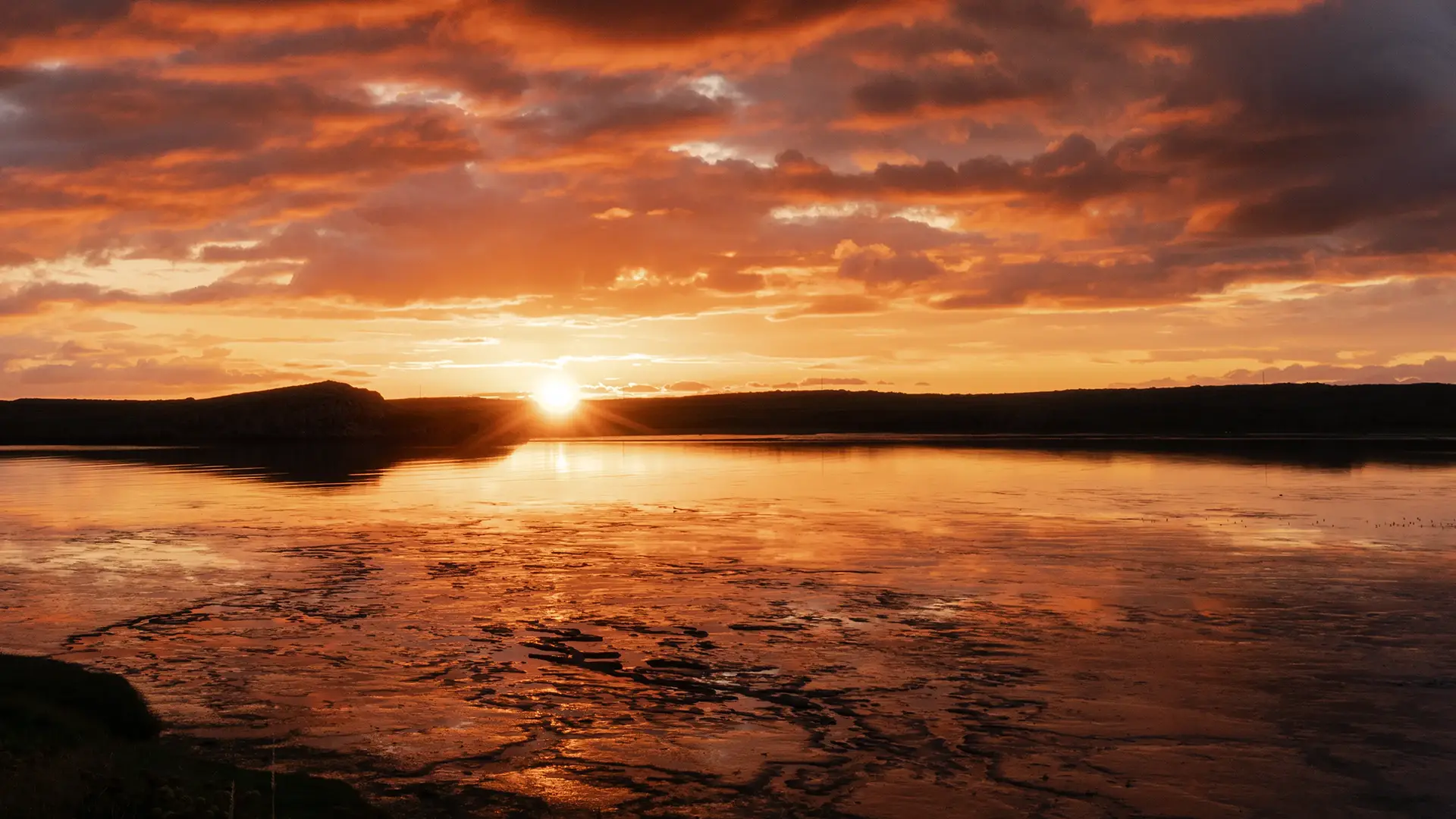
After the glacier tour and Hraunfossar, we arrived at our accommodation under a sky glowing with sunset colors. Once I had settled in, I went outside and found a river running past on the west side. I strolled down to the bank just as the sun was sinking from view.
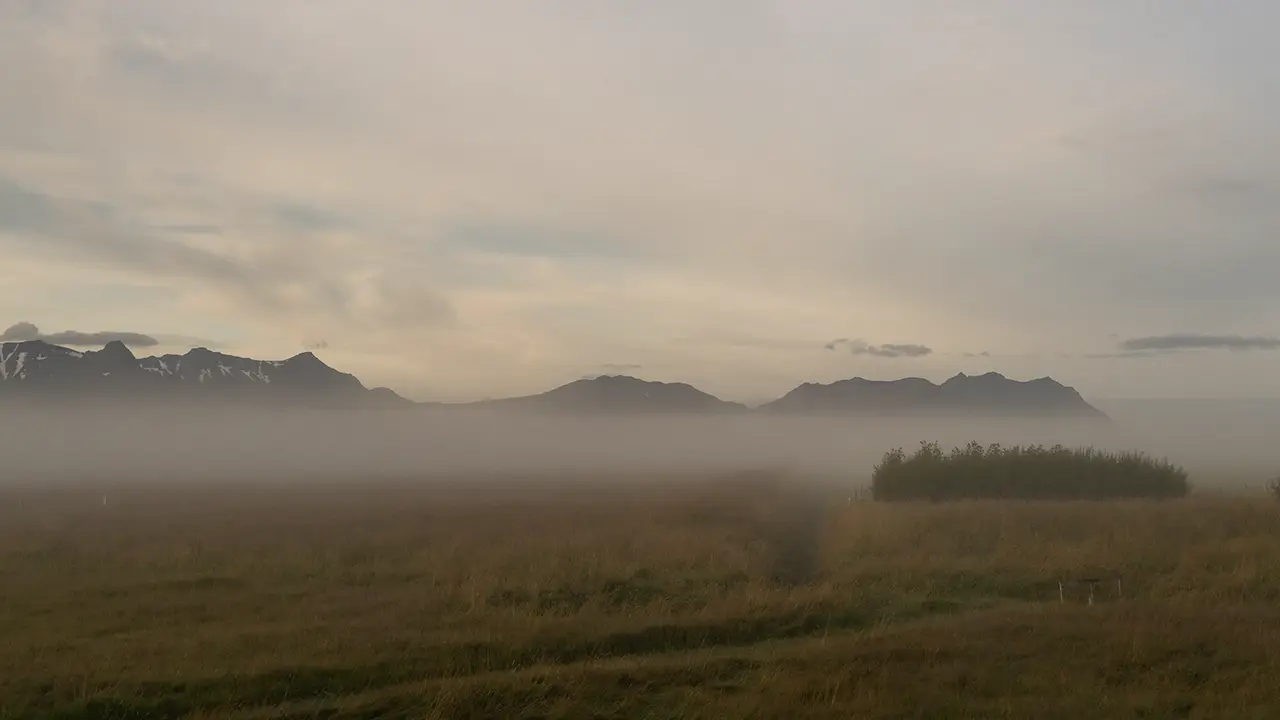
When I got up the next morning, it was the view to the east that caught my eye. The morning mist gave it a lovely feel that was hard to put into words.
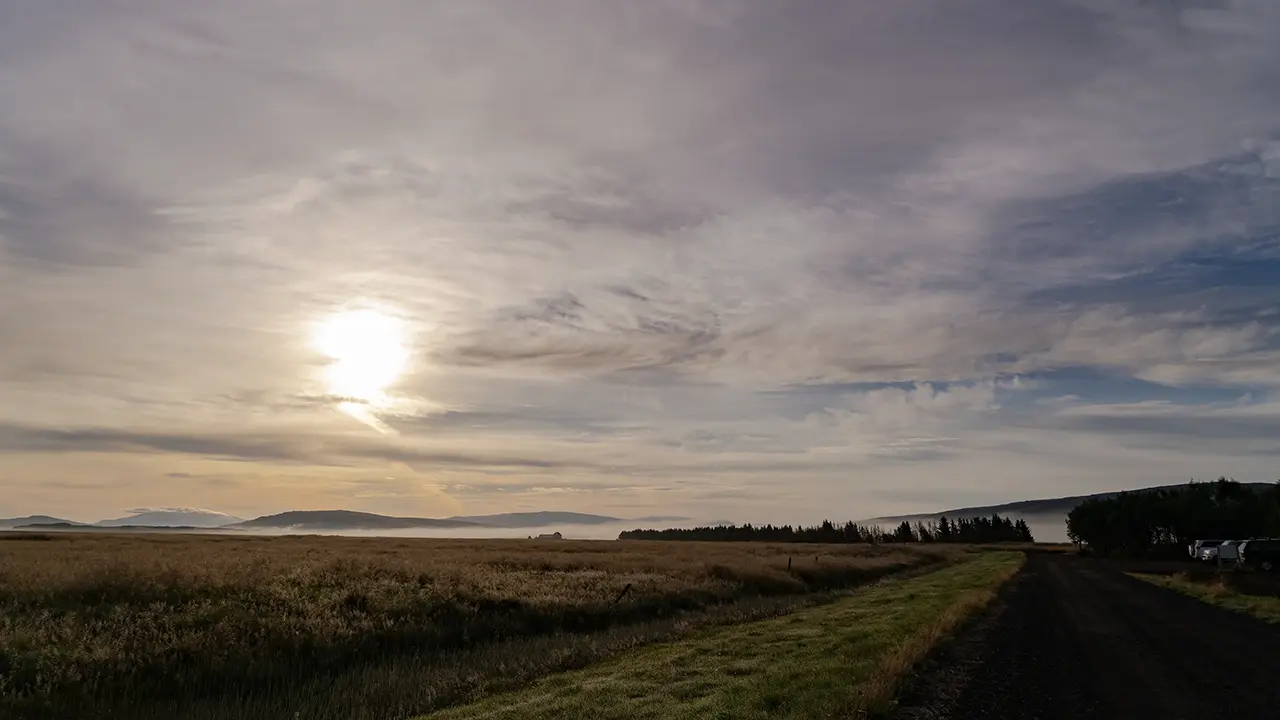
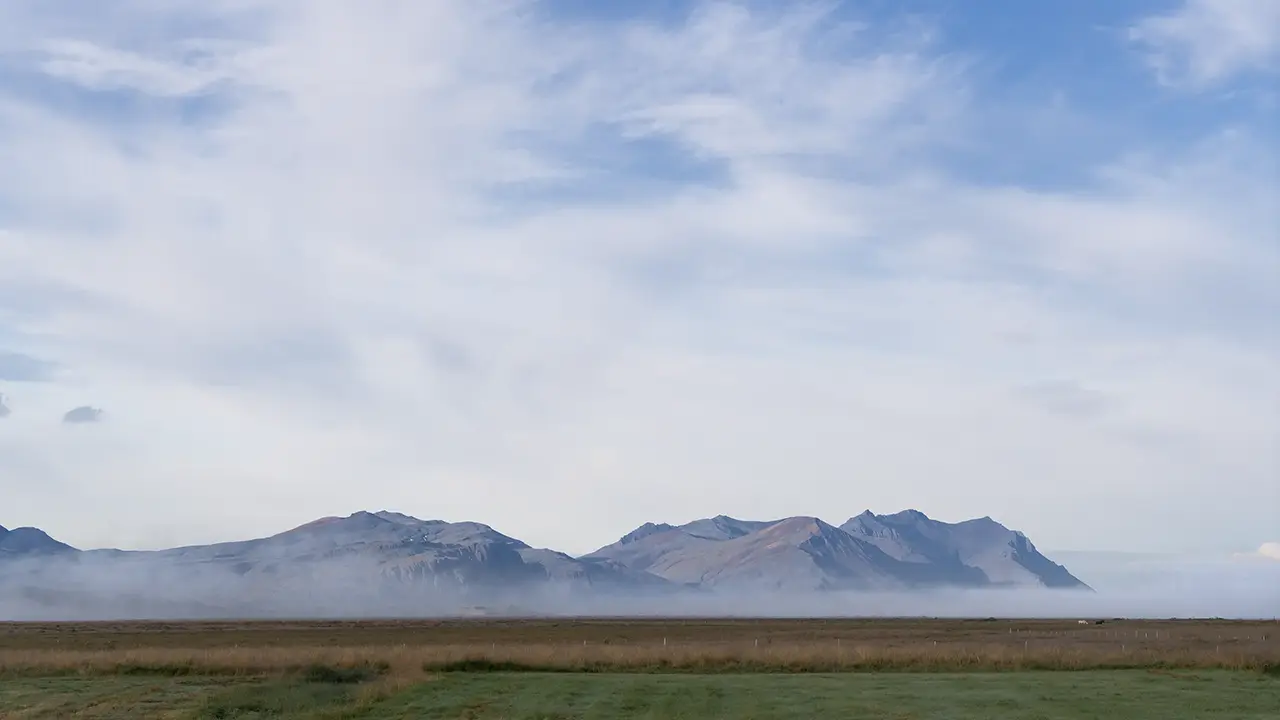
At the time, we stayed in a simple hostel called Hvítá Guesthouse. It now seems to be called The Hvítá Inn by Ourhotels, and appears to have been renovated and expanded, with meals available too.
I have said little about accommodation in this Iceland series, but I thought the scenery near this particular lodging deserved to be included.