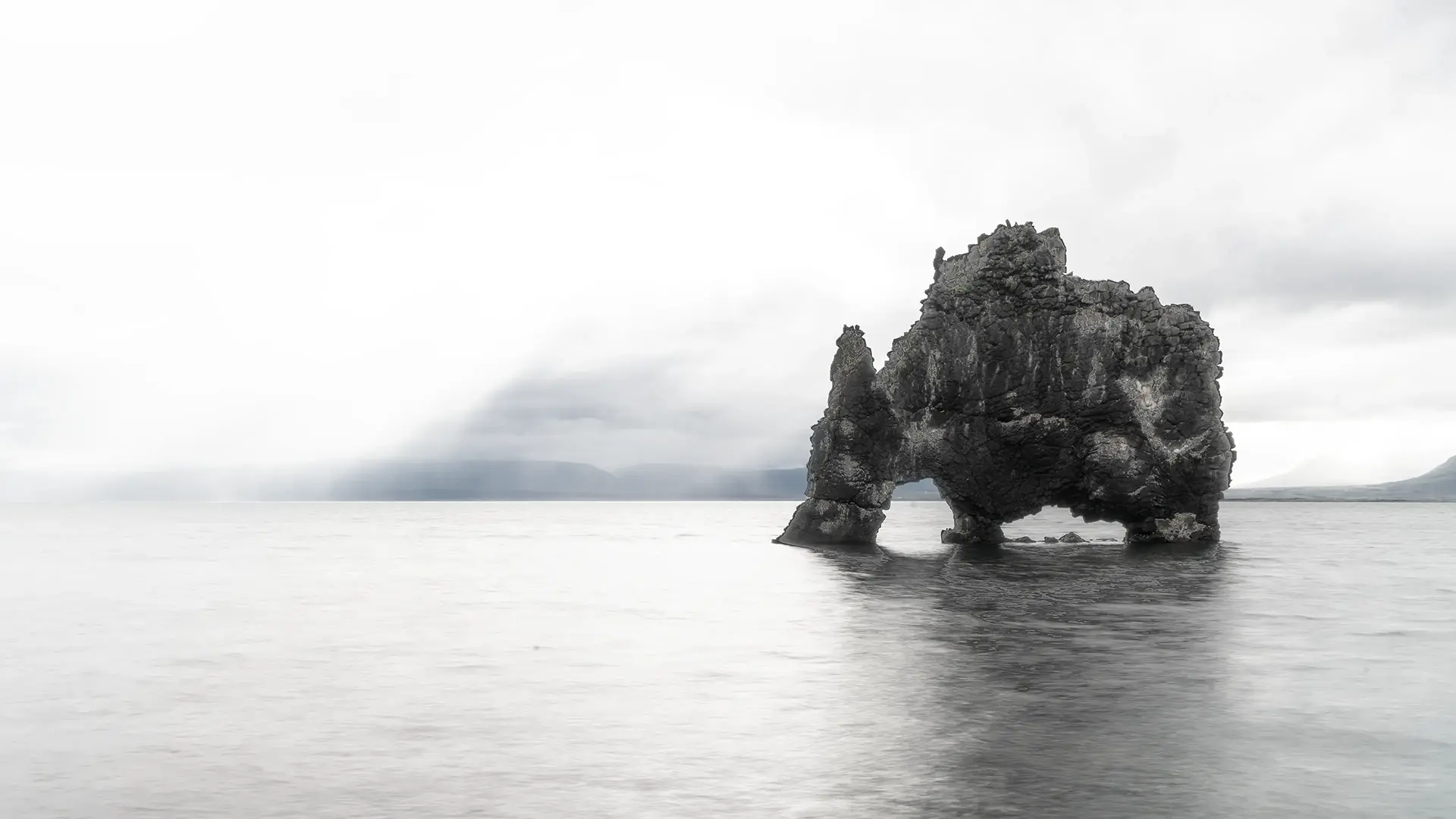
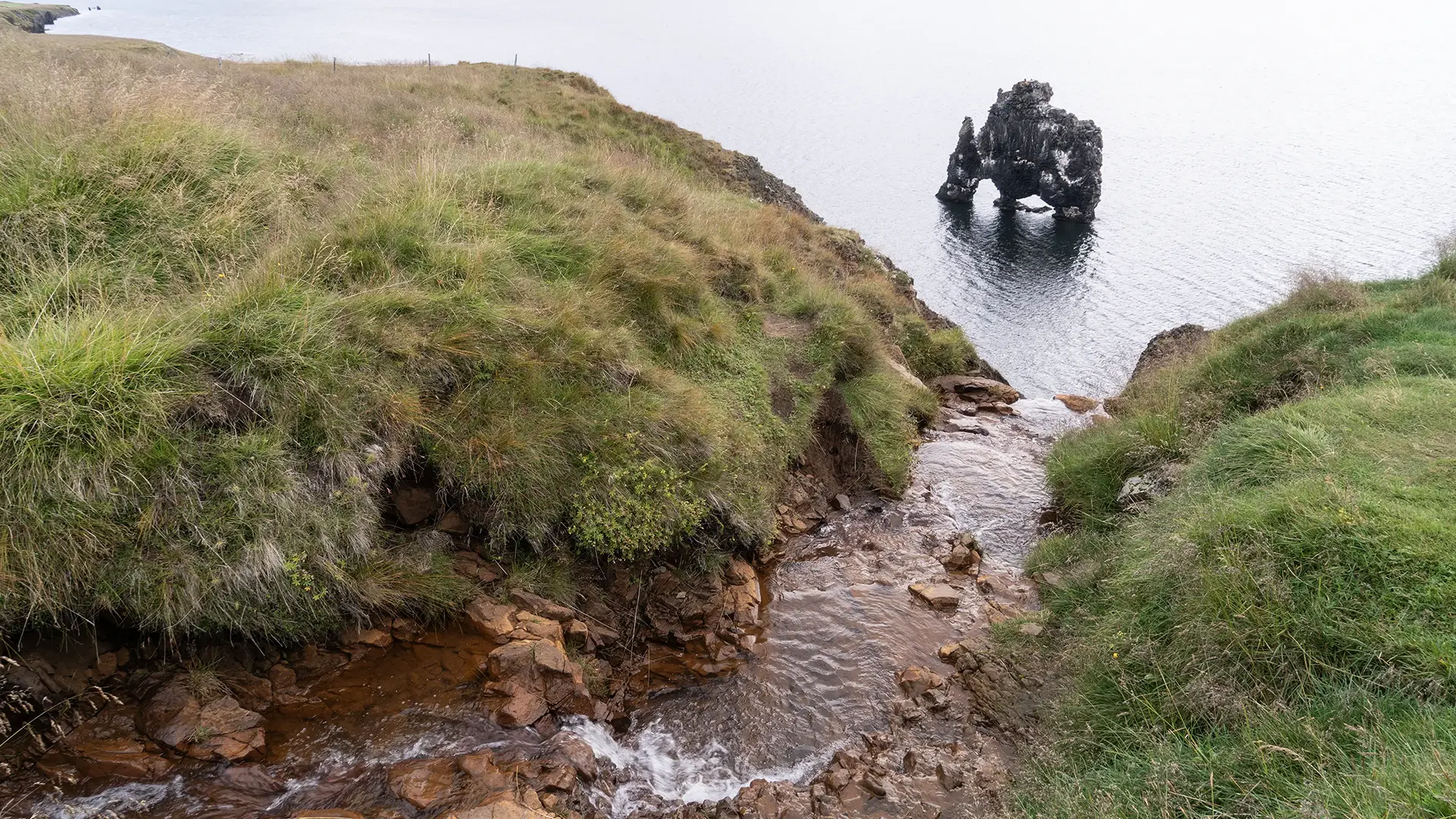
Hvítserkur is an oddly shaped rock that looks like an elephant, on the eastern coast of the Vatnsnes Peninsula. It stands about 50 meters offshore in Húnaflói bay. At high tide it is surrounded by water, but at low tide the area around it becomes a sandy shore, and it is possible to walk to its base.
Apparently, it is also called a dinosaur rock, or likened to a dragon drinking seawater or a rhinoceros.
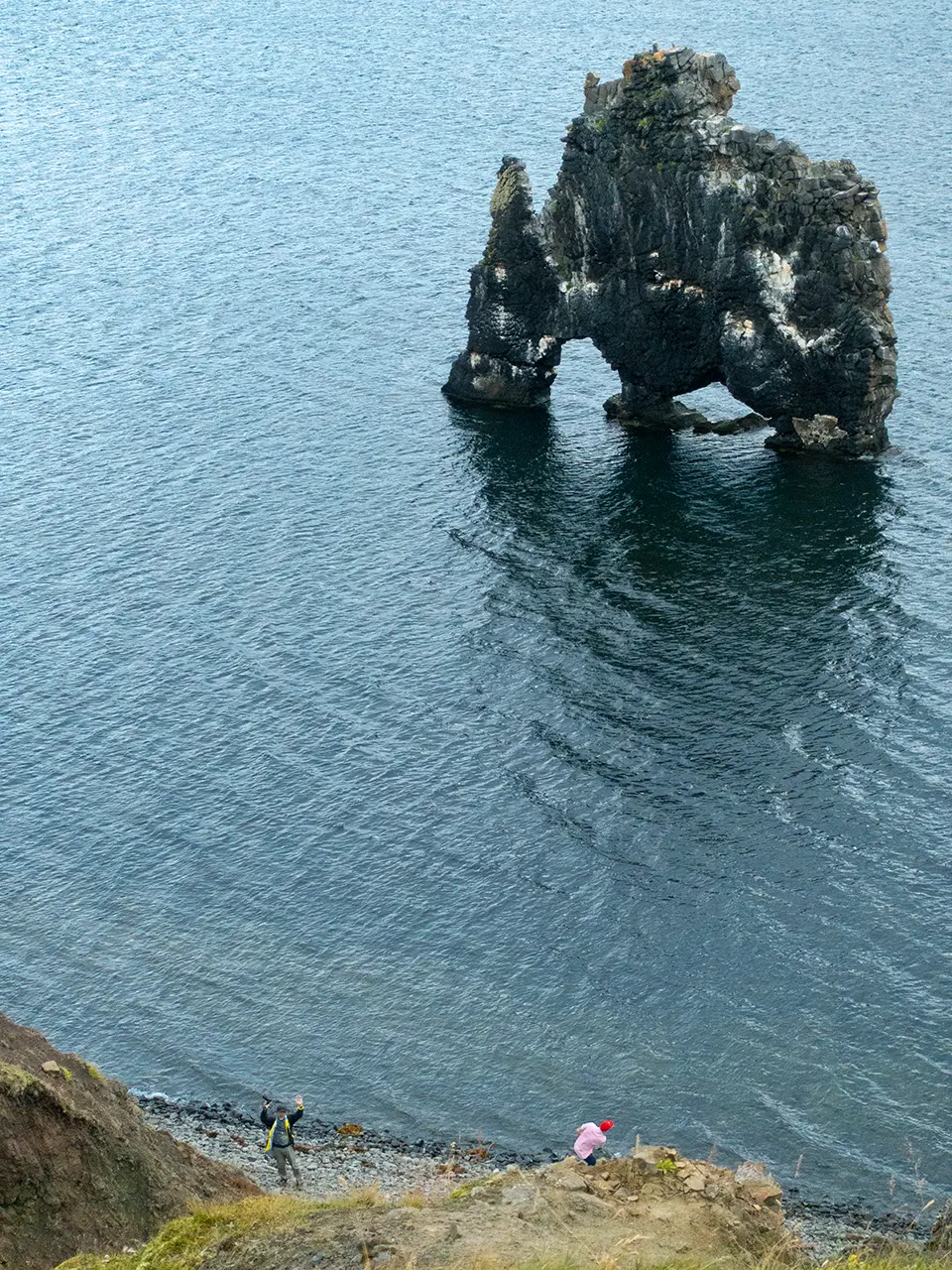
My wife took this one. The tiny speck of a person is me.
We walked from the car park towards the shore, and the rock came into view. The viewpoint is above the waterfall where a small stream drops into the sea. The view of the rock through the V-shaped notch was not bad either. But I had seen photographs of this place while planning the trip and had wanted to try photographing it from beach level myself. Now, at last, I headed down the cliff path. The photographs I had seen beforehand showed reflections in a sea as smooth as a mirror, but there were waves and rain that day, so the sea was not mirror-smooth. I tried taking a photograph with a slow shutter speed of about one second. The photograph came out looking dreamlike. Perhaps it was just my own satisfaction, but I was reasonably pleased with it. This spot is on the eastern coast of the Vatnsnes Peninsula, about 25 km from the Ring Road, so I was happy that the tour went out of its way to stop here.
Incidentally, this rock is a sea stack of black basalt, about 15 meters high. It is said to have acquired its present peculiar shape as waves wore it away over many years.
Apparently, concerns that marine erosion might cause it to collapse led to a local preservation campaign in the 1950s, and its base was later reinforced with concrete. Nature created this rock, but a little human intervention has also helped it survive to this day. An interesting little fact.
Kolufossar Waterfalls
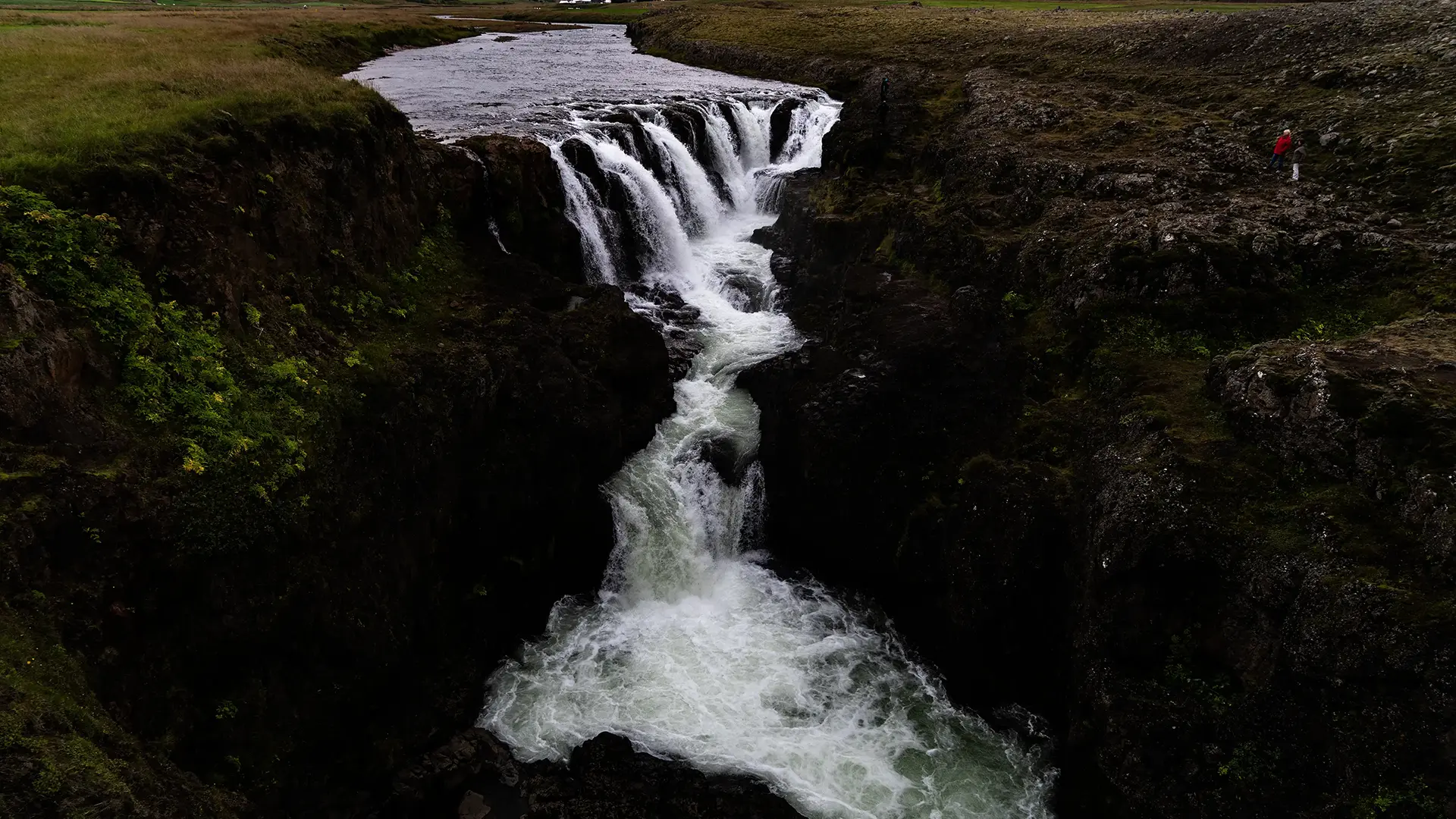
The Kolufossar waterfalls fall into a deep gorge carved out by the Víðidalsá River. Apparently, Kolufossar is actually the collective name for the waterfalls here, rather than the name of a single waterfall.
The falls are about 6 km south of the Ring Road. We walked from the car park to a bridge. I think the view from there gives the best angle for photographs. We walked around for about twenty minutes, and that was the end of our visit.
Apparently, a viewing platform was installed in 2018. Perhaps the best angle has changed since then. (Laughs.)
Hvítserkur and Kolufossar were our main stops in the northwest, but the views through the window west of Goðafoss, featured on the previous page, also interested me. Here are a few of them.
Northwestern Scenery Through the Window
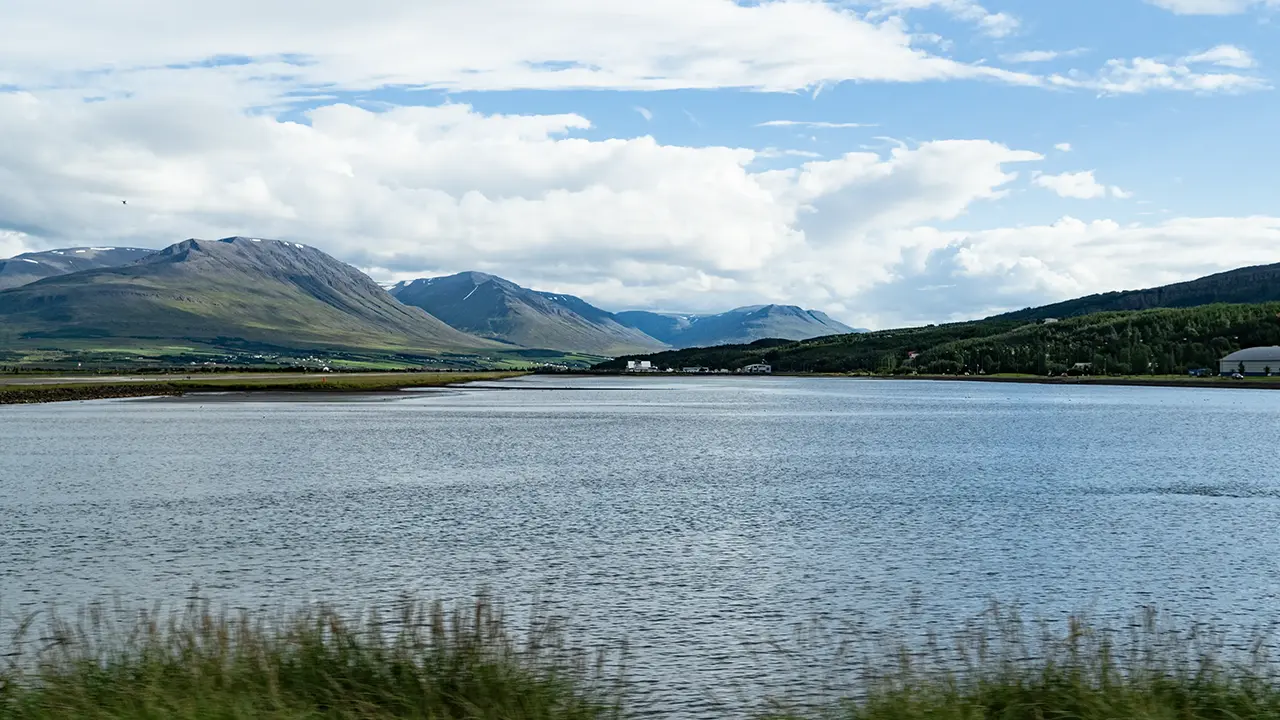
Beyond the Northern Volcanic Zone, we continued west from Goðafoss towards the valley between the mountains that had been in view for a little while. We crossed a pass along the way, and after about an hour on the road, the sea came into view. This was apparently a fjord called Eyjafjörður. We followed its eastern shore south towards the head of the fjord, where a causeway crossed the shallows, and drove across it. I took the first photograph through the minibus window as we crossed the causeway. On the other side was Akureyri, the main city of northern Iceland.
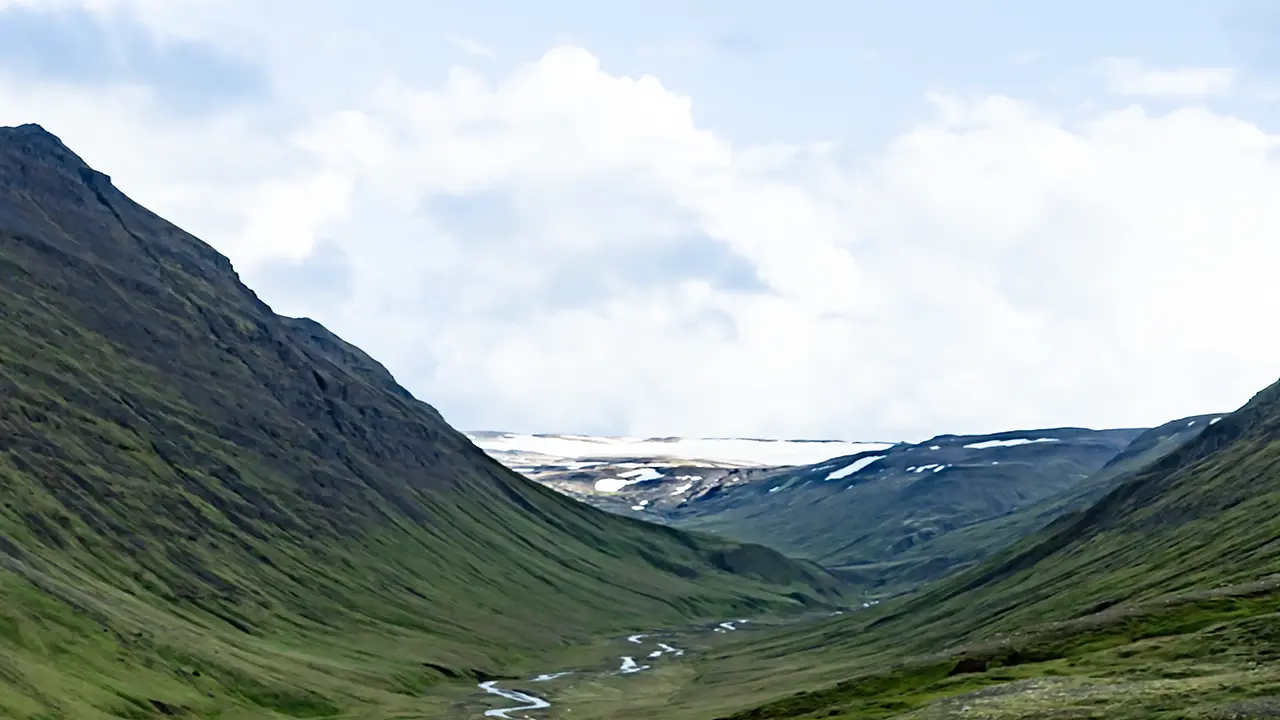
Mountainous country stretches between Eyjafjörður and Skagafjörður to the west, with a number of small glaciers remaining in the valleys between the high peaks. I took photographs through the window from time to time; the second photograph is one of them.
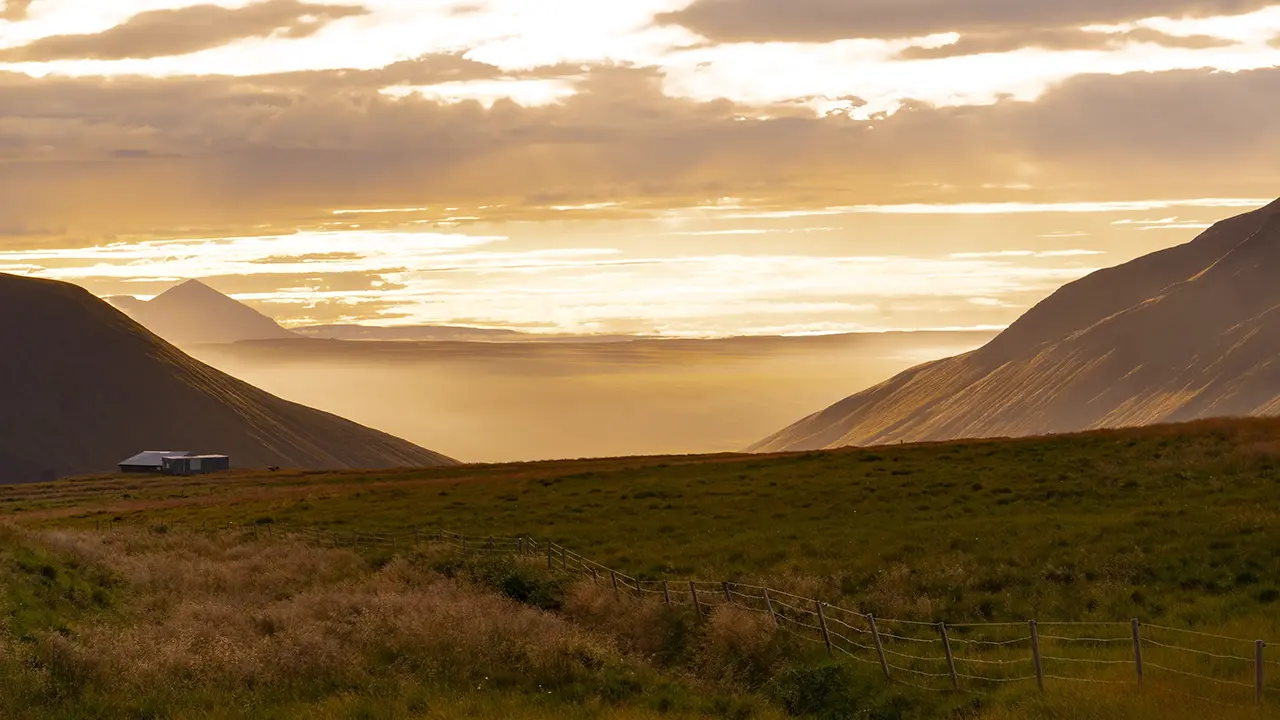
After about two and a half hours on the road, I asked for a stop. The reason was the view in the third photograph. The setting sun was turning the sea of clouds along the western horizon golden. Looking into it afterwards, I think this was somewhere near Vatnsskarð pass.
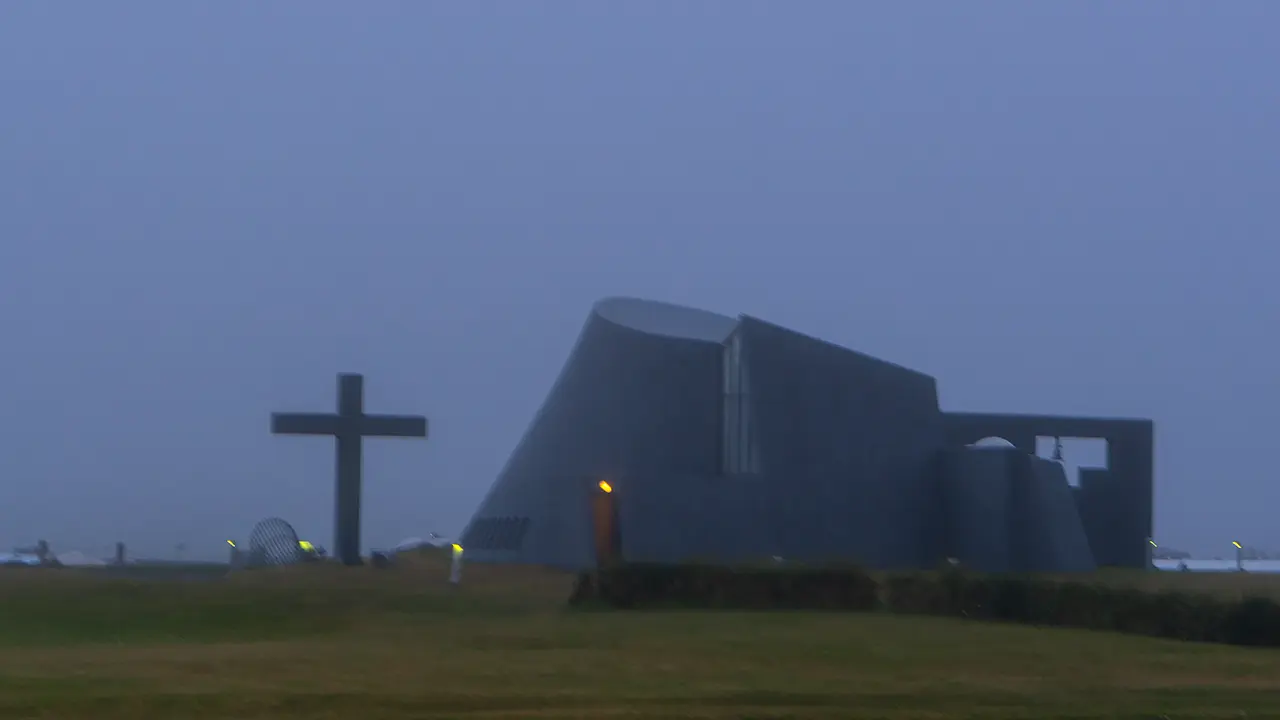
Once we crossed the pass, what had looked like a sea of clouds from up there turned out to be fog filling the landscape. A church stood alone in the fog, its light glowing warmly. It is apparently called Blönduóskirkja and seems to be a relatively new church, completed in 1993.
A church in the fog
It was almost frightening by now.
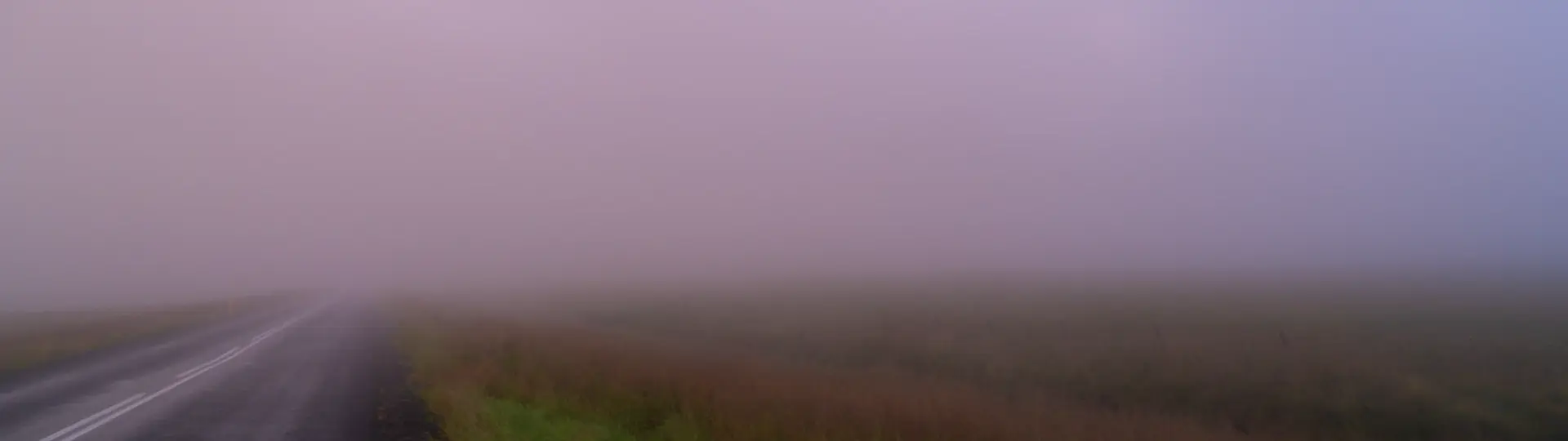
The final photograph shows the fog. A little farther inland, around our accommodation, visibility was almost zero. It was frightening even without being the one driving.