Iceland's South Coast is a regional name used for tourism rather than an official designation. It roughly covers the 390 km stretch from Selfoss, near the base of the Reykjanes Peninsula, to Höfn at the gateway to the east coast. There are no particularly large towns along it. The main settlements include Hella, a base for visiting waterfalls such as Seljalandsfoss and Skógafoss; Kirkjubæjarklaustur, like an oasis among lava fields; and Vík, roughly between them. Vík lies south of the active volcano Katla and the Mýrdalsjökull ice cap covering it, and is the southernmost village on the South Coast. Its population, incidentally, is said to be fewer than 400.
The area around Vík has many coastal attractions, including Reynisfjara, Víkurfjara, the Dyrhólaey headland, and the aircraft wreck on Sólheimasandur.
Reynisfjara Beach
Reynisfjara is a beautiful jet-black sand beach, or svartisandur, about a ten-minute drive west of Vík, beyond the mountain Reynisfjall. It has been named among the world's ten most beautiful non-tropical beaches by National Geographic, and used as a filming location for Star Wars and Game of Thrones. In the music video for Justin Bieber's "I'll Show You," there is also a scene of him running across the black sand.
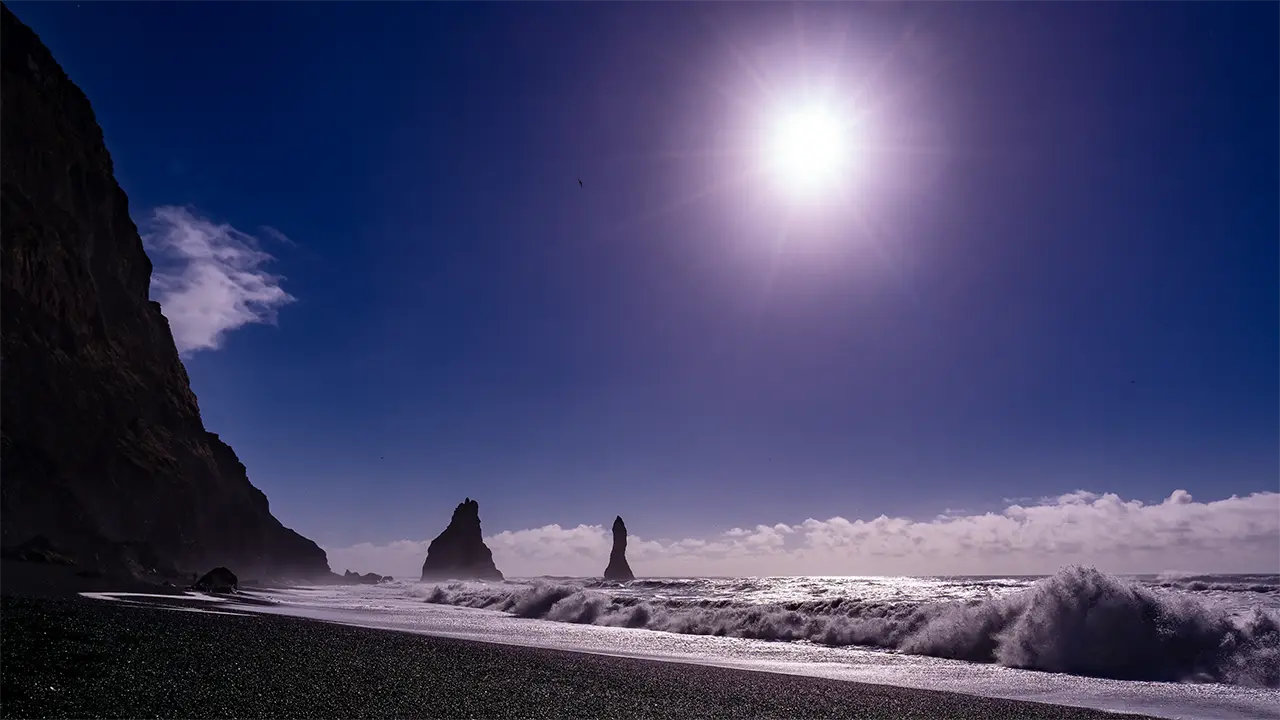
Reynisdrangar caught my eye first: curious sea stacks rising off the eastern end of the beach. Two appear in this photograph, with slender Mjóidrangur on the right and Langhamar beside it. Atlantic waves roll straight onto the black sand here, sometimes surging unexpectedly far up the beach—the so-called sneaker waves. The rocks, the surf, and the black sand seemed to sum up Reynisfjara. I was pleased to catch them without a single tourist in the frame.
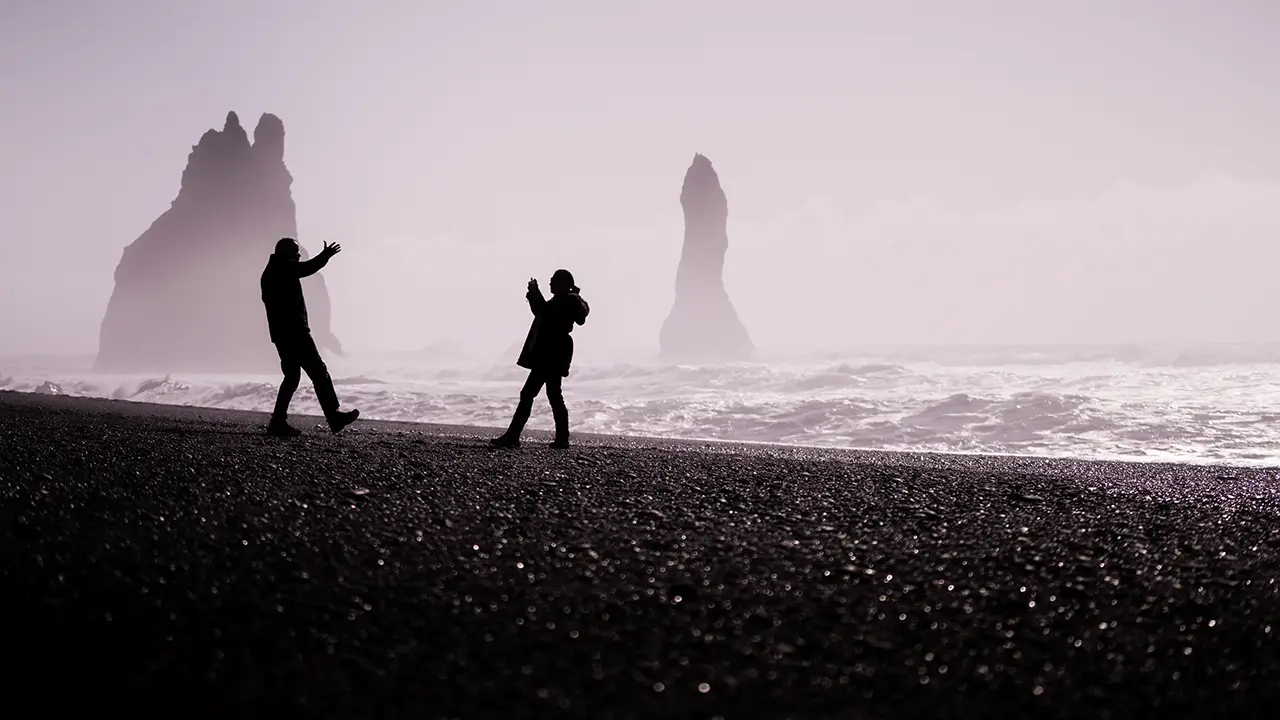
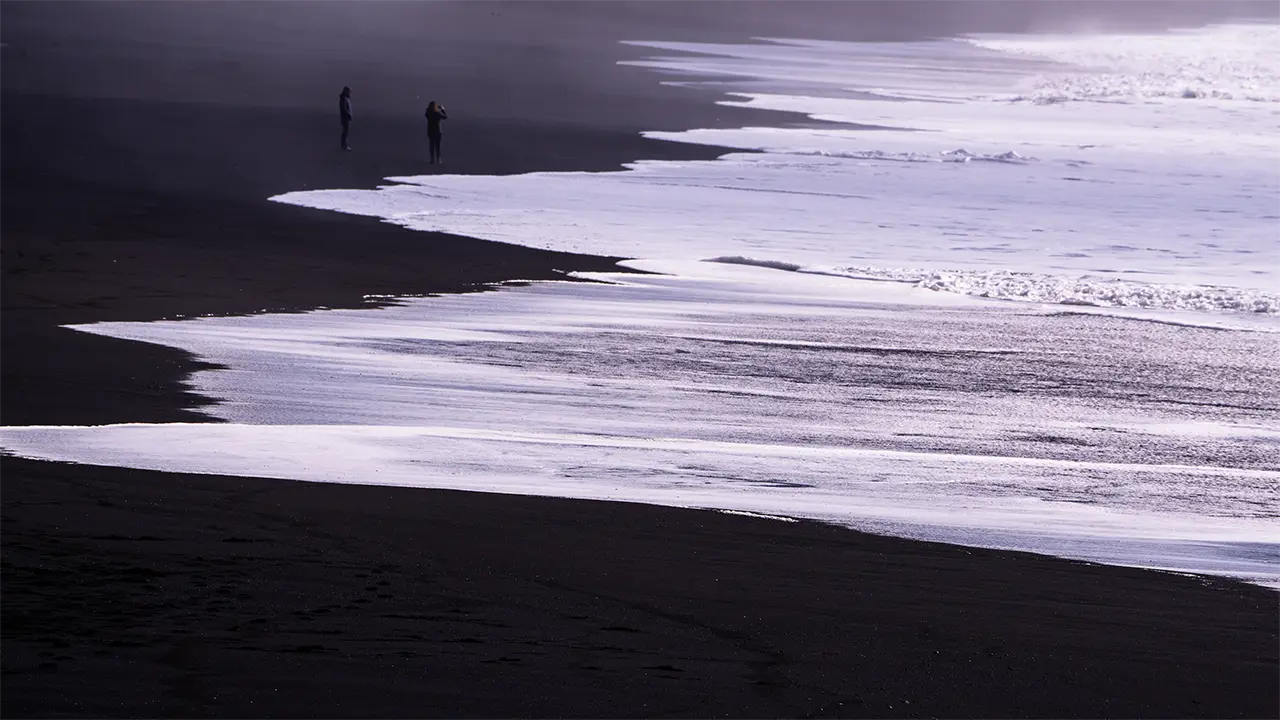
A couple were joking around as they took pictures of each other. I caught the scene from almost sand level, and the spray and exposure happened to come together in an almost monochrome image. It became a photograph I rather like.
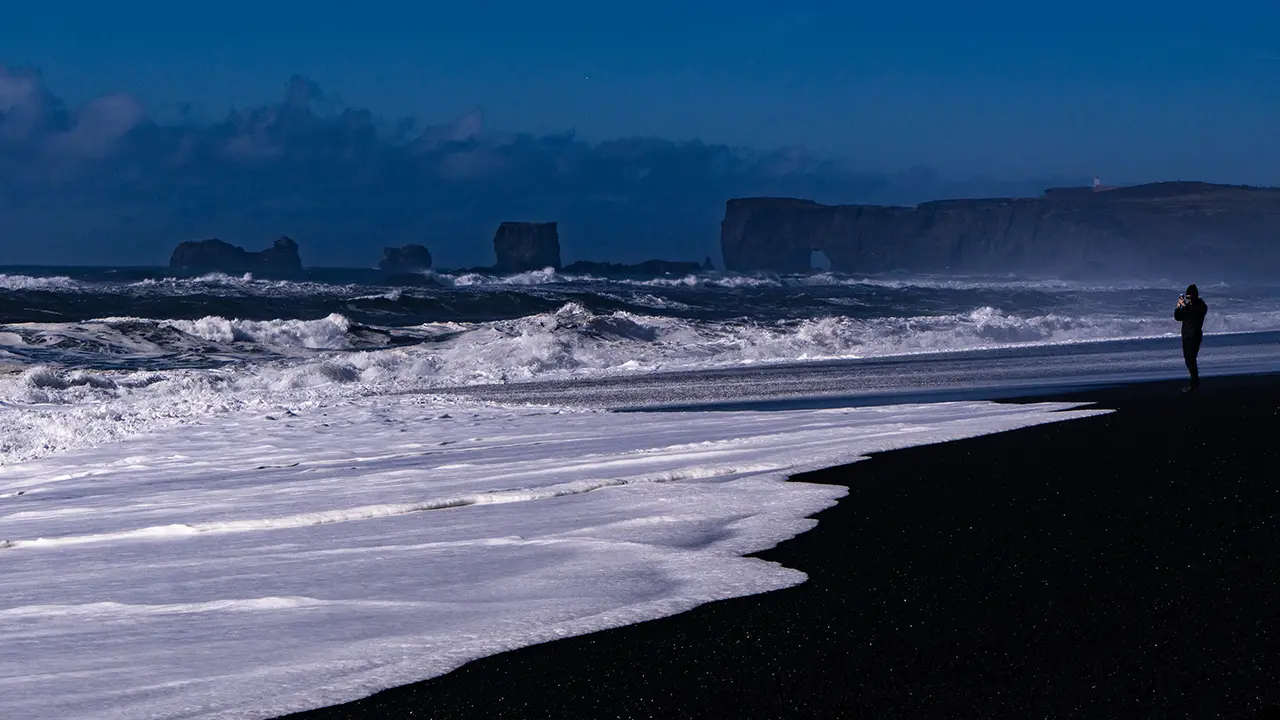
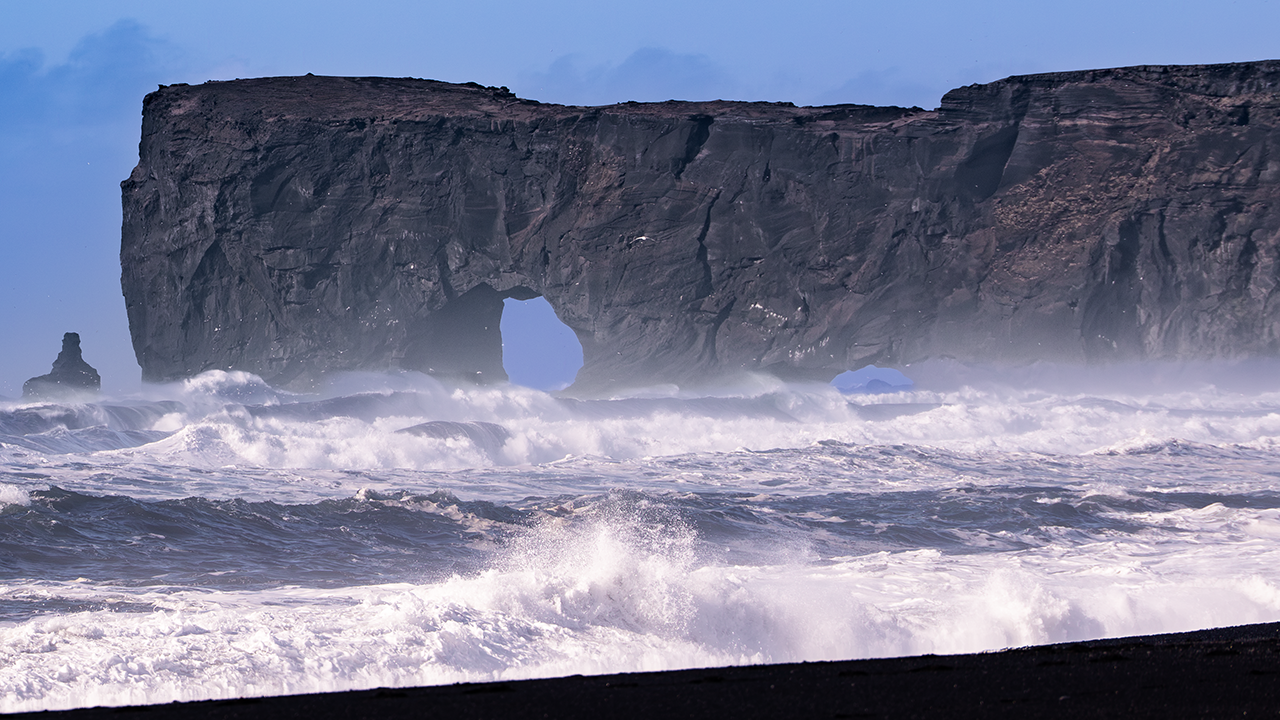
White foam from those sneaker waves spreads across the black sand, with the Dyrhólaey headland in the distance. I decided not to go there, reasoning that its arch would be better seen from this side anyway. That made sense to me at the time. Now, looking at the photograph again, I wonder whether I should have gone after all.
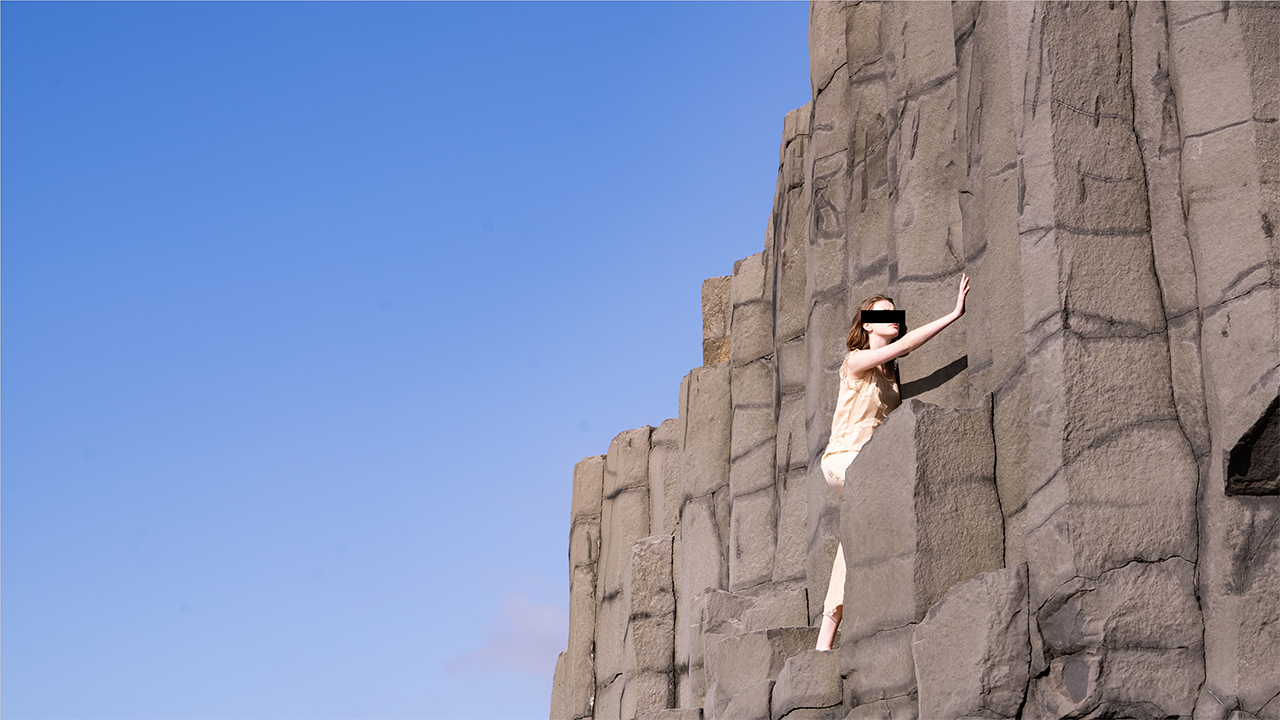
Beautiful basalt columns, with someone climbing among them
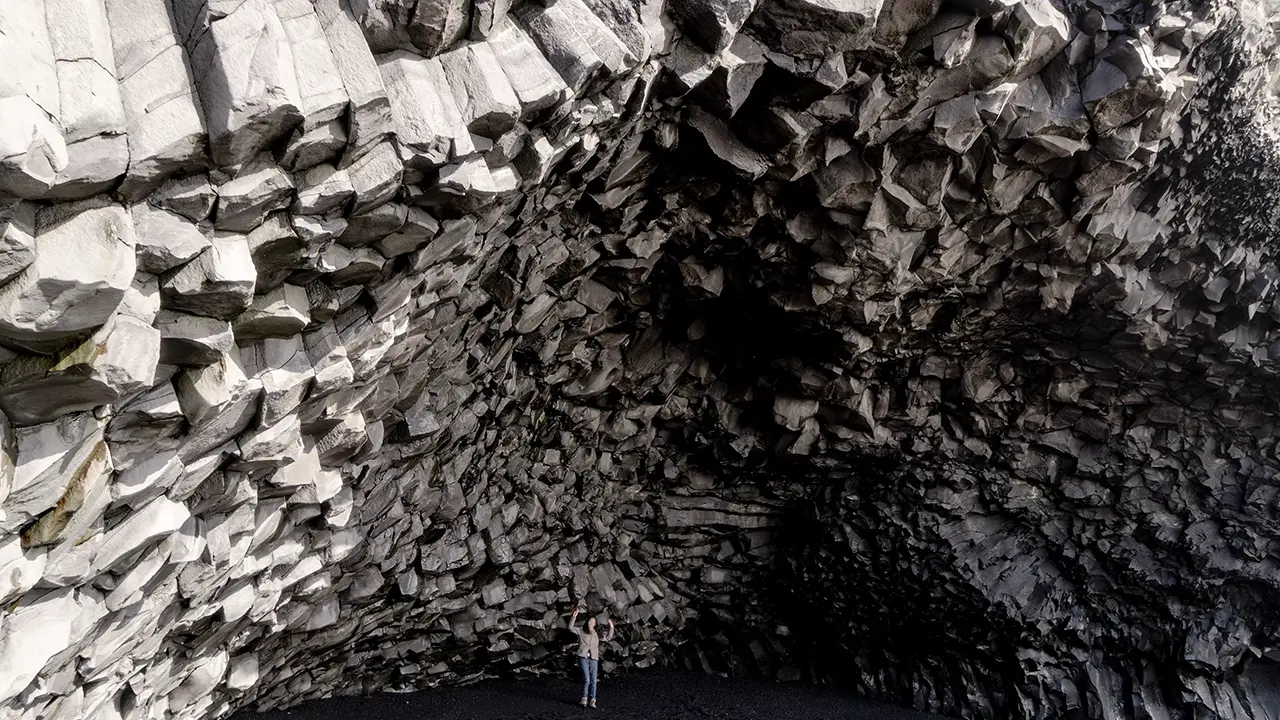
A cave shaped like a theater stage
Both sea arches at Dyrhólaey Visible from here
The cliffs facing the beach beside Reynisdrangar are formed of basalt columns.
The second photograph in the group above looks into Hálsanefshellir, a cave framed by basalt columns. Its rounded interior reminded me of a half-dome, or a theater stage. I wanted someone in the picture to give a sense of scale, so I asked a person taking photographs nearby if they would mind being included. The result was just what I had hoped for—another favorite.
All the photographs shown so far were taken on my April visit.
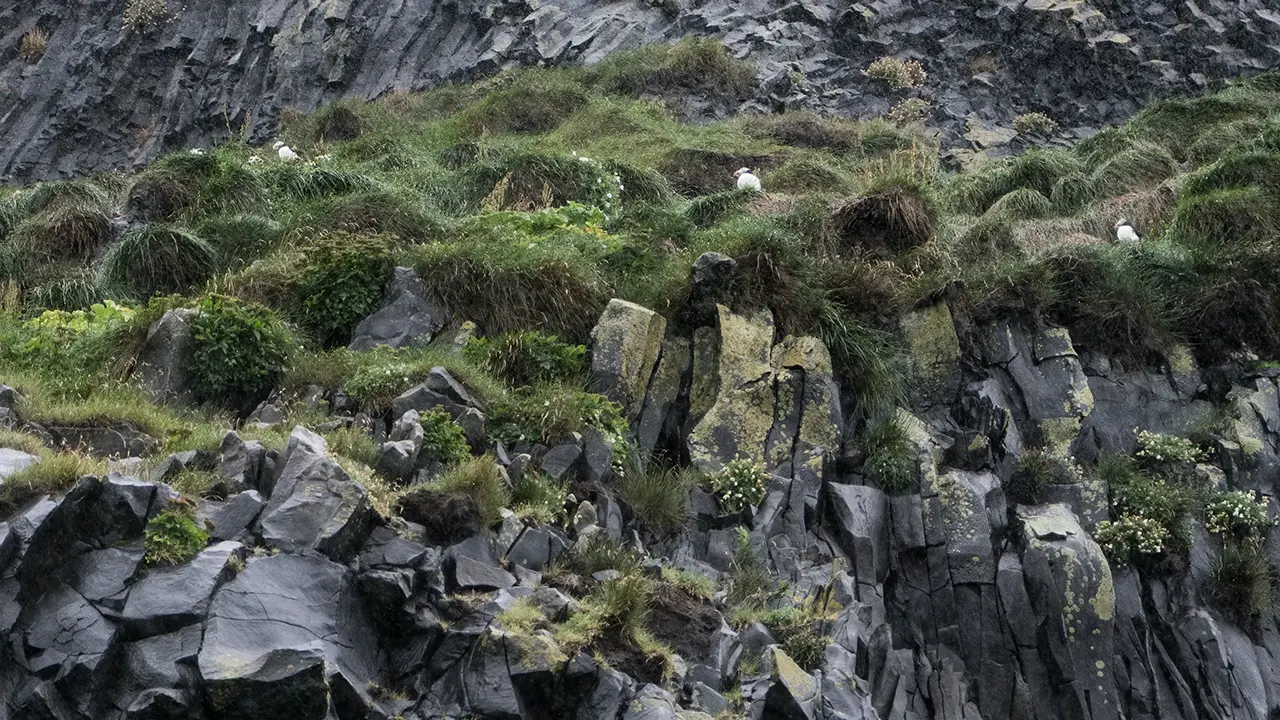
The basalt columns where I spotted puffins
Reynisfjara was very wet when we visited in August, and this is the only photograph from that visit I am including. Plenty of puffins were flying about, so I tried to photograph them at least. The rain had put me off fitting a telephoto lens before leaving the minibus, though, and this was the best I could manage.
Reading about puffins while writing this travelogue, I learned that they come ashore to breed in spring and begin heading back out to sea in August. We had caught them near the end of their breeding season. I had seen none during my April visit; perhaps they had not yet arrived. While I was writing, an episode of NHK’s nature series Taikan! Great Nature featured the puffins here and brought back memories of that rainy visit.
The Atlantic puffin is known as lundi in Icelandic.
Víkurfjara Beach
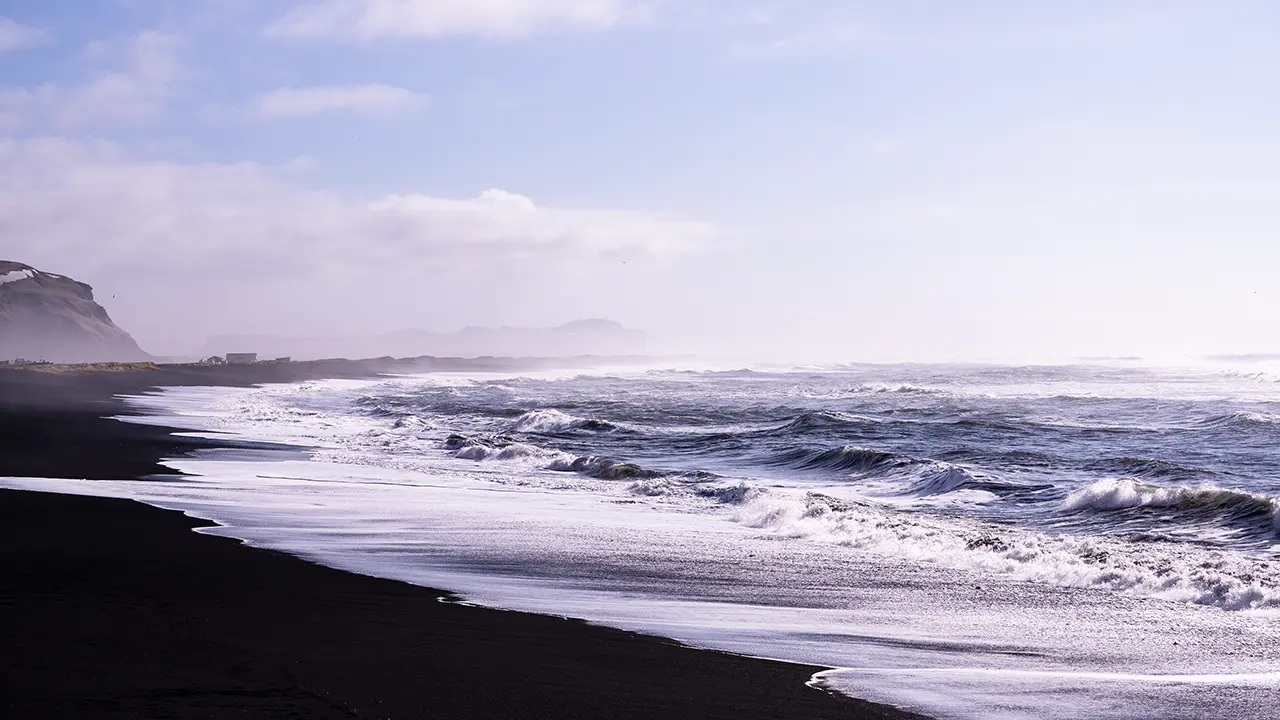
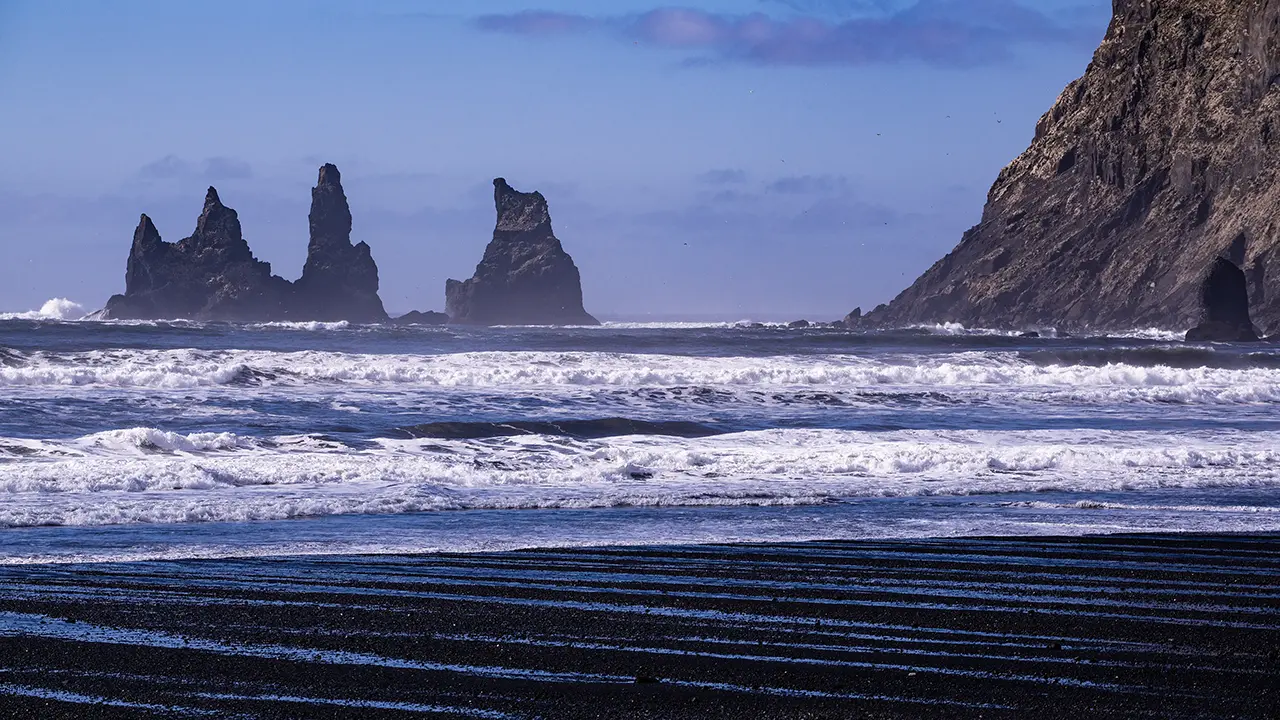
Víkurfjara is a black sand beach on the Vík side of Reynisfjall, across the mountain from Reynisfjara. The two Reynisdrangar stacks visible from Reynisfjara appear from another angle here, along with Landdrangur, the stack closest to land. The same rocks, yet a very different scene. The waves were less rough than at Reynisfjara, and the beach had a gentler slope. The retreating water had drawn beautiful stripes across the black sand. I later learned that waves washing in and out can sort sand grains by size and weight, leaving bands of different shades. That was probably how these patterns had formed, too. There were also far fewer people here than at Reynisfjara, and the beach was quiet.
The shore at Víkurfjara
The contrast between black sand and white surf was beautiful.