Eyjafjallajökull stands about 150 km east of Reykjavík on the South Coast. This glacier-covered volcano became famous when its 2010 eruption disrupted air travel across Europe.
A line of steep cliffs runs along the foot of the mountains here. Looking at the land stretching out in front of them, it is hard to imagine Atlantic waves once breaking against their base. Yet near the end of the last ice age, the sea stood higher relative to the land, and these cliffs marked the coast. As the sea retreated, low ground emerged below them, leaving the old coastline inland.
The waves are gone, but water still finds its way over the edge. Several of the South Coast's best-known waterfalls tumble from these former sea cliffs.
Seljalandsfoss
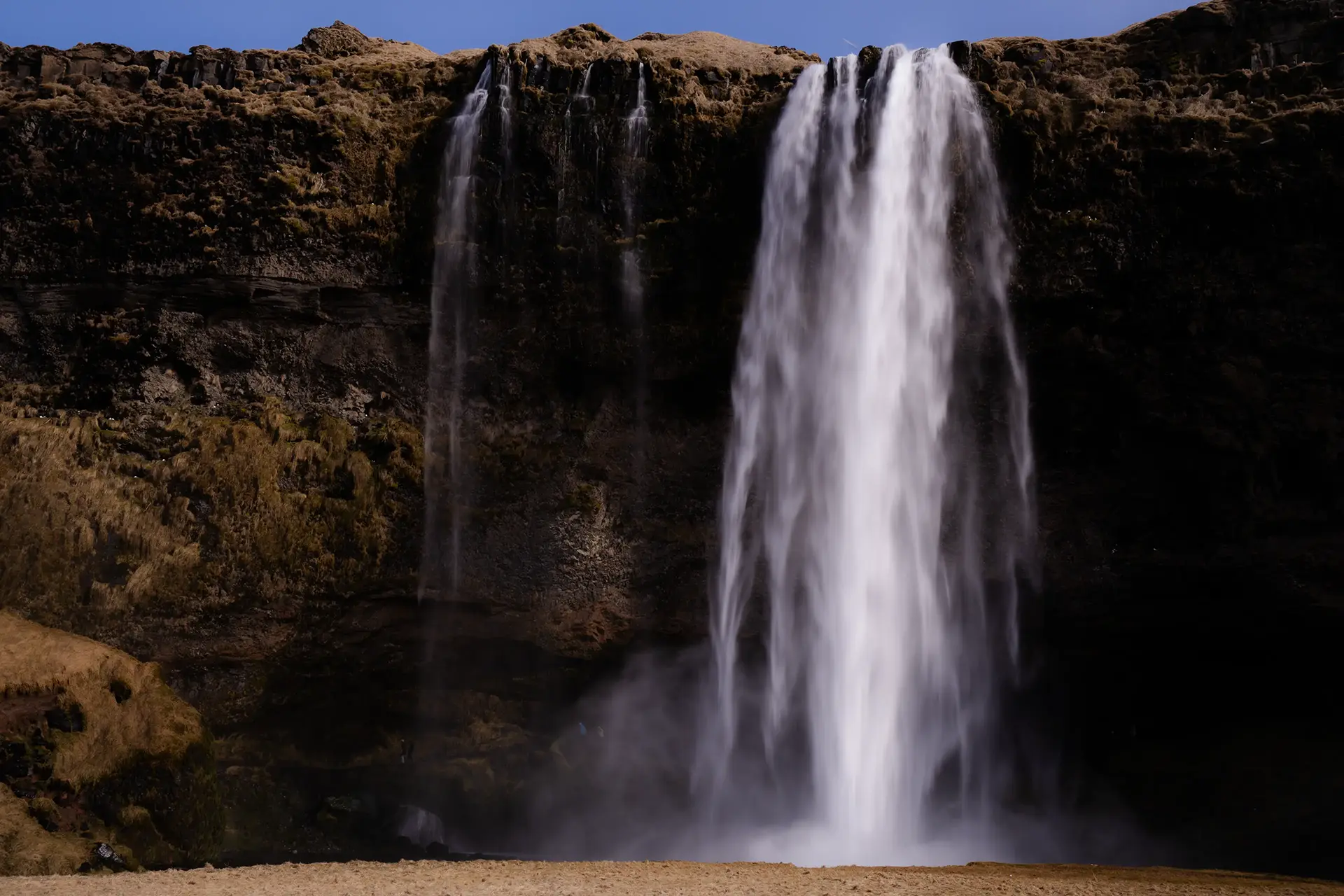
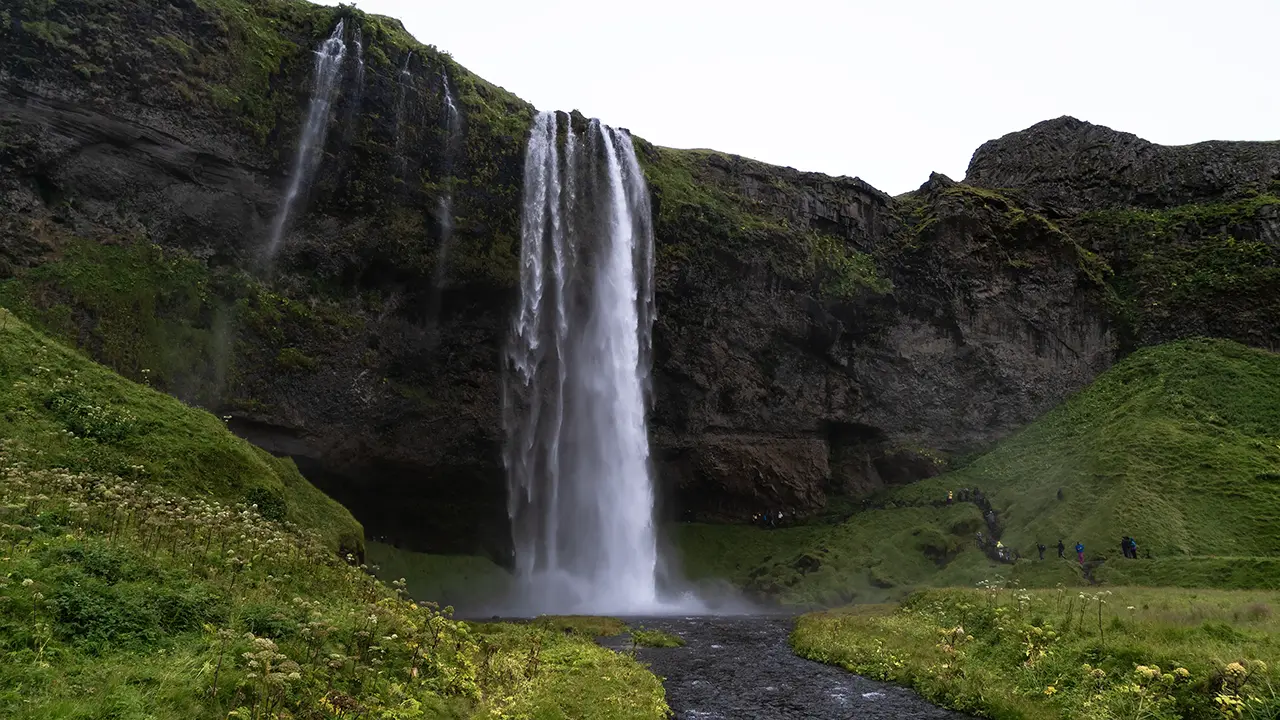
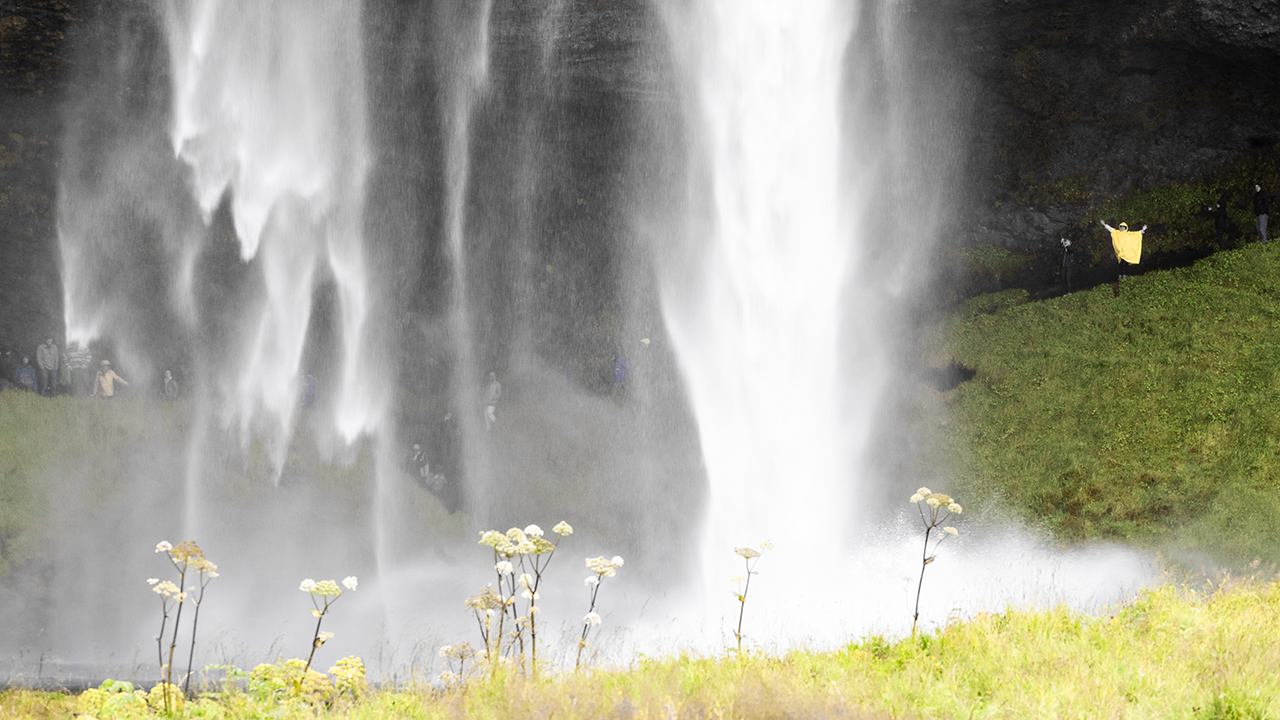
Seljalandsfoss falls about 60 meters from these old sea cliffs, a slender ribbon of water against the rock. Its flow apparently changes with the seasons, making that ribbon wider or narrower, though it looked much the same to me in April and August.
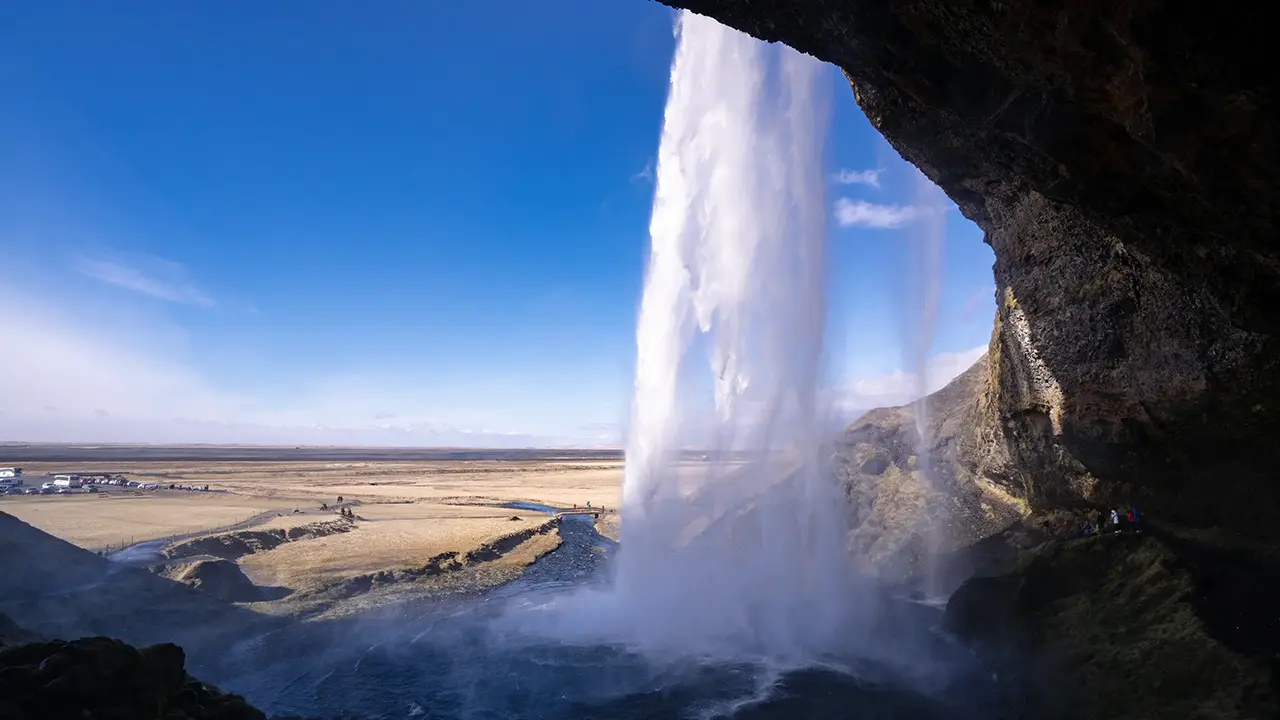
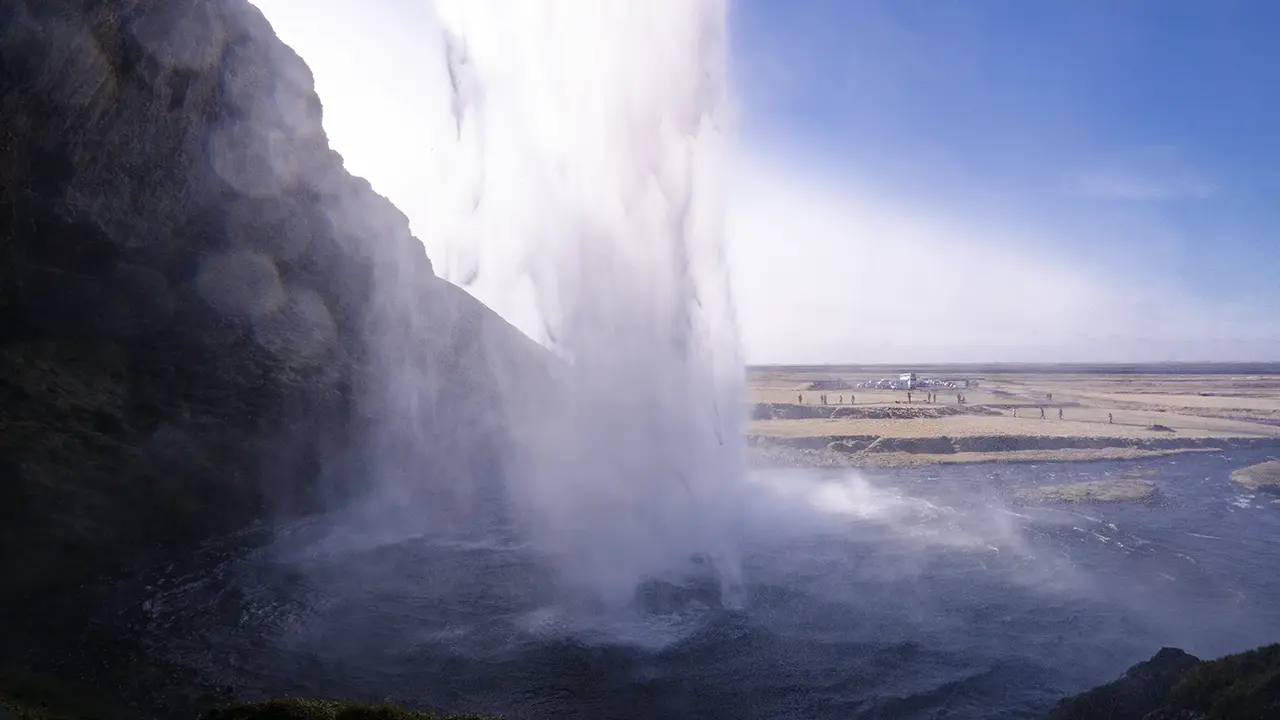
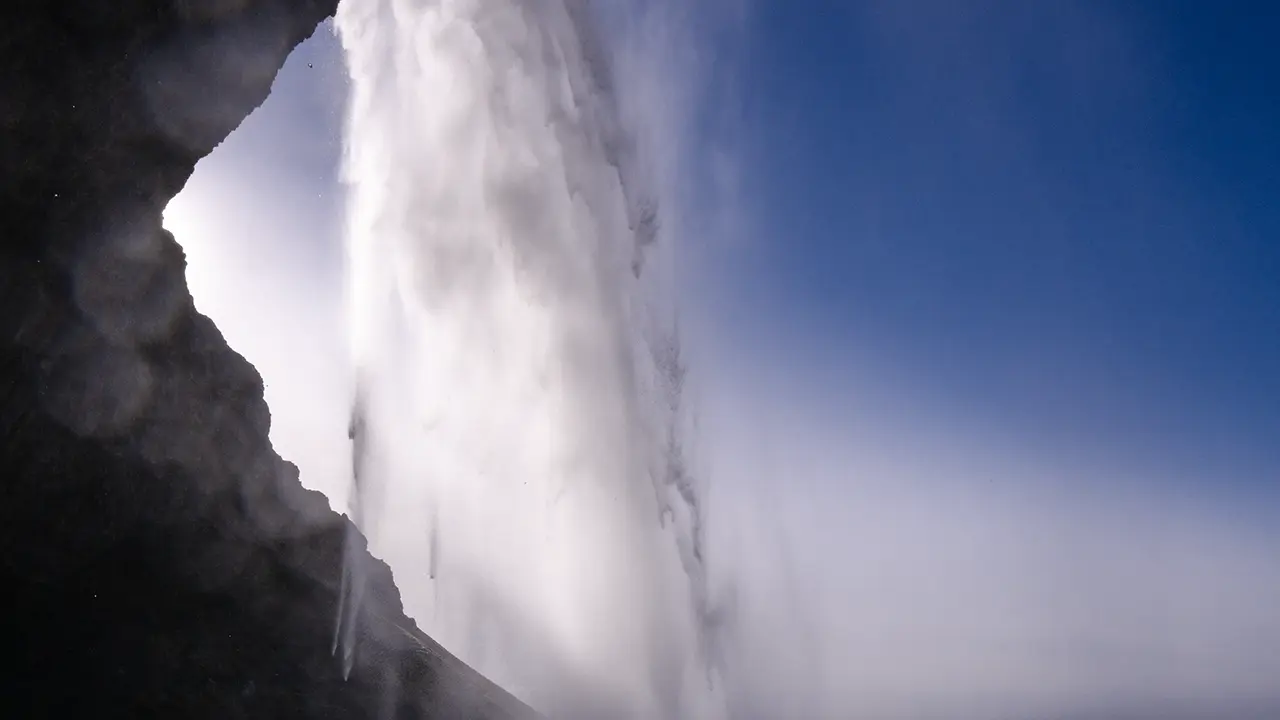
Seljalandsfoss is well known for the path that leads behind the falls. I enjoyed trying different angles from behind such a tall waterfall, but the wet, uneven footing made it difficult to move around and find a good position. People sometimes crowded together on the path, too, so I could hardly set up a tripod and take my time.
I had hoped to photograph the falls from behind with the setting sun beyond, but the timing of my visits did not allow for it. It was a view I would have liked to capture, but it simply did not work out.
From the west
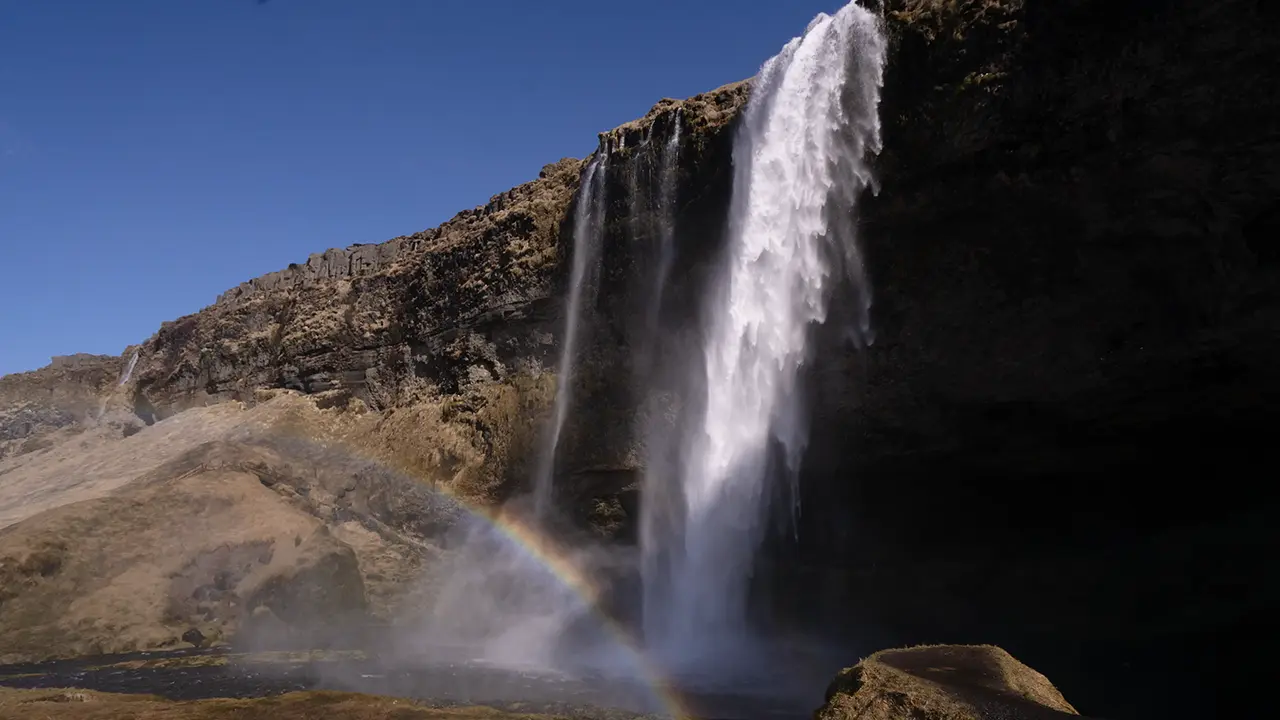
Near the entrance to the path behind the falls. A rainbow appears.
Looking towards the sunset, but…
Spray on the lens. No escaping it.
One of my favorites
My wife's yellow raincoat certainly stands out!
Gljúfrafoss
Gljúfrafoss lies north of Seljalandsfoss. A trail connects the two, making it easy to walk between them.
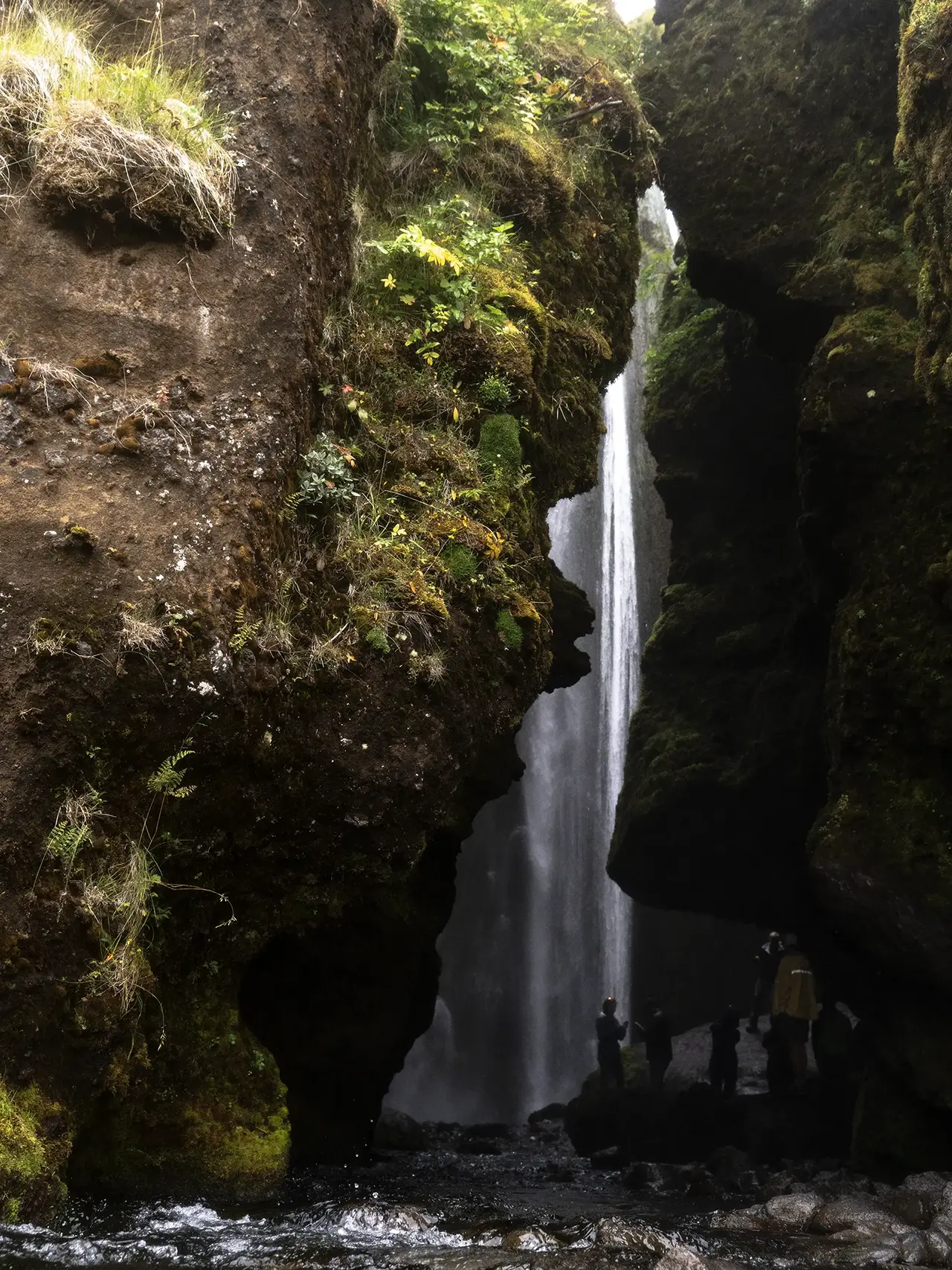
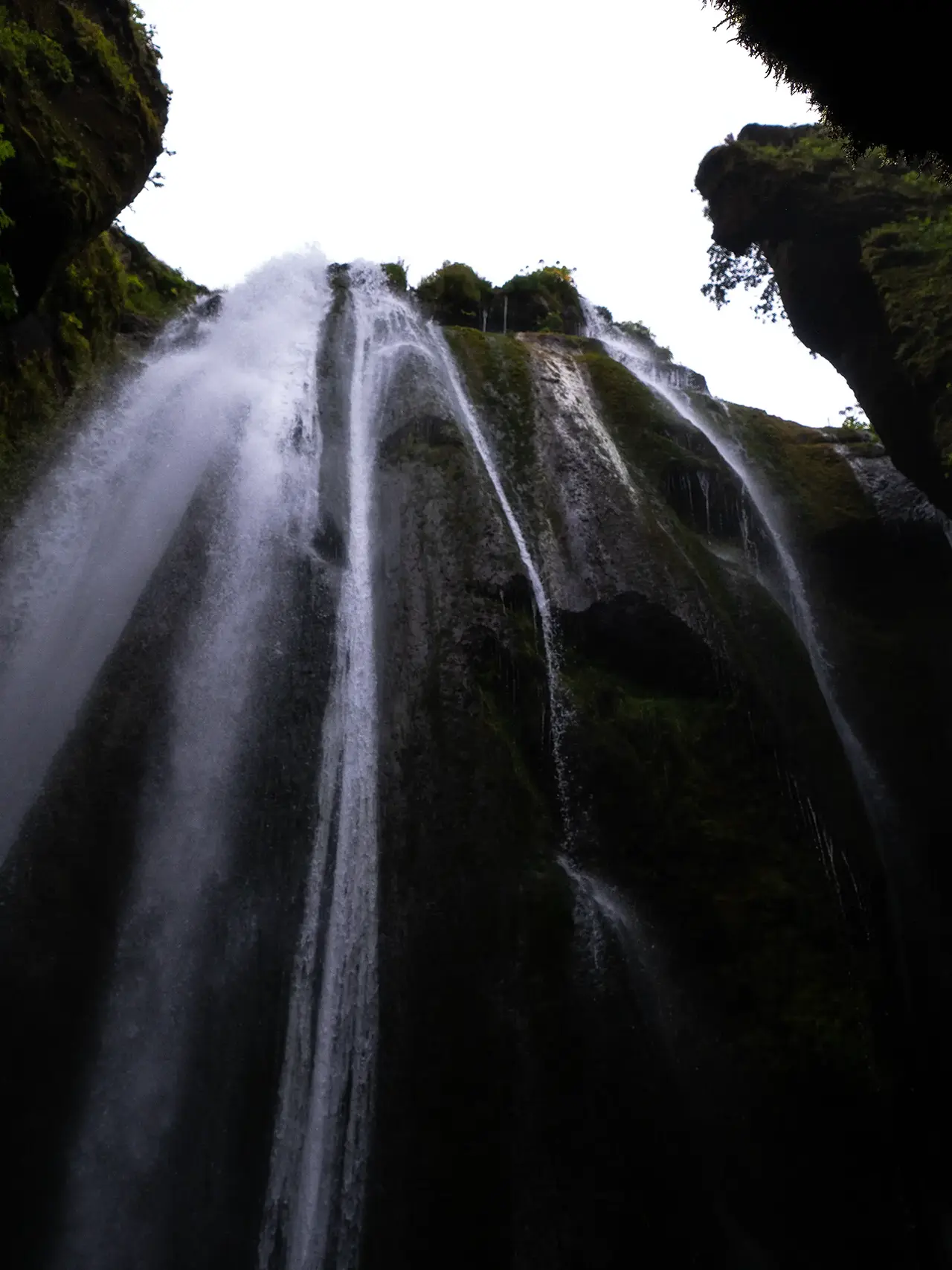
Gljúfrafoss is hidden behind a wall of rock. A narrow opening offers just a glimpse of white water falling inside. I followed the stream through the gap, stepping from stone to stone. The narrow passage opened into a tall chamber, open to the sky, with the waterfall descending into it. I had not imagined anything like this from outside. What struck me was not so much its power as the intricate shape of the place, as though the rock had been carefully hollowed out.
The water falls inside the cliff rather than over its outer face. I wondered whether it had gradually worn a hollow into the rock just behind the edge, leaving only a narrow opening through which the stream flows out. The shape reminded me of a hole punched through a thick stack of paper for binding, with a tear running from the hole to the edge of the stack. That was how I pictured it, at least—not an explanation of how it actually formed.
The entrance gives little hint of the waterfall hidden beyond
The view above me, inside the chamber
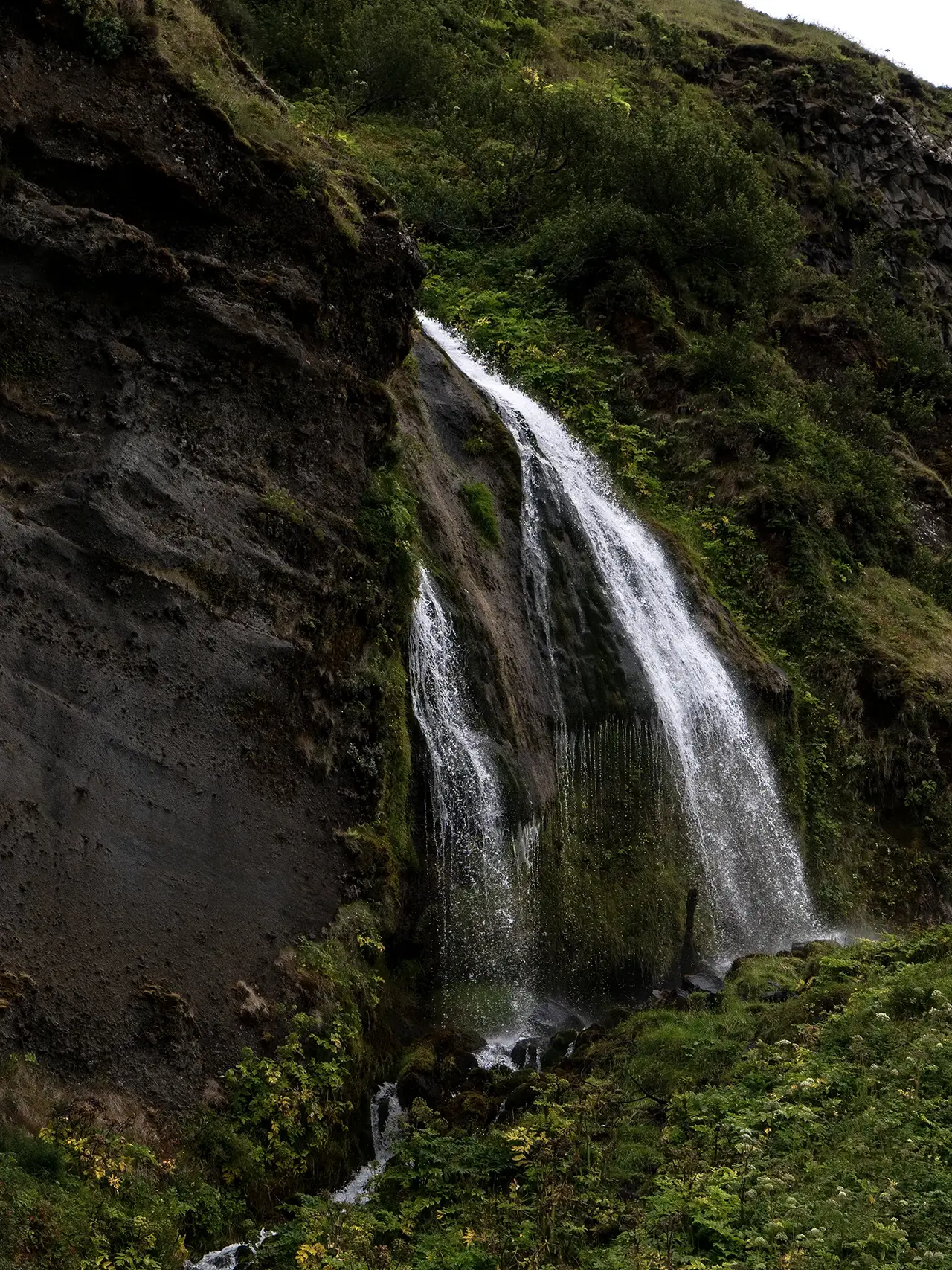
Waterfalls whose names I never learned, on the way to Seljalandsfoss
Skógafoss
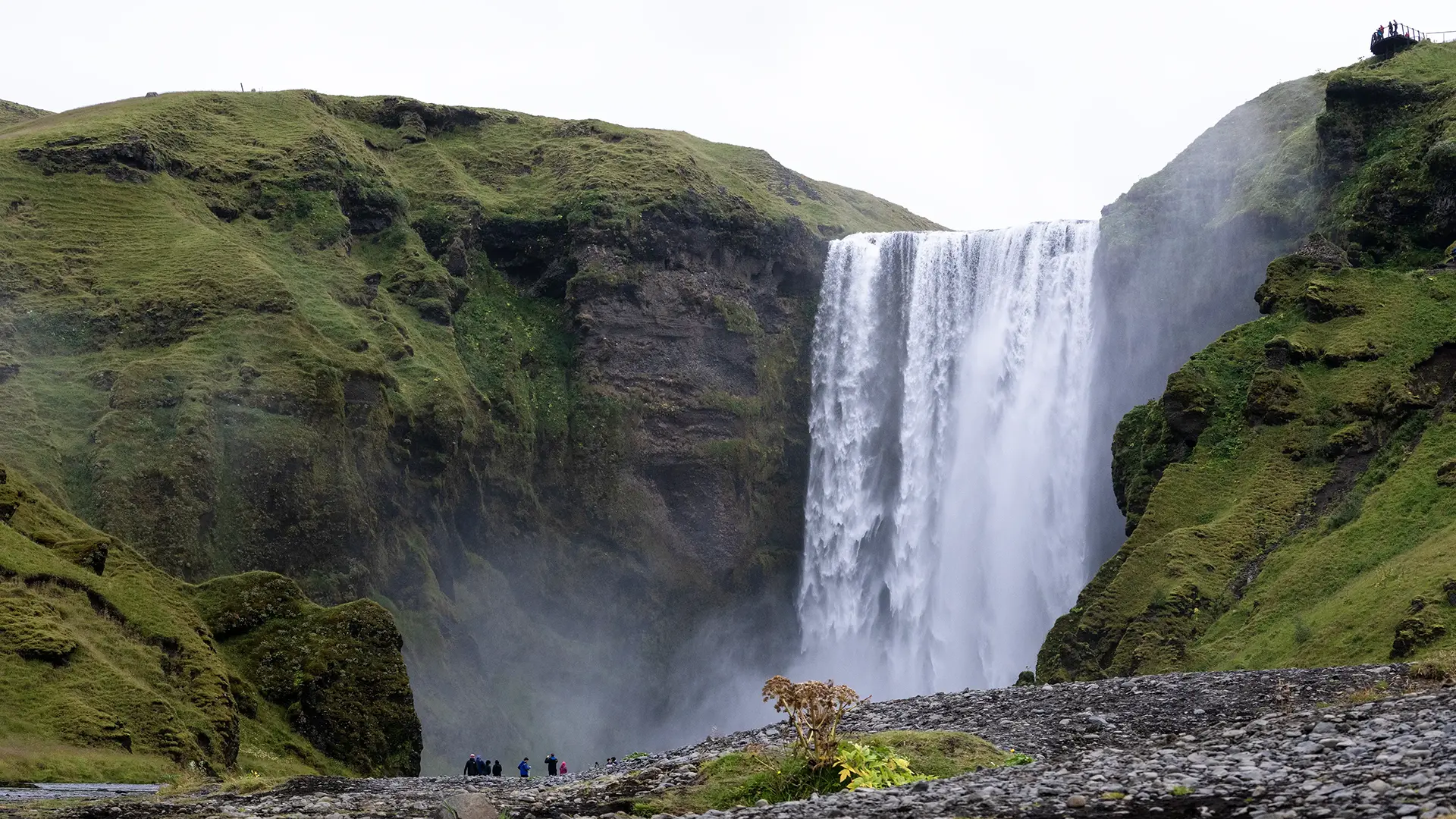
Seljalandsfoss falls in a slender ribbon; Skógafoss comes down in a broad, powerful curtain of water.
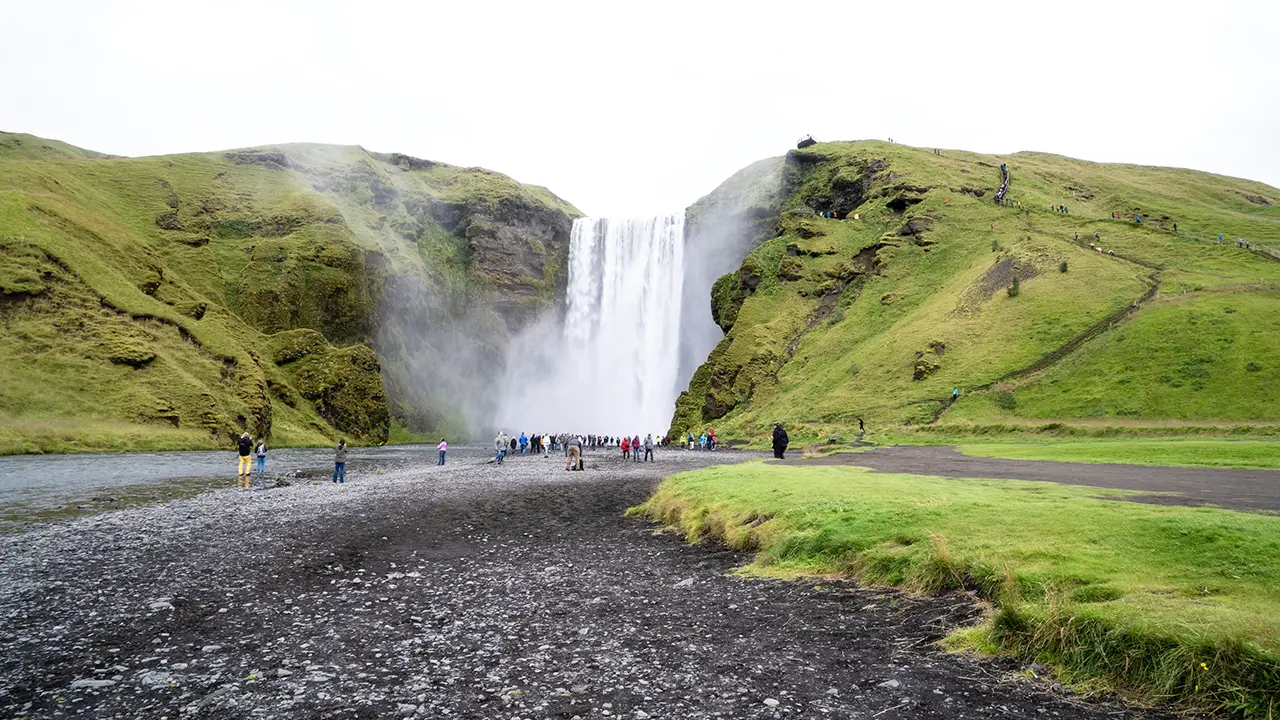
The falls and the path up to the lookout
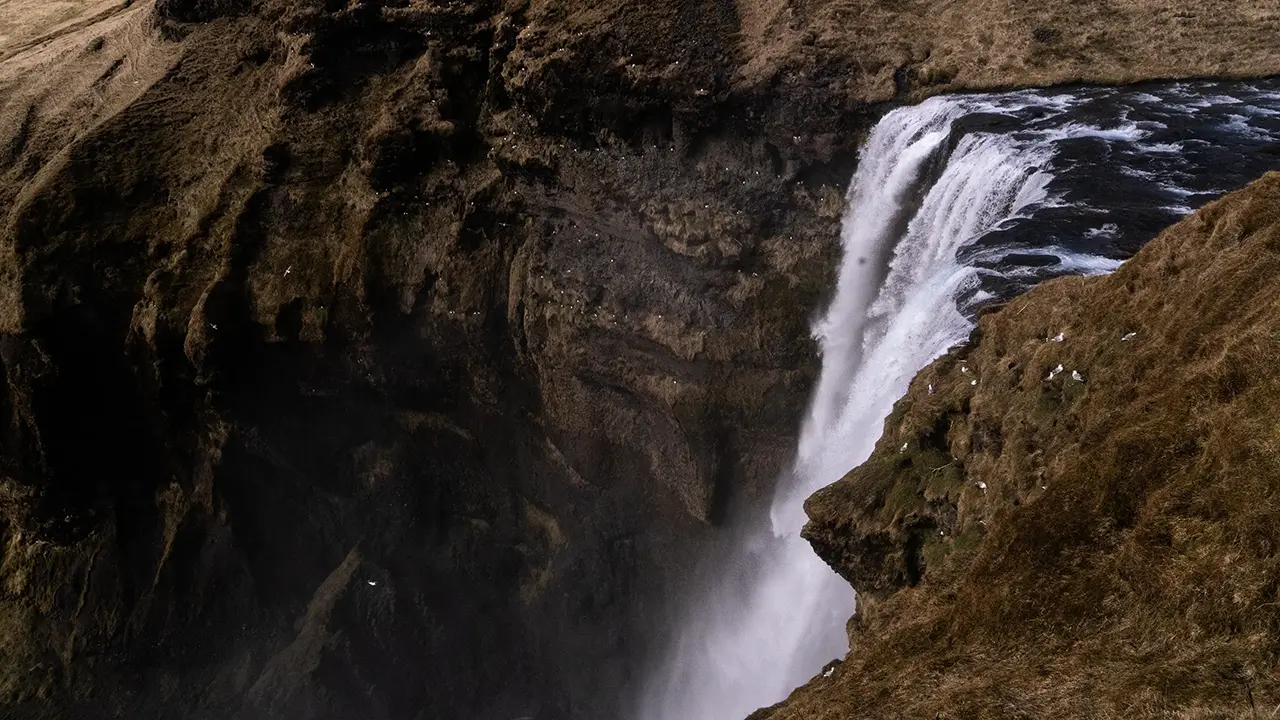
The view from the lookout
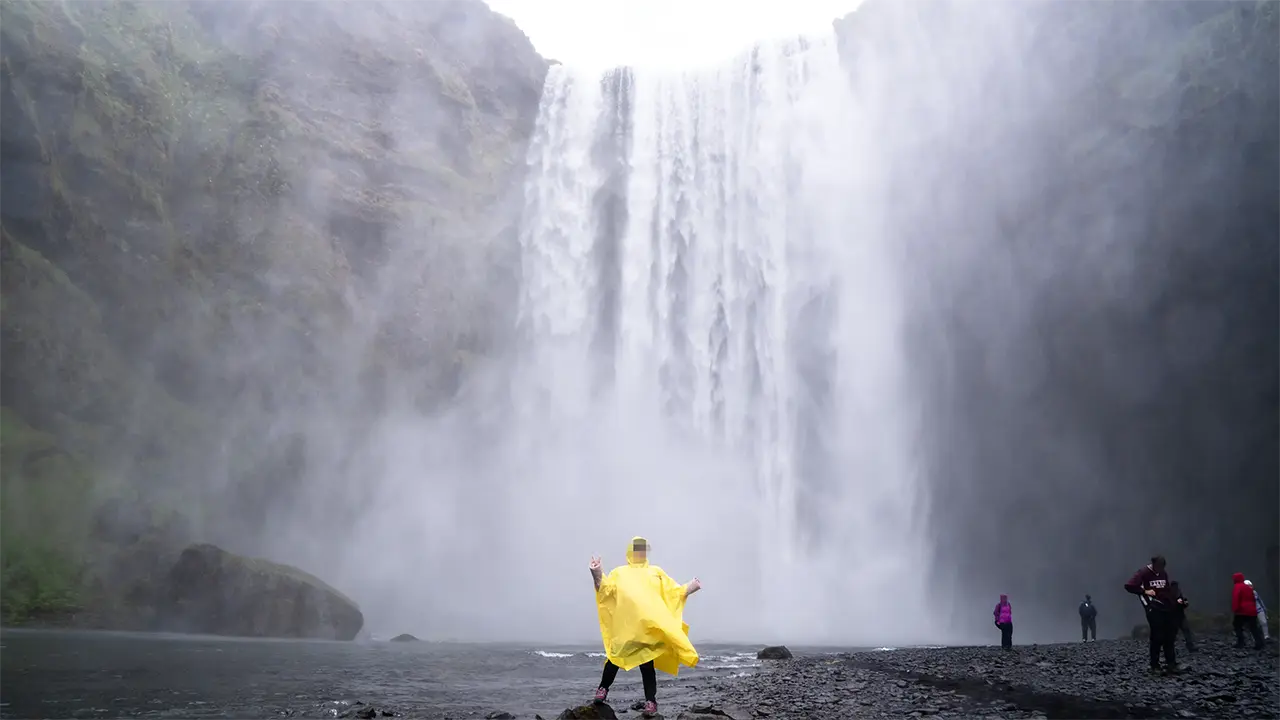
The lady in the yellow raincoat again
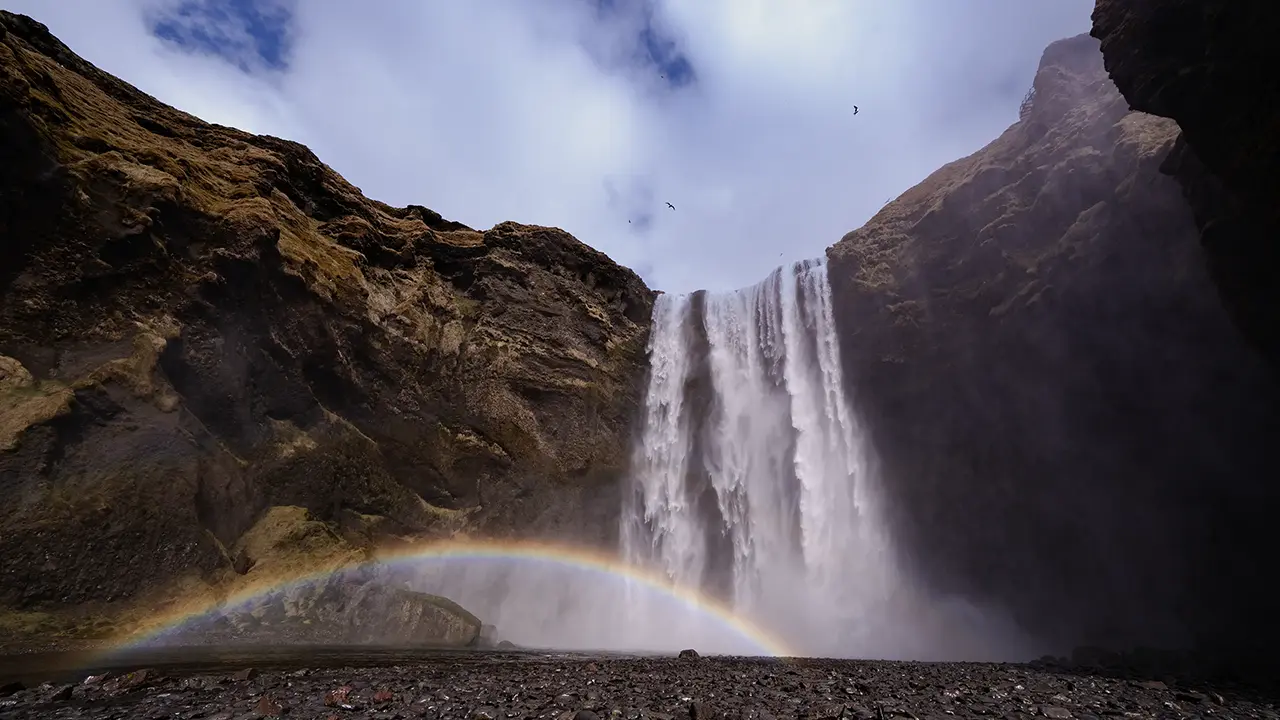
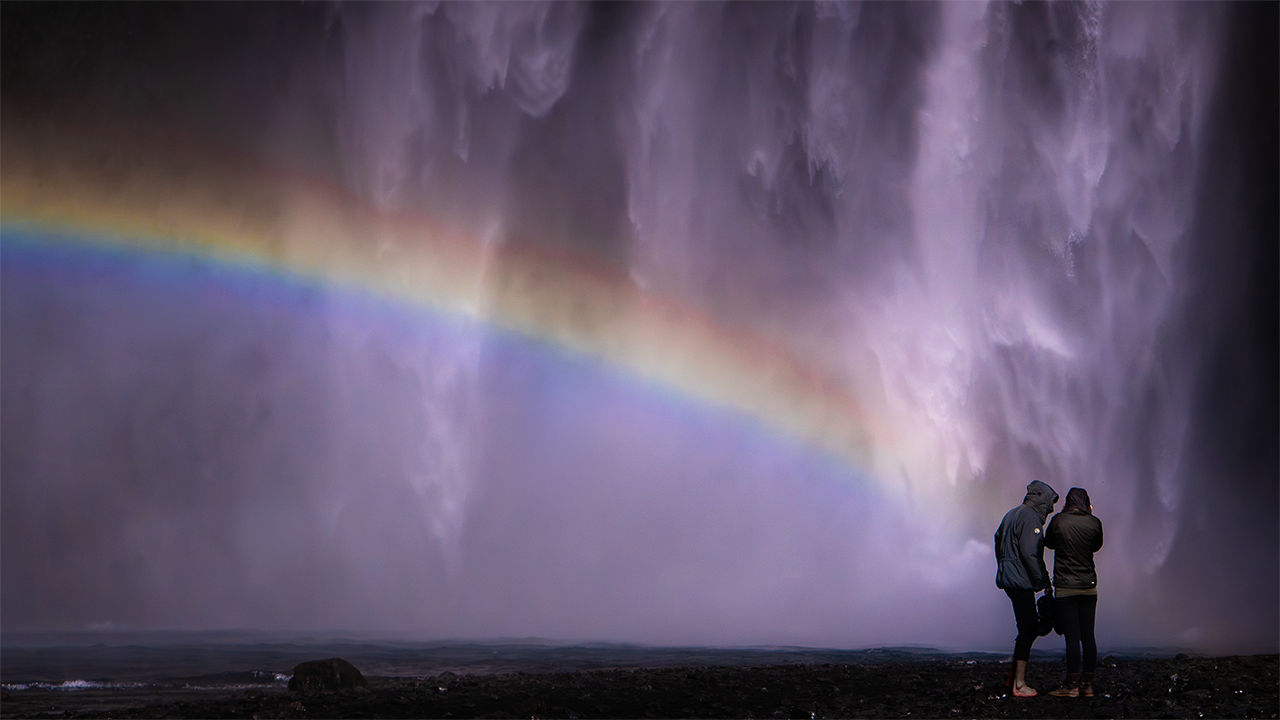
A vivid rainbow in April
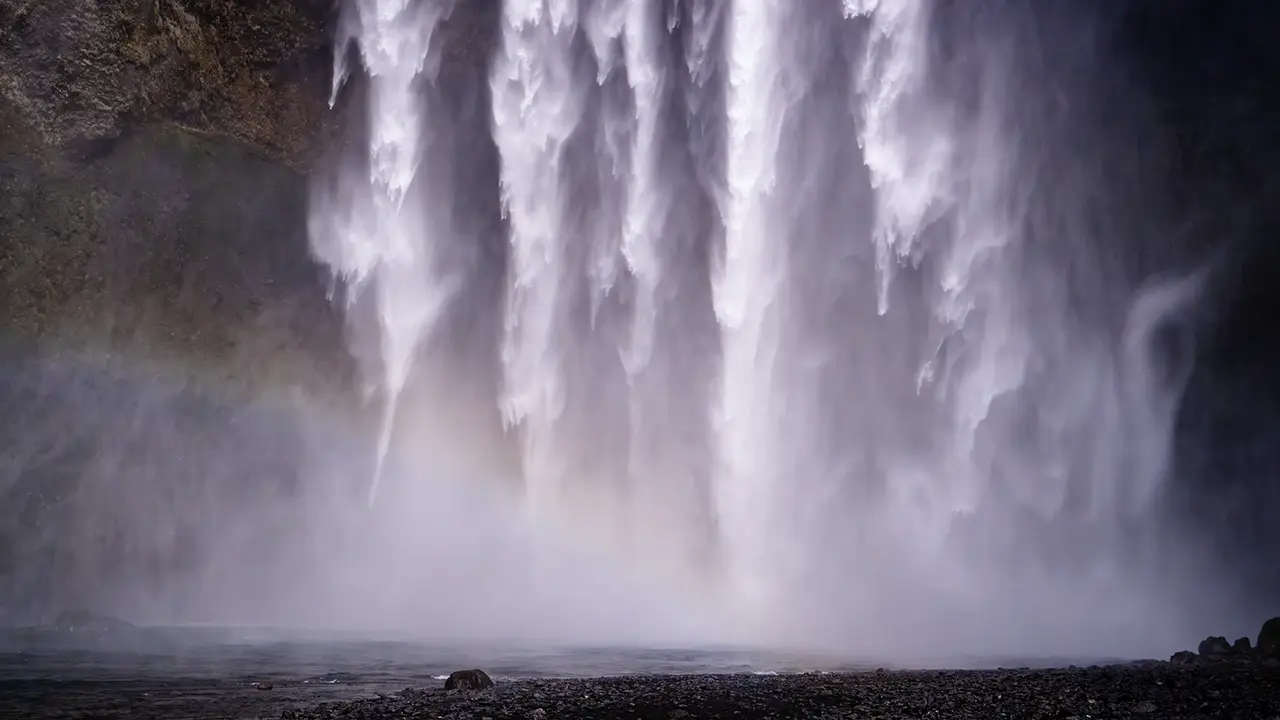
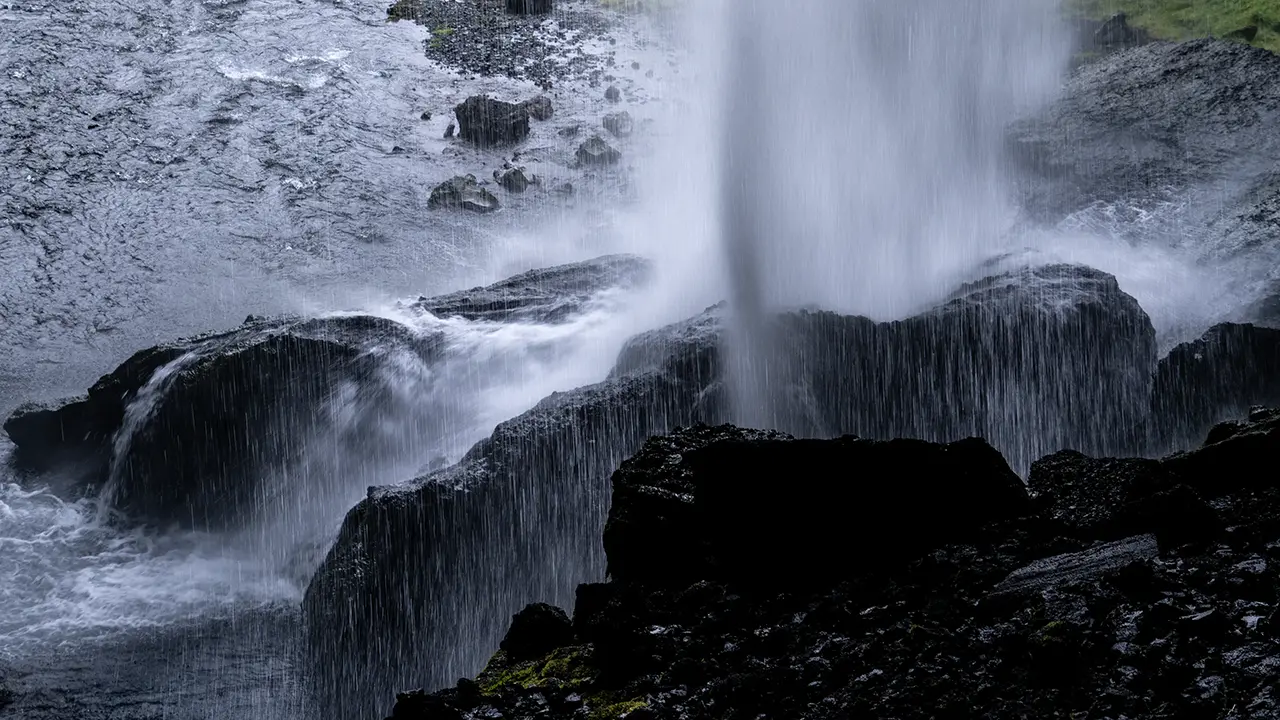
The force of the water, up close
One of my favorites.
Skógafoss drops over the same line of former sea cliffs as Seljalandsfoss. The two are about the same height, roughly 60 meters, but Skógafoss is around 25 meters wide and carries far more water. The roar is tremendous, and spray fills the air. We got wet even in our raincoats. I remember struggling to take photographs while keeping the camera covered.
A path climbs the hillside to the right of the falls, leading to a lookout at the top. It is a strenuous climb, but the view gives a very different impression from the one below. A rocky ledge just short of the top offers another angle, perhaps even more dramatic. If memory serves, that is the rock where Justin Bieber sat in the music video for "I'll Show You."
Rainbows are another part of the spectacle—apparently common enough to earn Skógafoss the nickname "the rainbow waterfall." The cloudy skies in August gave us none, but in April I had seen a double rainbow.
After returning home, I came across a photograph of the northern lights above Skógafoss. It made me want to stay nearby and photograph the falls at night on a future visit. That is something I have yet to do.
Winter is not the only season for seeing the northern lights. They can be visible whenever the sky is dark enough and conditions are right. My own aurora trip to Yellowknife in Canada, for example, was in September.
Kvernufoss
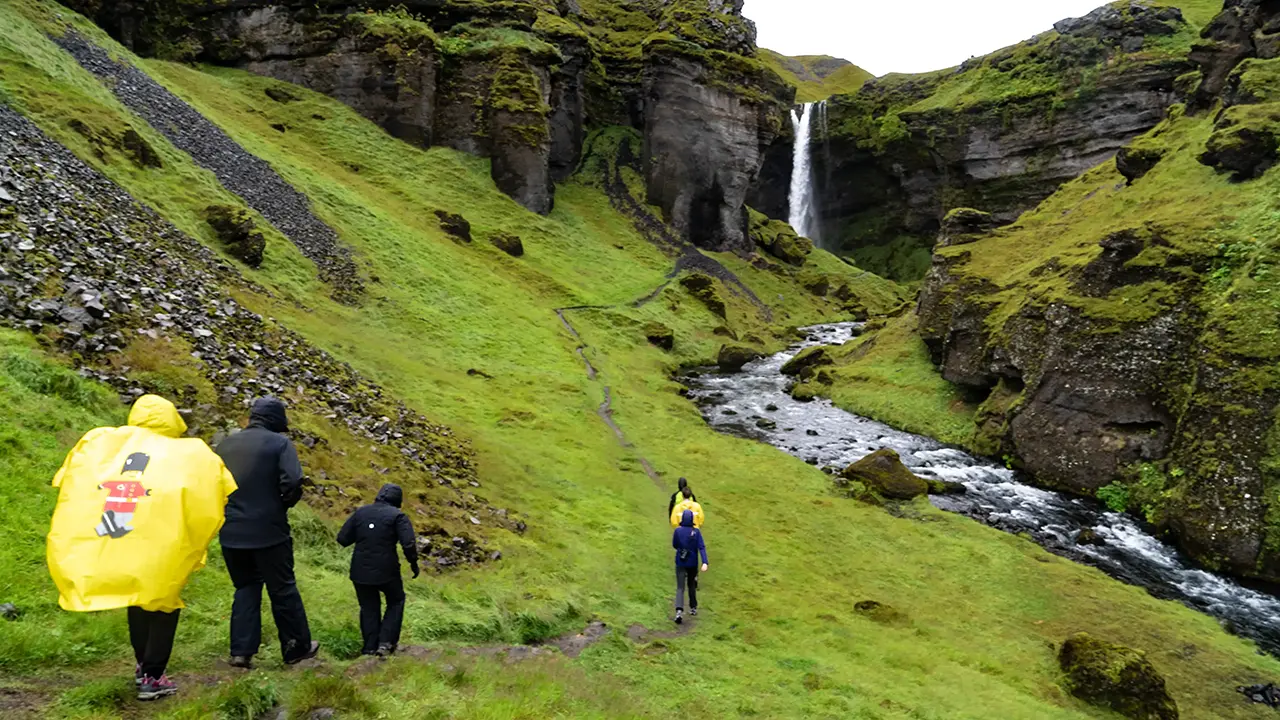
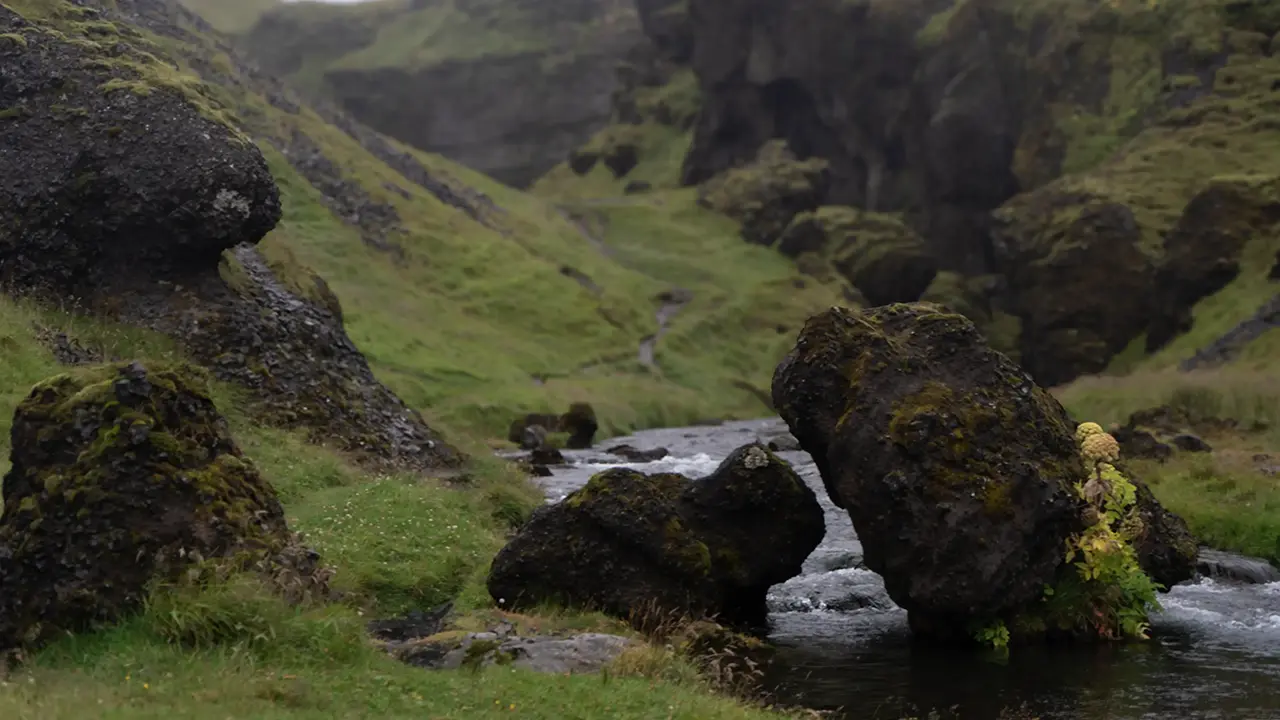
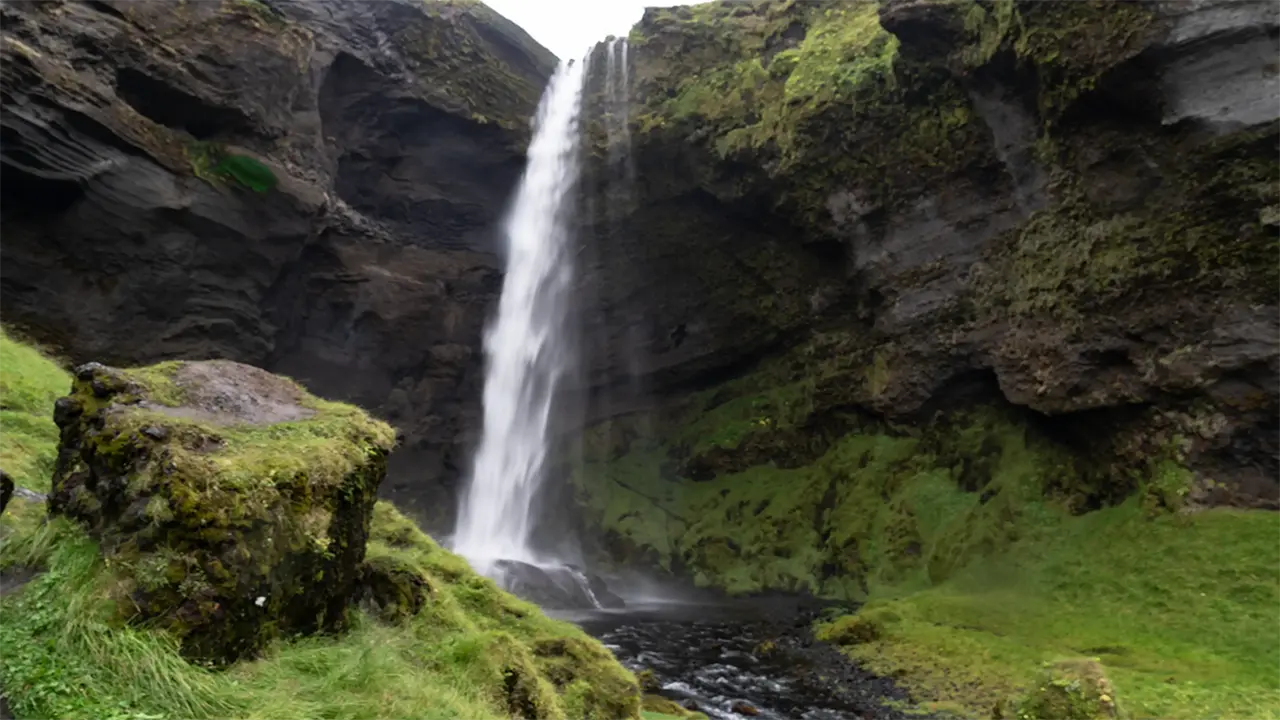
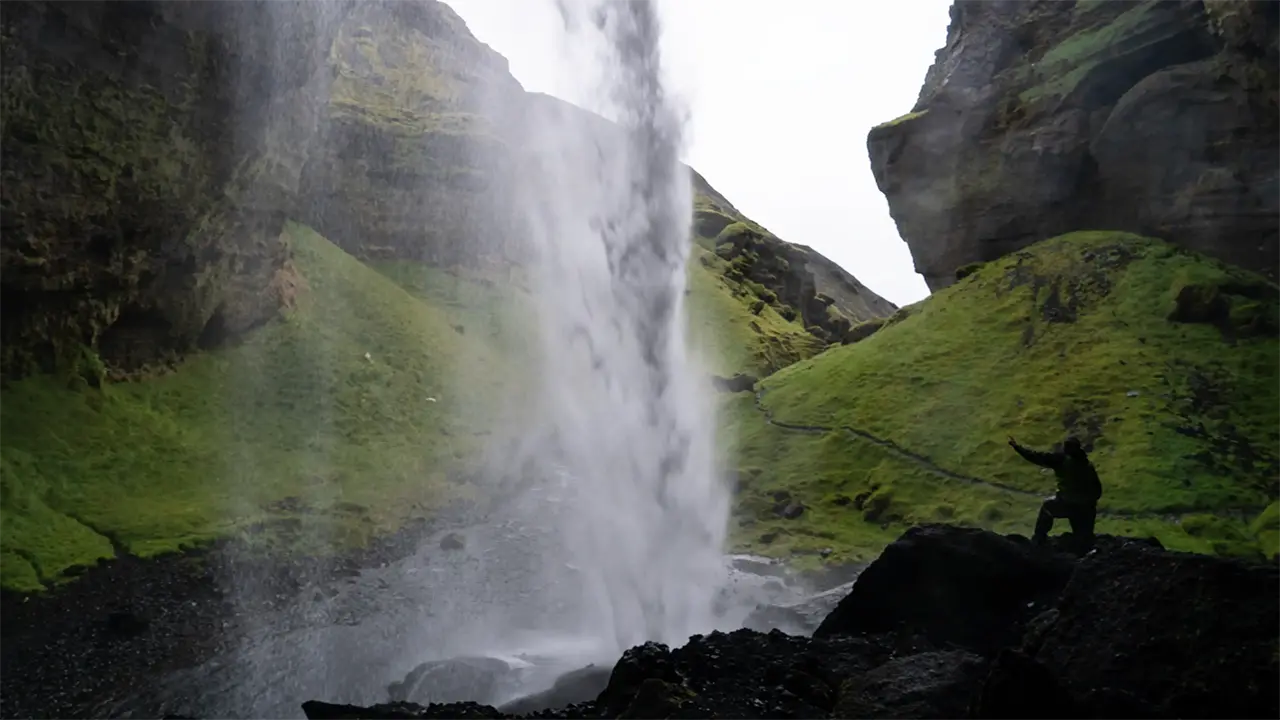
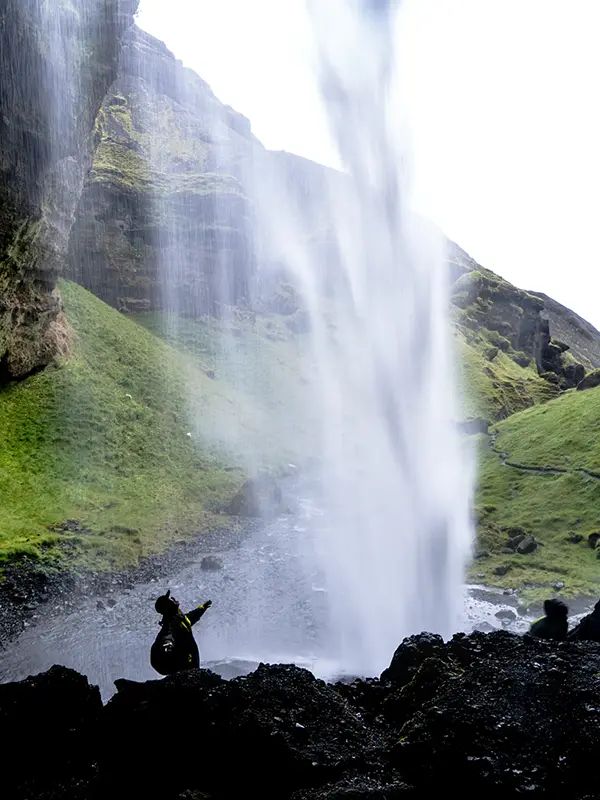
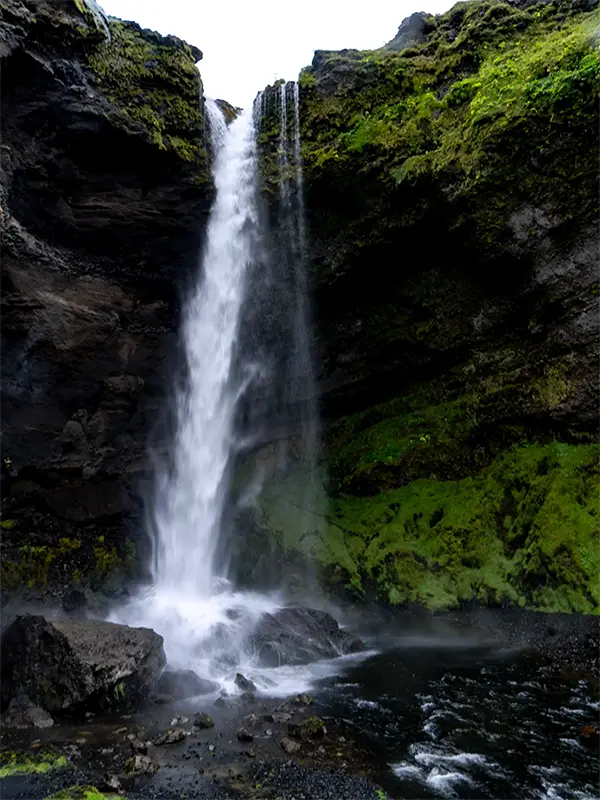
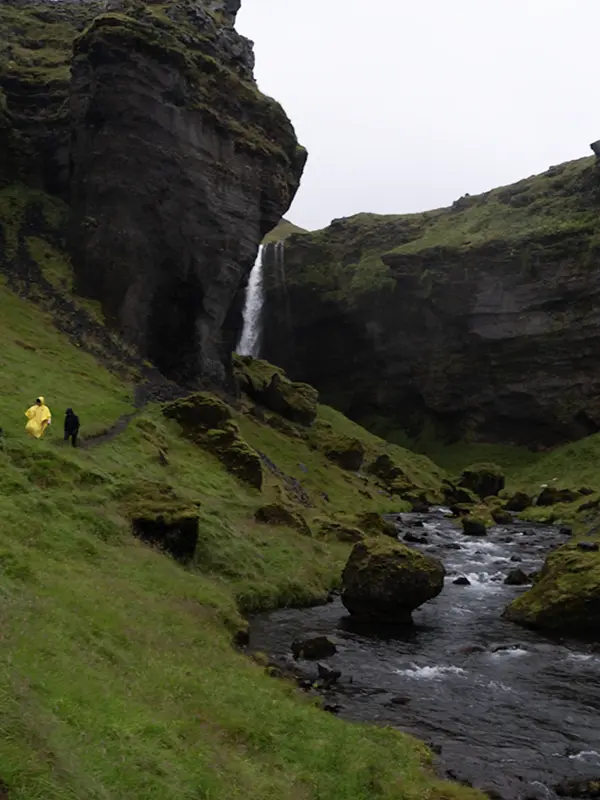
Kvernufoss lies a short distance east of Skógafoss. We followed the riverside trail into a winding valley and heard the waterfall before it came into view.
A deep recess in the cliff let us walk behind the falls. The place felt quiet and tucked away. We met no one else along the trail; a few grazing sheep were our only company. At the time, I thought I would probably never have visited the place without joining a guided tour.
The trail has apparently been improved since then, and there is even a café near the entrance. More people visit now, too. The photographs I have seen online look quite different from the place I remember.
The yellow raincoat again
A narrow, rocky path
Fifteen minutes to the falls
Room to spare behind the falls
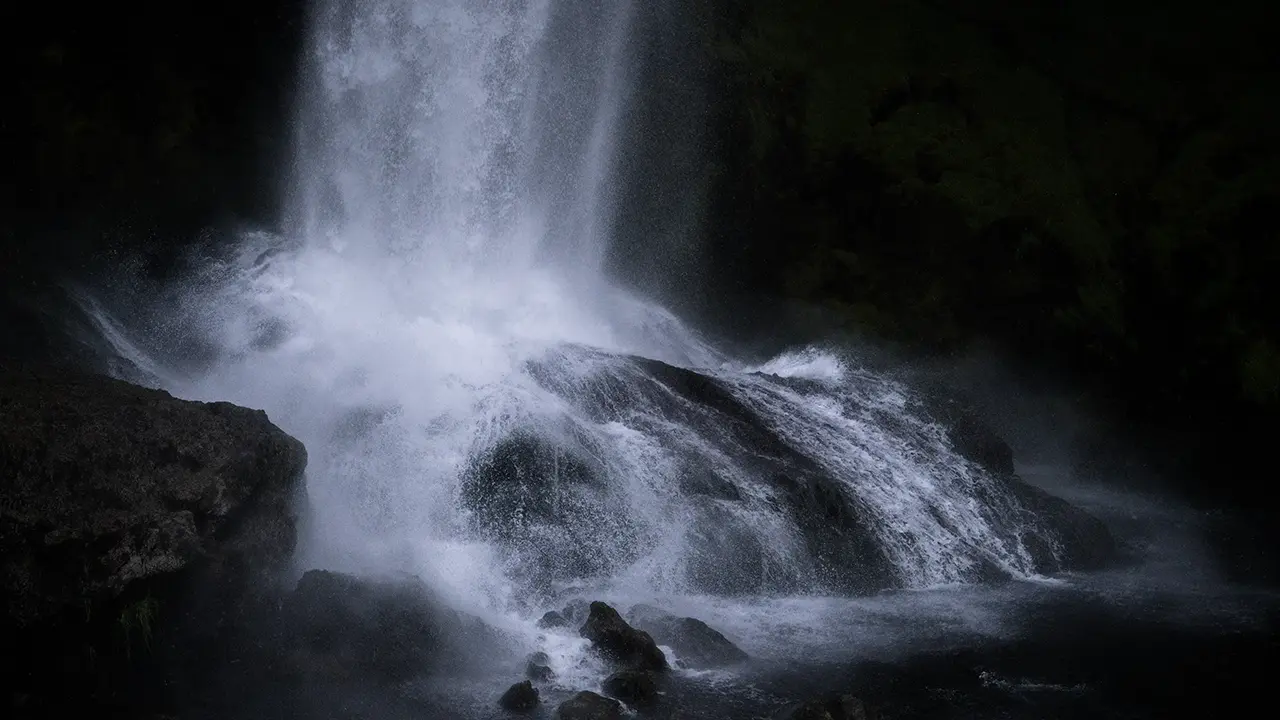
A rock catches the falling water
A carp leaping up the falls? A Japanese garden comes to mind.
She seemed to escape the spray
The falls in full
Heading back
We made our way back down carefully along the slippery path. Despite the rain, it had been a pleasant walk—just over an hour, without meeting another visitor.
I have featured four waterfalls along the former sea cliffs of the South Coast here, but there are countless others. There are also remarkable waterfalls beyond the area around Eyjafjallajökull, which appear on other pages.