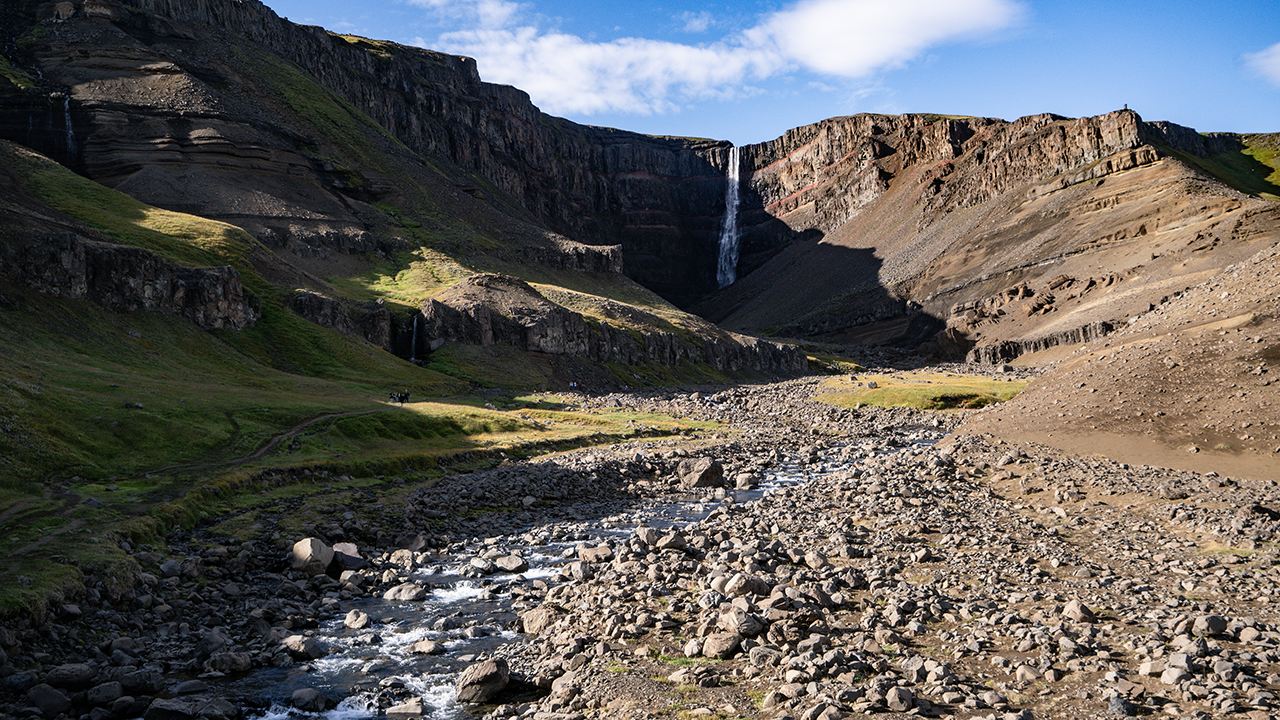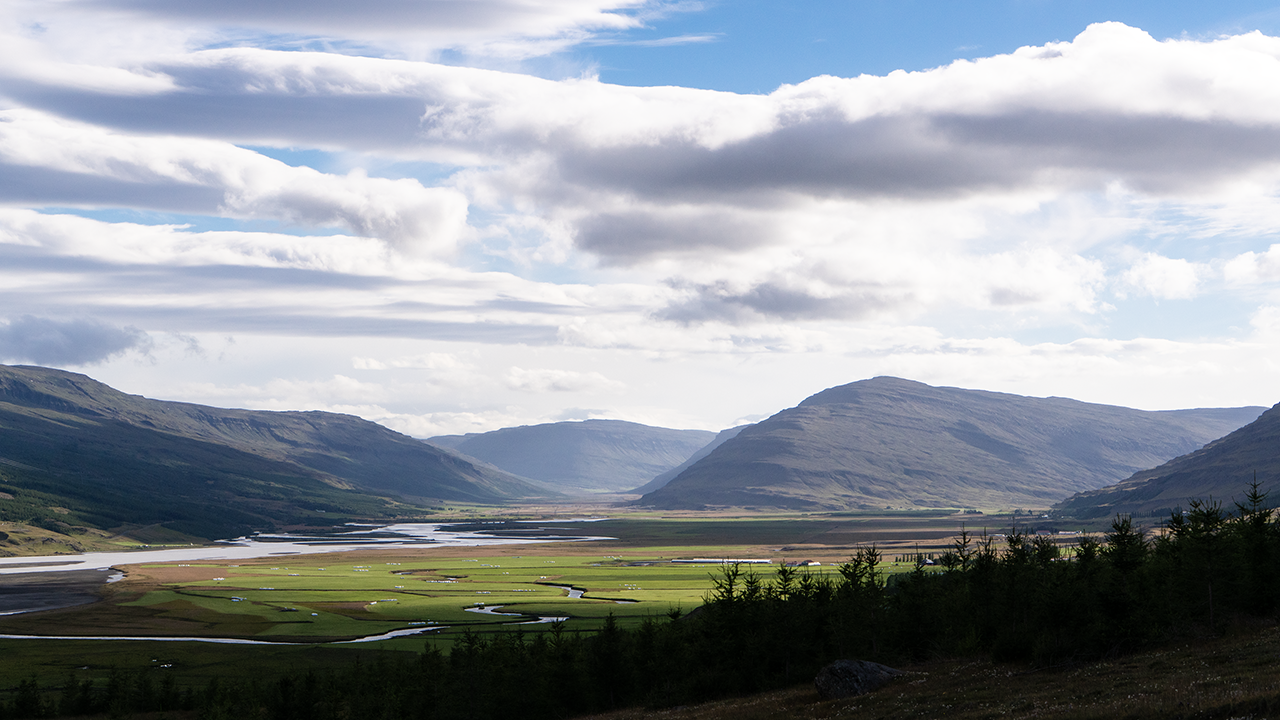
We followed a gently rising trail from the parking lot beside the river towards Hengifoss. The river is called Hengifossá: essentially Hengifoss River. A straightforward name. Hengi apparently shares its roots with the English word “hang.” Looking back at my photographs, I could see the sense in “hanging waterfall.” It really does look as though it has been hung from the cliff.
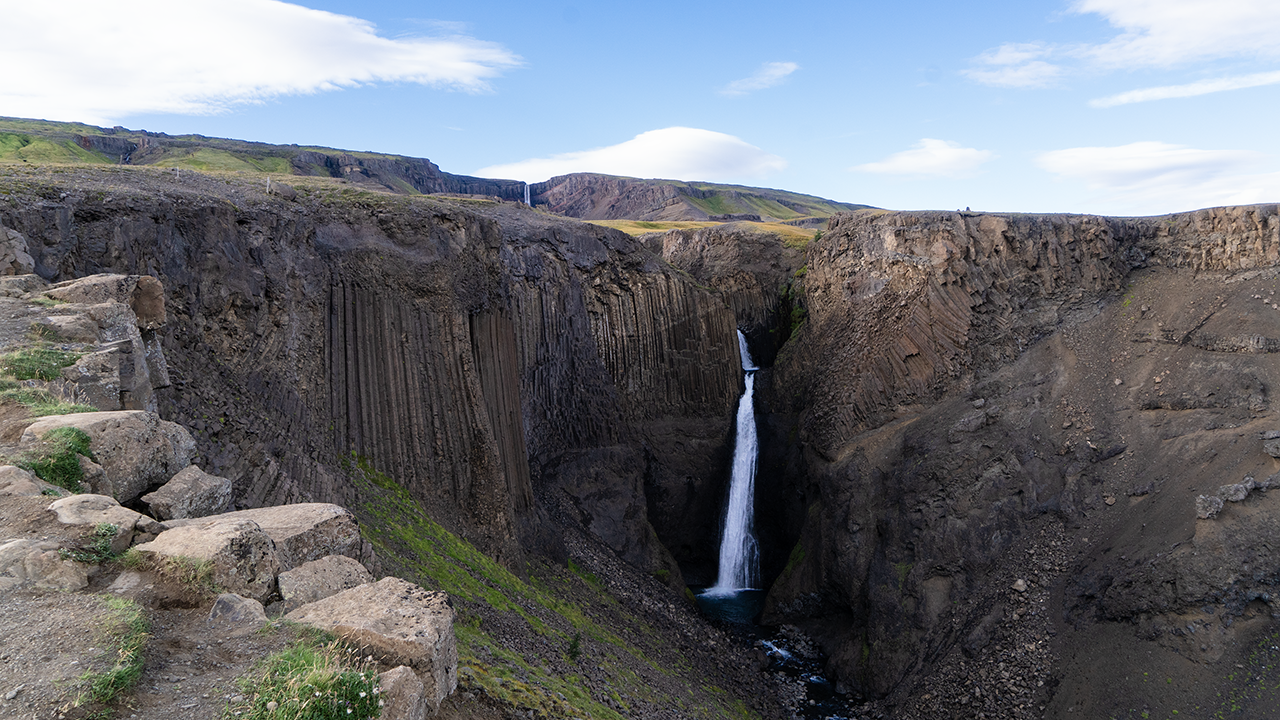
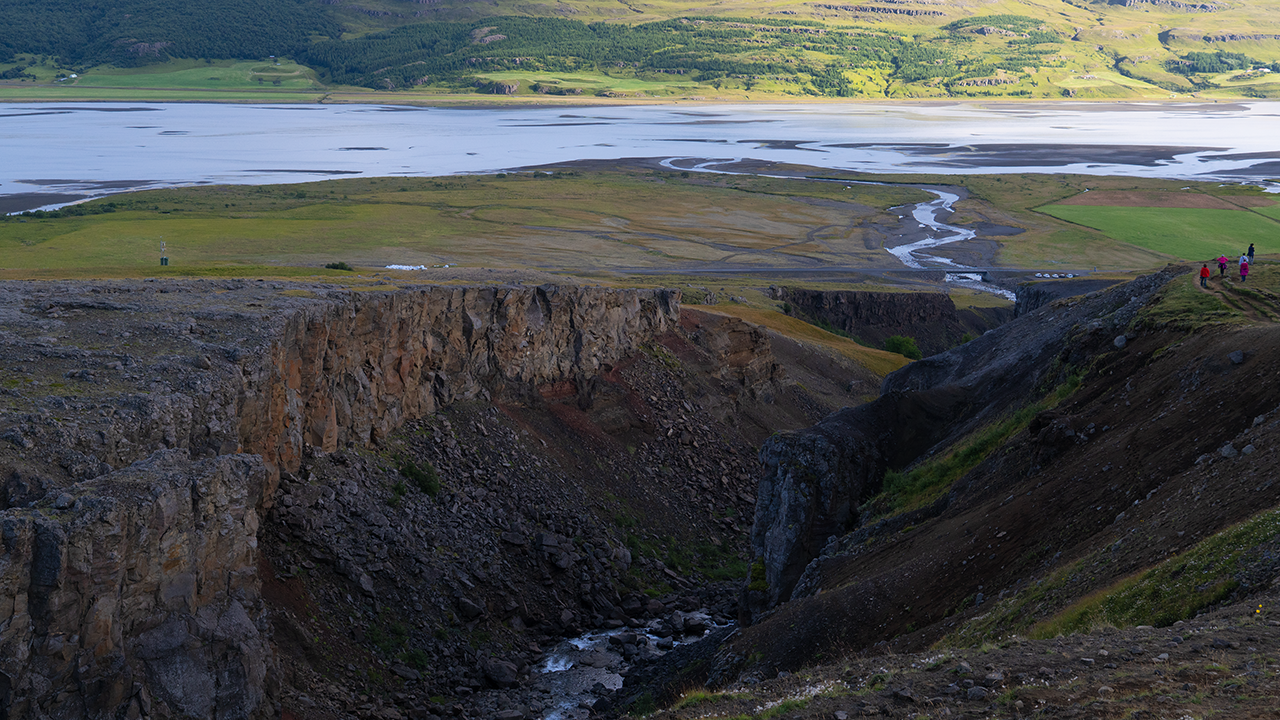
Litlanesfoss soon came into view, with Hengifoss farther behind it. The waterfall drops about 30 meters, but the basalt columns surrounding it were what really caught my eye. The Hengifossá has sliced through the rock, exposing the columns along the walls of a deep gorge. Heaps of fallen rock and earth lie below them.
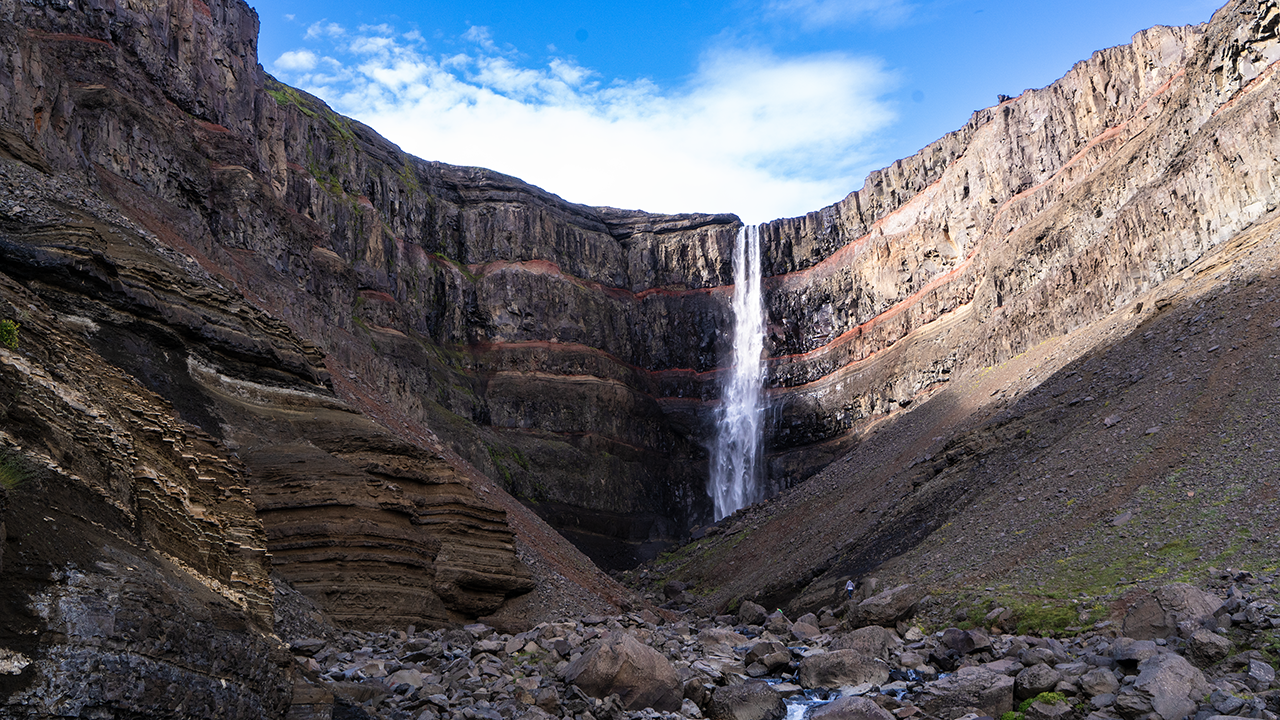
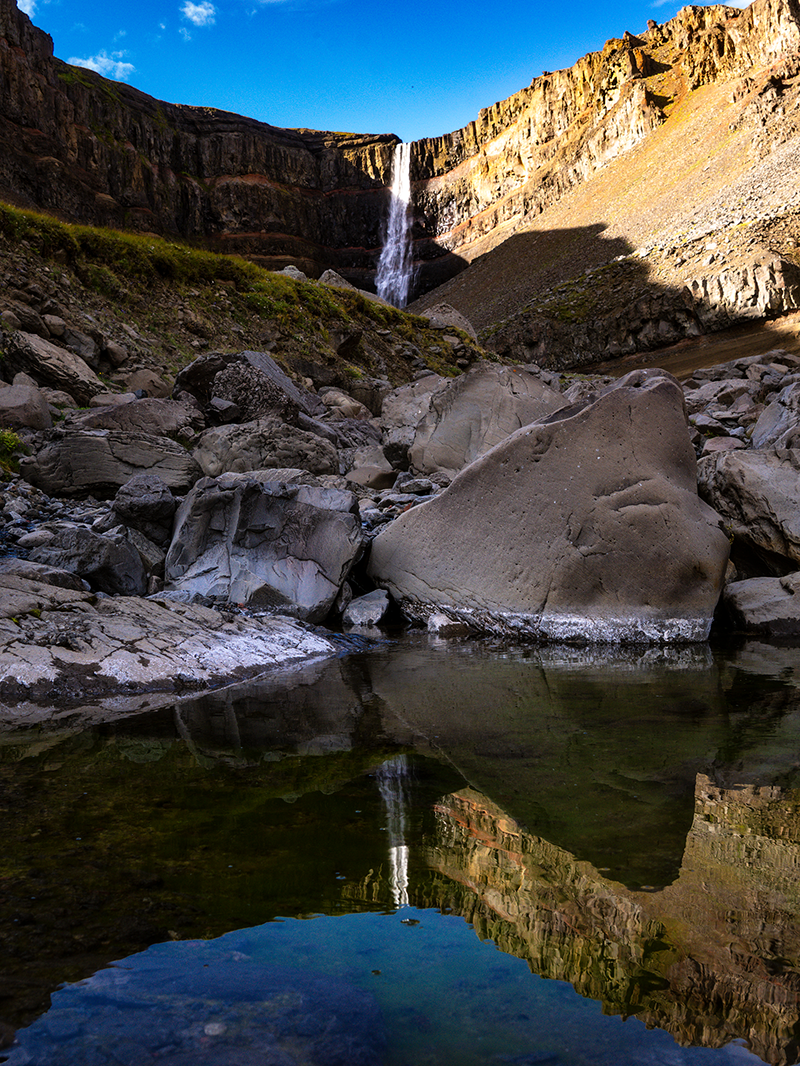
Hengifoss gradually came into full view, falling from a dark cliff at the back of a great horseshoe-shaped hollow. Our guide told us it was 128 meters high and Iceland’s third-highest waterfall. We could not get as far as the plunge pool at Hengifoss that day, but the closer we came, the more striking the red bands became: about four lines running across the dark cliff, apparently layers of clay. A broad slope of fallen rock and earth spread out below. Boulders lay scattered in the river in front, presumably left behind as the finer material was washed away. The whole scene had a rugged grandeur that stayed with me.