I renewed this website. Over the past few months, working with AI over the past few months has been a series of new experiences for me, and I wanted to keep a record of that process. That is why I made this page.
FUKUDOYA Web Renewal
- Renewing My Website with Help from AI -
Powered by Google Translate
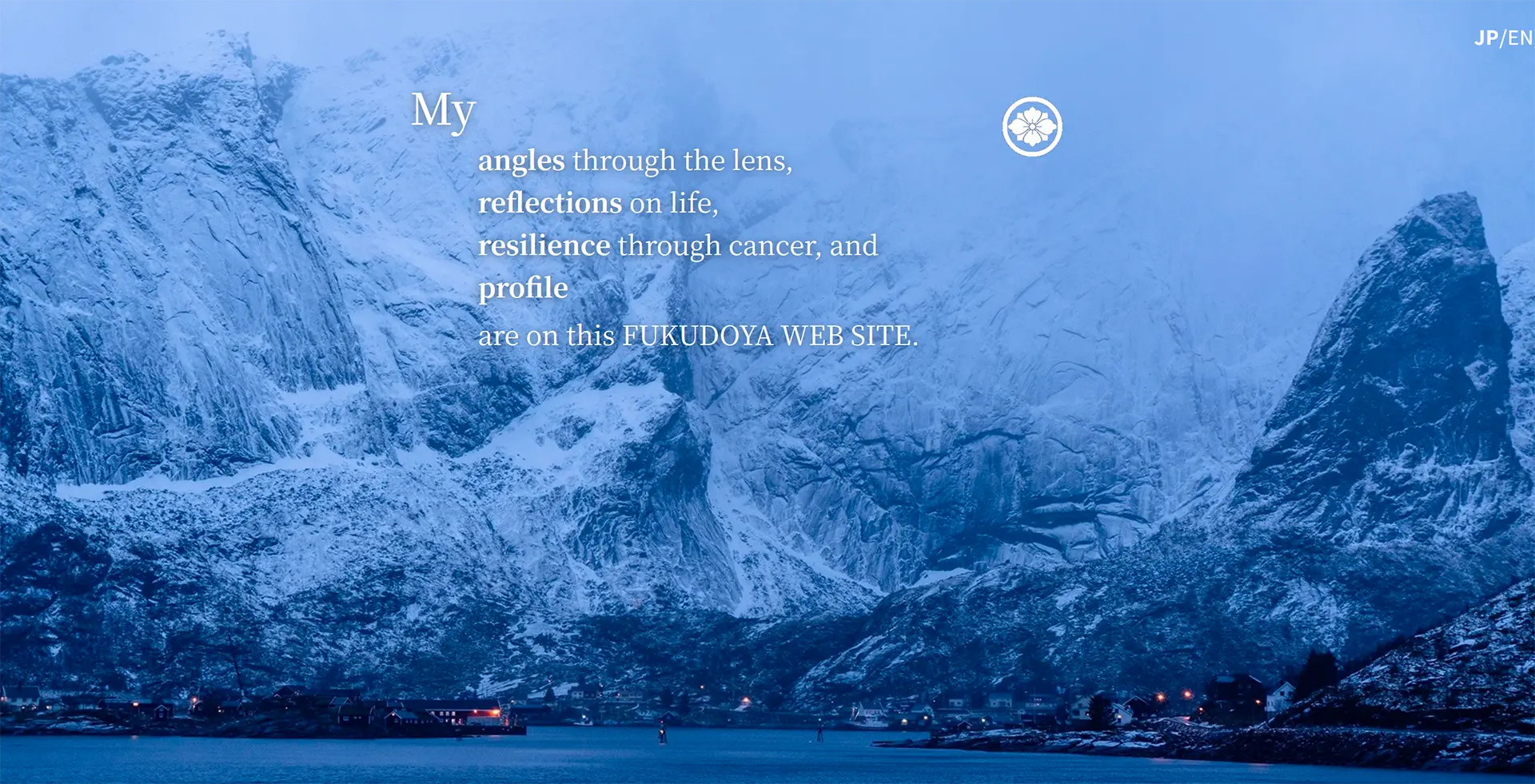
The renewed home page. Several photographs were considered for the background, as it would shape the first impression of the site. This one, taken in Lofoten, stood out early on. It captured the atmosphere I wanted the site to convey.
Getting Help from AI
I had been creating and updating my old website since around 2013, but it was not responsive and did not work well on smartphones. Gradually, I lost the motivation to update it. Then, in April 2026, it had been exactly ten years since I saw BABYMETAL perform at Wembley Arena in London, so I added a commemorative page to the site. I made that page while consulting ChatGPT. The exchange went more smoothly than I expected, so I began thinking about renewing the whole site.
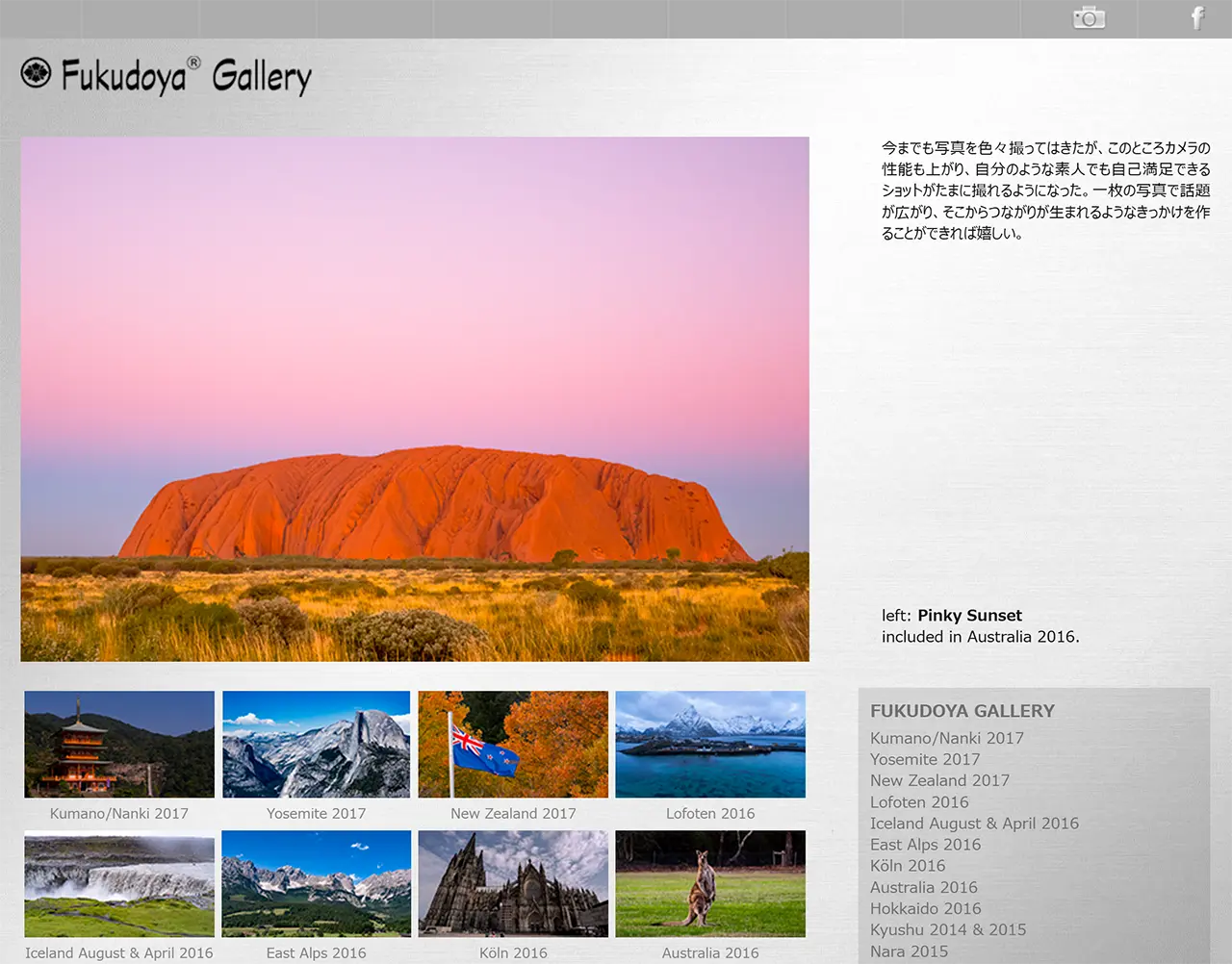
The landing page of the old site, Fukudoya Gallery
I had no real knowledge of how to write prompts or how much detail to include. So I first uploaded screenshots of representative pages from the old site and asked whether it would be possible to make the menu in the right column interactive. I do not remember the exact wording, but the response was basically that a static page of this level could be handled without using Codex.
Then, when I started making one page in particular, things stopped going smoothly. I would ask for a correction because the result was not what I had in mind, and the answer would start moving in a more complicated direction. When I pointed out that it was wrong, it became even more tangled. I asked it to check the history and not revive discarded ideas, and it almost returned to the earliest version, circling around again. I was getting irritated, so I asked Codex. It solved the problem immediately.. Not only did it suggest fixes, it even rewrote the HTML and CSS files in the folder. That made me happy, and from then on Codex helped me a great deal with the code.
I used ChatGPT to review the structure of my Japanese text, proofread it, suggest changes, and help revise English. I also asked Gemini to look for reference materials and check facts. I do not know whether this is the correct way to use these tools, but at least for me, this way of working felt the most natural.
Falling Down the Rabbit Hole
The page that took by far the most time in shaping the overall design of the site was the Galapagos page.
I had already made a Galapagos page on the old site, so I thought it would be simple to drop it into the new format. But once I started, the old text began to feel insufficient, and I found myself researching all over again. I pulled brochures and other materials I had kept as souvenirs out from the back of the closet and rechecked countless details. I had not even recorded the names of many animals and plants, so ChatGPT and Gemini were a real help. If I had tried to identify everything by comparing the photos and brochures only by eye, it would probably have taken ten times as long, and many things would still have remained uncertain.
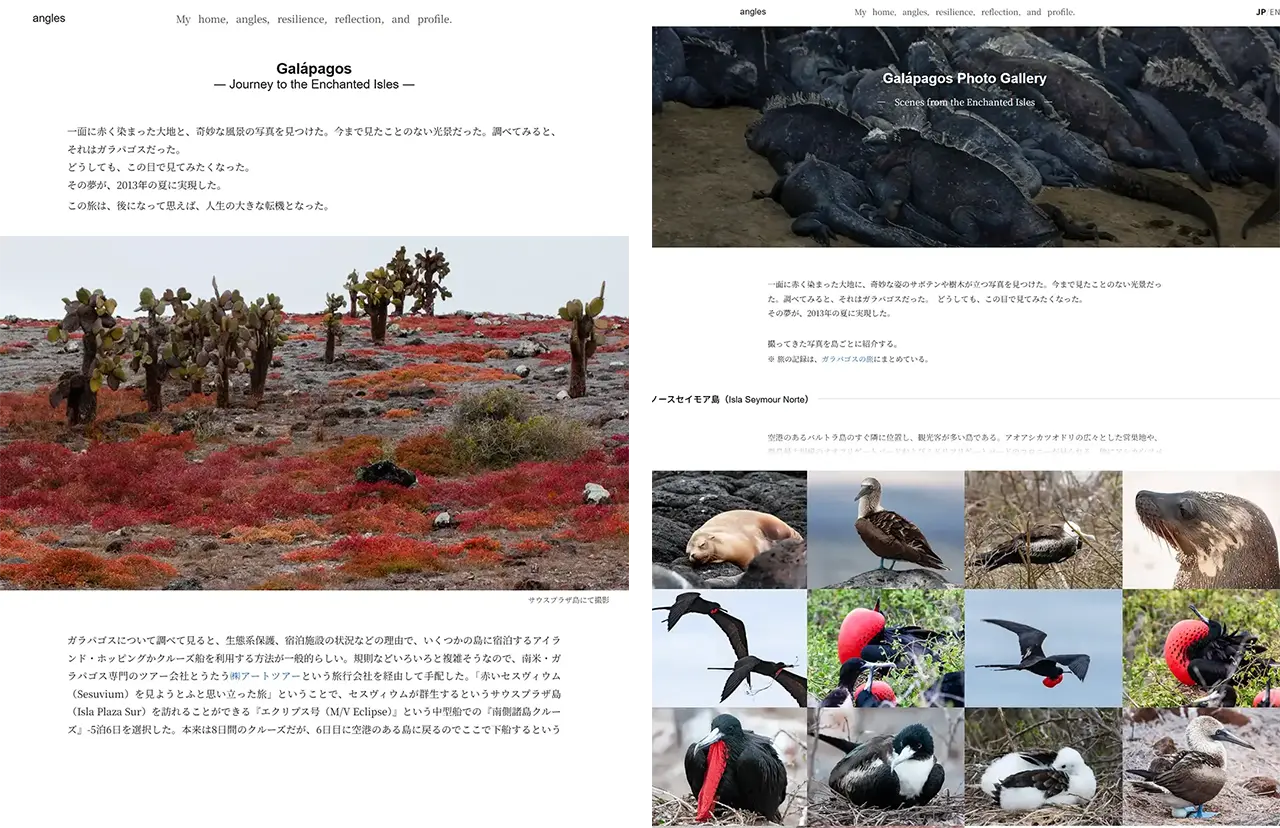
Left: Galapagos Travelogue, right: Galapagos Photo Gallery
I also tried many different ways of placing images, and many of the site's layout patterns were created while working on this page. The Photo Gallery in particular took a lot of time. I do not remember how many days it took to arrive at the current style, but it definitely took a while. On the old site, images were shown one by one across the browser, so it was hard to get an overall sense of how many photographs there were. My first idea this time was to arrange the images like tiles, similar to the landing page of the old site, and enlarge them when clicked. I tried various layouts along the way, but in the end I arrived at something close to that first idea. It has become one of my favorite layouts. That said, this pattern is not very interesting unless there are many images, and it does not include captions. On later pages, I often used the three-column image grid that I adopted for the travelogue.
So Many Things I Did Not Know
One thing that surprised me was seeing information that could be read as saying that only about 30 percent of websites are made with HTML. When I looked into it, it turned out to be a kind of modern exaggerated headline. In reality, almost all websites are made with HTML, CSS, and JavaScript. The "30 percent" referred to simple production projects that do not require complex programming and consist mainly of design and coding with HTML and CSS. That was a relief. I had briefly worried that complex sites made with Java or Python had become the mainstream and that I had once again chosen an outdated way of building things. It turned out to be needless anxiety on my part.
I also did not know that images should preferably be in WebP format. Compared with JPEG, it is more efficient and roughly 30 percent lighter while maintaining good image quality. AI also pointed out again and again that I should avoid using unnecessarily large images. Looking back at the old site, I found many huge files. I had known the pages were slow to display and assumed it was because the image files were large, but I never fixed them. I had seriously underestimated the importance of image optimization.
I was also surprised by how much CSS had changed and evolved. I learned that jQuery is no longer essential for new projects. More than anything, perhaps the biggest difference is that I no longer have to worry about supporting Internet Explorer. To be honest, even in the old days I tended to ignore IE when things became too troublesome.
Writing text and code like this makes me lose track of time. It is satisfying when an image layout finally behaves the way I imagined, and it is simply fun when writing brings a small discovery or helps me rediscover a memory.
Making the Site Multilingual
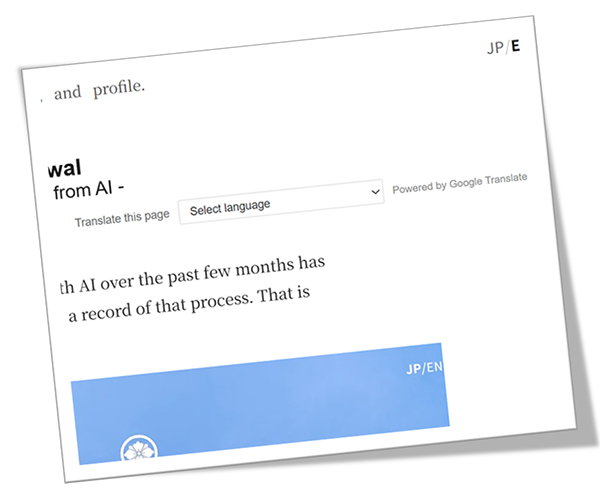
When I decided to renew the site, I also wanted to offer it in English. My first idea was to place Japanese and English side by side on the same page. It looked reasonable enough for the first page, but as soon as I started the second one, the problems became obvious.
Japanese and English require different spacing, justification, font sizes, and other typographic adjustments. Of course, CSS can handle all of that, but maintaining two layouts in a single page quickly became more trouble than it was worth.
When I mentioned this to my wife, she said, "That's being too stingy. Why not just make it multilingual with machine translation?"
Codex suggested embedding the Google Translate widget into the English pages. I thought translations from English might read more naturally than those generated directly from Japanese, so I decided to try it.
To my surprise, the English page suddenly appeared in Arabic. The page looked almost like a PDF, with links and other interactive elements stripped away, but it worked. Once again, I found myself impressed by how far the technology had come.
Now I can proudly tell my wife, "See? I did it." More importantly, I hope the site has become a little more welcoming to people who speak different languages.
Even if you are reading this in Japanese, I hope you will try the translation feature just for the fun of it.
Favorite Pages
Among friends who go to concerts, people often say, "The latest is the greatest." For the pages I made this time, I think it is a little different. It is true that the newest pages contain the most accumulated knowledge, but in the end the content matters more. When the value of the subject or place, the quality of the photographs, and the strength of the story all come together, I feel that the page has come together successfully. I do not intend to rank my own pages, but at the moment these three are my favorites.
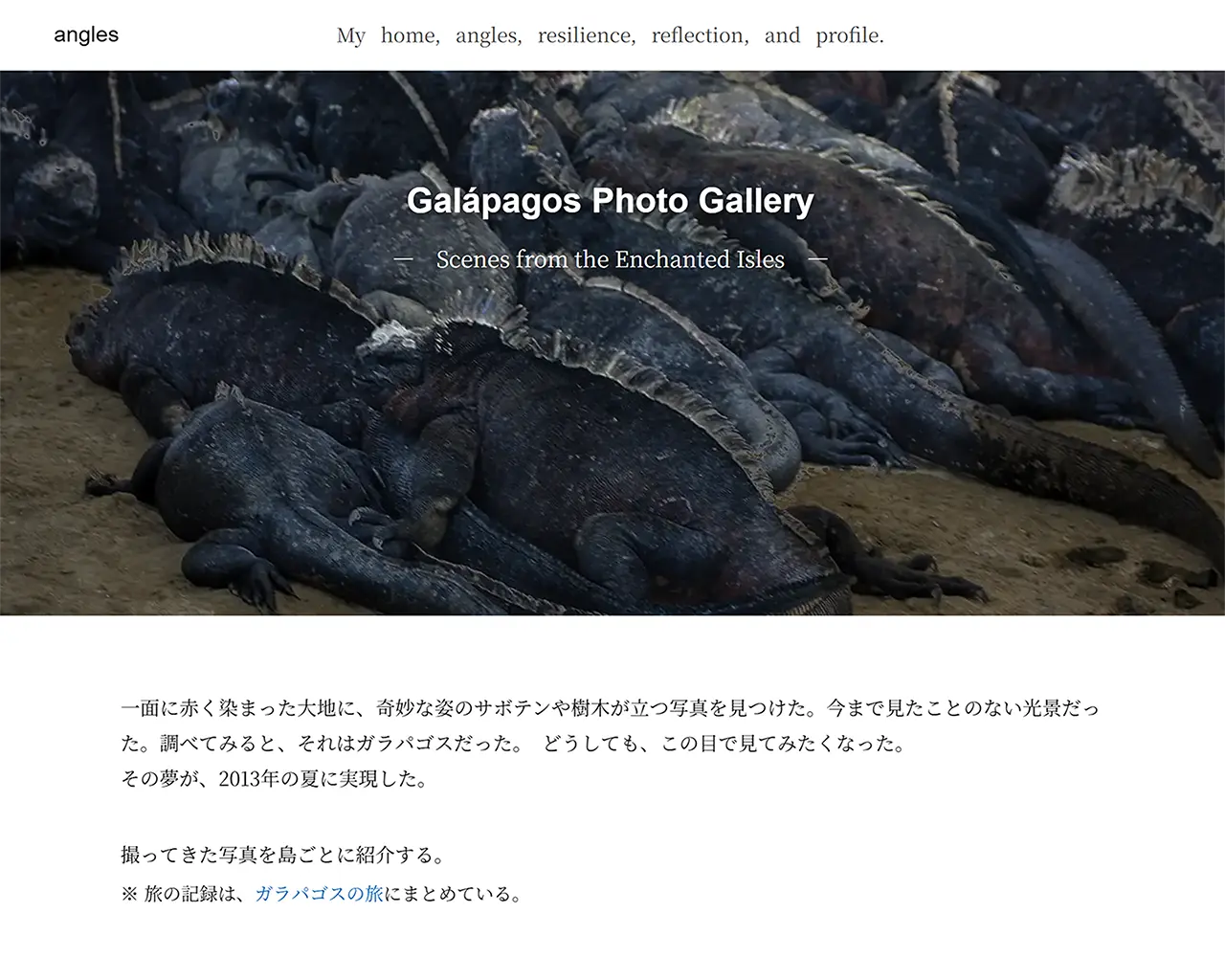
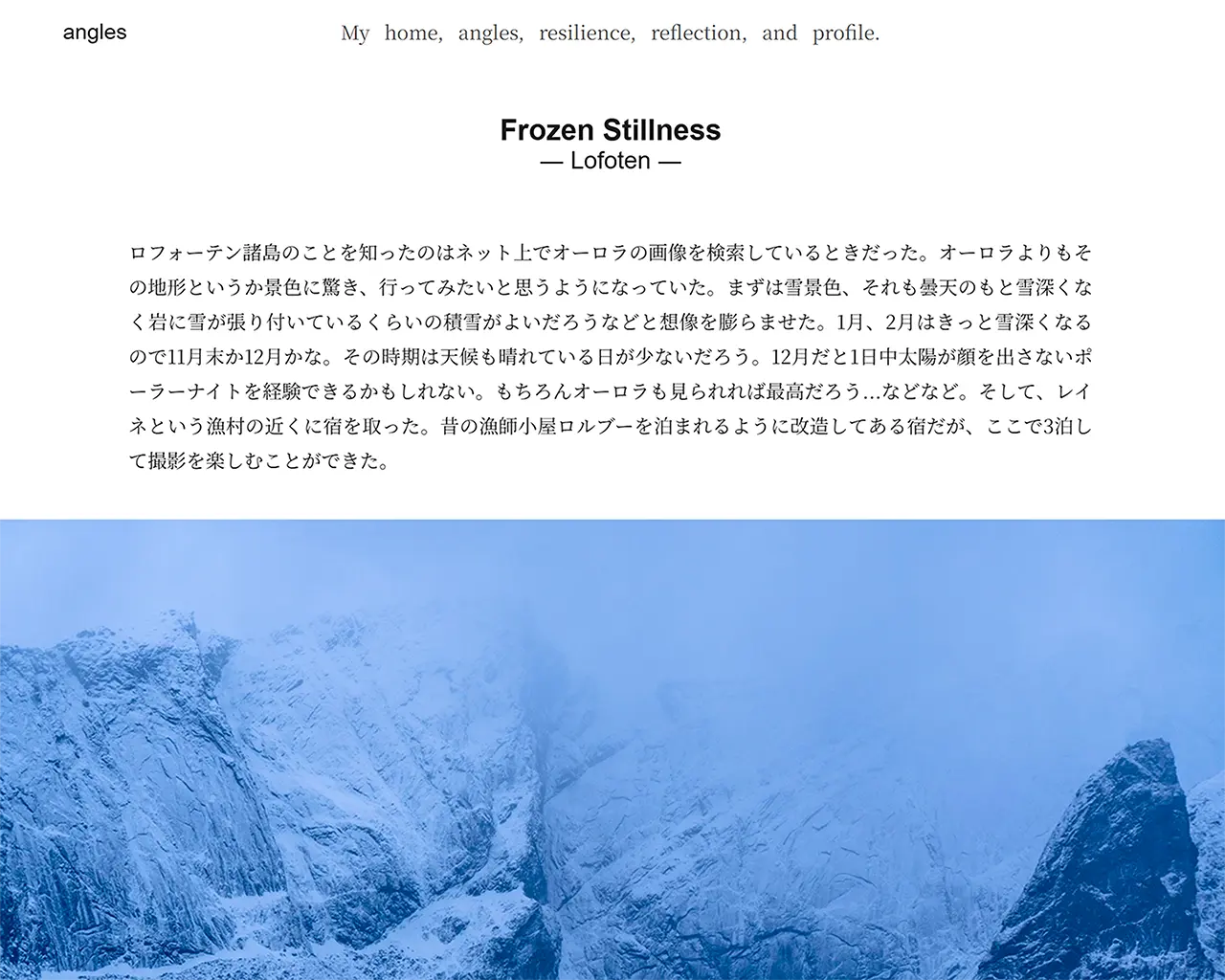
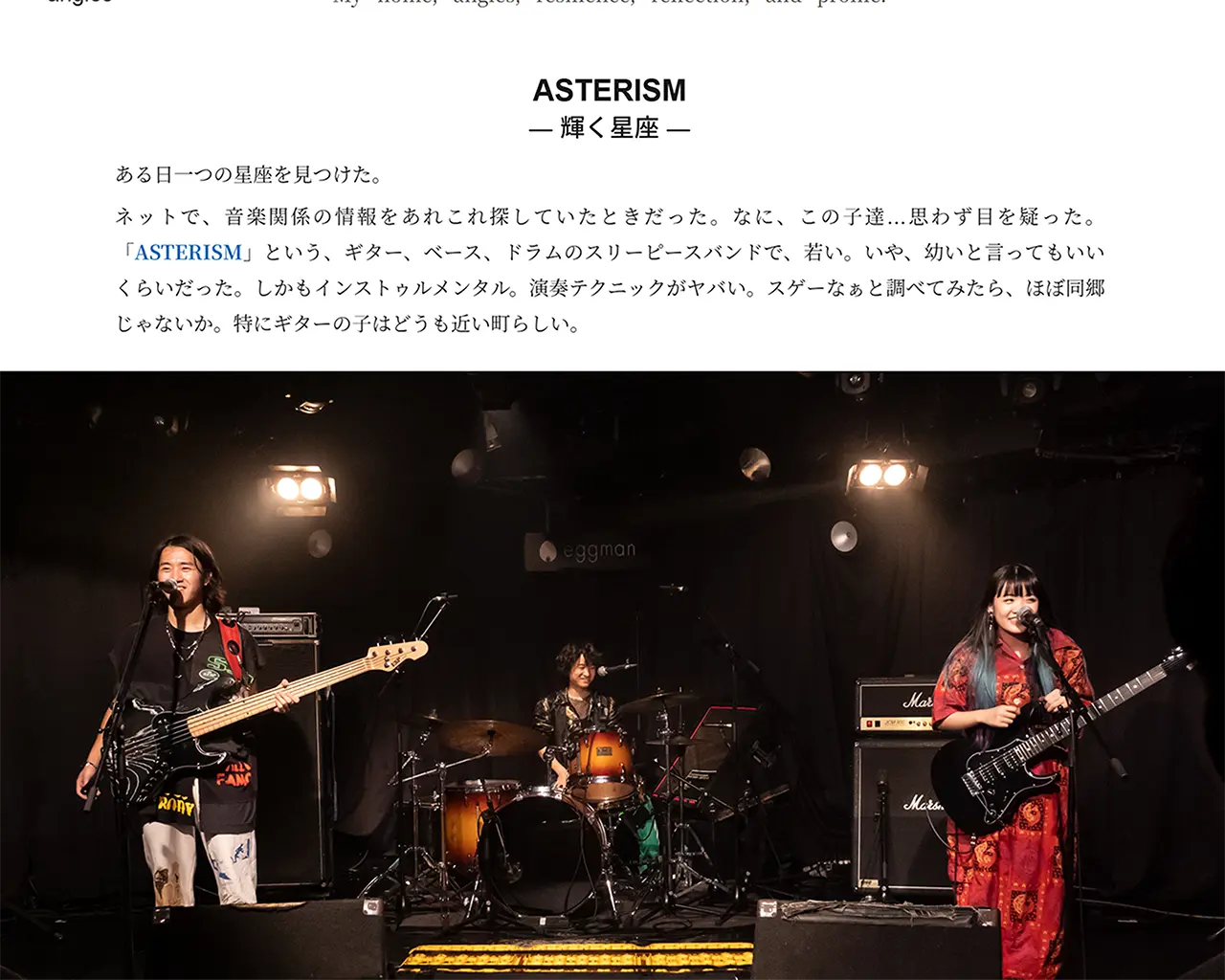
As I wrote earlier, I spent a lot of time on the Galapagos Photo Gallery, so I feel a strong attachment to it. For Lofoten, above all, I like the photographs. And with the ASTERISM page, perhaps it is only my own satisfaction, but I like the images because I feel they brought out the band's appeal well.
This is how I have been building this website. There are still far fewer pages than on the old site, and there are many things I want to write about, or rather, many things I want to leave as a record. AI has helped me, but in the end the work is still about organizing images, revising words, and shaping the memories I personally want to preserve. If those records end up reaching someone else as well, I would be even happier.
Postscript
Oddly enough, the restored Japanese reads a little more naturally than the original. Perhaps the AI had absorbed something of my writing style through months of working together. It still cannot write my stories from scratch, but it does seem remarkably good at polishing them.