The Red Cross Medical Center
Powered by Google Translate
I would also like to write about the hospital: the Japanese Red Cross Medical Center in Hiroo, Tokyo.
Until an internal medicine clinic opened nearby in 2013, the Red Cross Medical Center was the hospital closest to my home. We moved to Hiroo back in 1994. We were both working, both came home late, and taxi rides from the office were frequent. One ride cost about 7,000 yen, and some months exceeded 100,000 yen. I thought that if we put that money into housing instead, commuting would become easier. It was a way to improve our quality of life without increasing the overall cost.
Two years later my employer changed, and so did my health insurance. Since I had once used the Red Cross for a medical checkup, I more or less made it my regular hospital. It is a nationally known general hospital, but I thought of it simply as a hospital; if I accepted the long waiting times, that was enough. I continued to have annual checkups there, and the nurses in the checkup center came to remember me. Looking back, I realize what a privileged environment I had created. This time, living near a good hospital turned out to be an effective form of risk management.
After discharge we moved a little farther away, but still within walking distance. I cannot sleep with my feet pointing toward that hospital.
Link to the Red Cross is here.
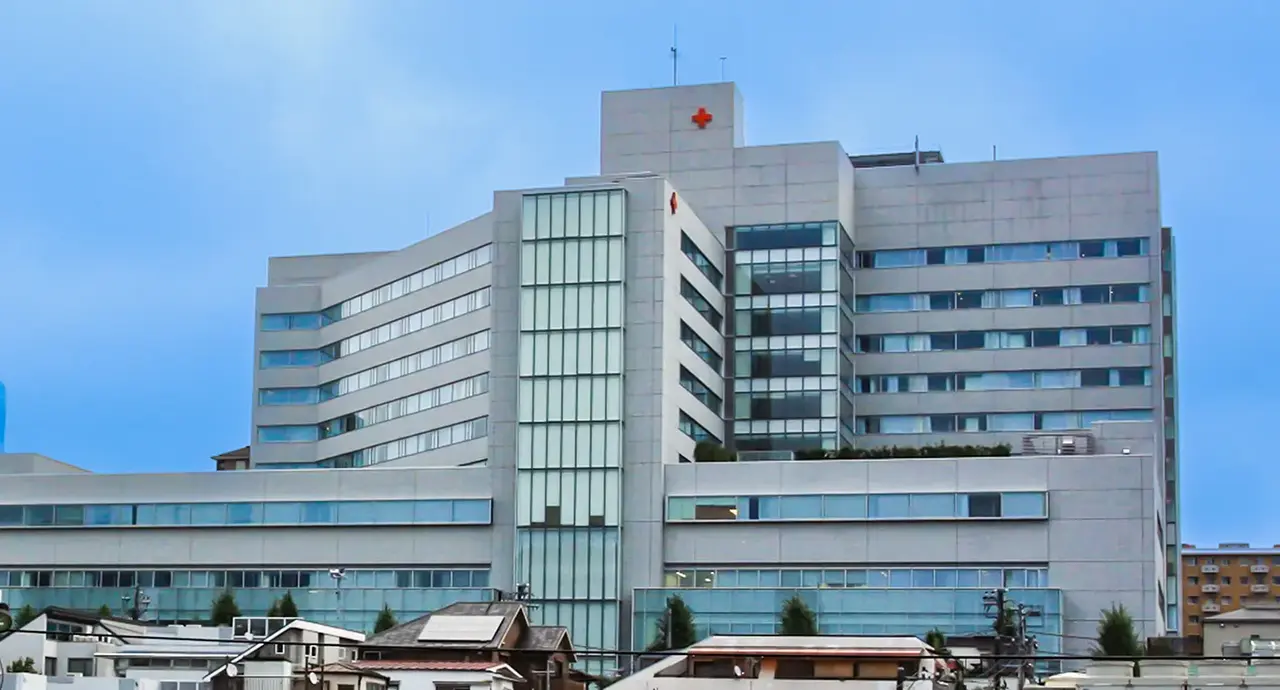
The Japanese Red Cross Medical Center, photographed from my home and found in my PC archive.
An Operating Theater Like a Film Set
I already wrote about entering the fourth-floor operating area in a wheelchair, but I want to add a little more. At the entrance, the patient's care is handed from the ward nurses to the operating-room crew. Guided by them, I thought I was entering a room, but instead a wide corridor stretched ahead like a fifty-meter road, with six operating chambers lined up on each side. The almost infographic sight overwhelmed me: a medical facility of the future. The feeling was powerful. It increased my sense that the latest technology was being applied to save me.
Later I learned that the building had been completed in March 2011 by Kume Sekkei and Obayashi, using the most advanced safety technologies. Of course I knew the hospital in front of me had been rebuilt, and I had visited it after completion, but I understood it differently then. As an aside, I have worked in architecture-related fields and once submitted proposals for the rebuilding of two university hospitals. We lost. Seeing this hospital made me realize how old and insufficient my knowledge had been, and I even felt relieved we had not won.
Doctors
I mentioned Dr. Ito at the beginning. Even after admission, my impression remained consistent: she was extraordinary. I have not really explained in what way, but she felt like the brilliant female doctor who appears in a film. I believe I was saved by her decision. That alone is enough for me to call her extraordinary.
Dr. Inoue and Dr. Sato performed the operation. Dr. Kato supported Dr. Ito. Dr. Orihara and Dr. Hosokawa handled anesthesia. I did not directly receive care from Director Makuuchi, but he too was present in the hospital's force. They were all energetic and devoted. I expect more episodes about them will appear in later pages.
For all of them, I have only gratitude.
Nurses
I wanted to write about the nurses, but it is difficult. More than sixty people were involved in my care. Every one of them treated me with warmth and genuine care. I was especially helped by the nurses on night duty. One young nurse shared my interests and came to talk when she had time. Truly, thank you.
Surgical Volume
According to the hospital website as of August 2014, the Red Cross had performed 203 operations that year related to gallbladder, bile duct, or pancreatic cancer, including 18 pancreaticoduodenectomies. My operation should be included in those 18. The number felt surprisingly small, probably because many patients cannot recover through surgery. Again, I am grateful for my luck.
Chemotherapy
Surgery broke through the immediate situation, but I was still carrying the bomb called cancer. From here on, the battle would be to prevent recurrence. As I wrote before, the Red Cross seemed to choose chemotherapy more often than radiation. Chemotherapy is a fight using drugs. The weapons selected for me were Gemzar by infusion and the oral drug TS-1.
This battle began on Thursday, October 24, two weeks after discharge. Two weeks of anticancer drugs and two weeks of rest make one four-week cycle. Anticancer drugs differ depending on the cancer, and side effects differ from person to person. Before starting, many people told me frightening things: it would be terribly hard, my hair would fall out. To the latter I always answered, "There is none left, so no problem."
The first course was done in hospital to see how I reacted, since some people have severe side effects. In my case the result was almost normal, so chemotherapy continued as outpatient treatment.
Chemo
I work for a foreign company, and my colleagues, and my wife too, call it "chemo." I like the simple sound of the word. I like the word because it sounds lighter and less oppressive.
Another Medication
I also inject insulin. Four times a day: rapid-acting insulin before meals and long-acting insulin before bed. Since part of the pancreas, the producer, has been removed, a shortage is only natural. I measure blood sugar, record dinner menus, report to the diabetes and endocrinology doctor, and have the dose decided. So far control seems to be going well, and since June we have even been trying without the pre-dinner dose.
I have been told not to rejoice or despair over each individual high or low reading, but to beware of hypoglycemia. It can cause loss of consciousness and real danger. Insulin is taken before eating because it stabilizes the blood sugar spike caused by food; it is different from medicine taken by the clock.
Insulin also seems to go badly with alcohol. I cannot explain the details, but alcohol can apparently trigger sudden hypoglycemia. That seems to be a major reason I have been told not to drink. I have no intention of taking that risk, so I obediently abstain. To my own surprise, not drinking has not affected me much. I used to say alcohol was the one thing I could never quit until death. Strange.
The pancreas apparently does not recover, so these injections will be with me to the end.
My Condition Comes in Waves
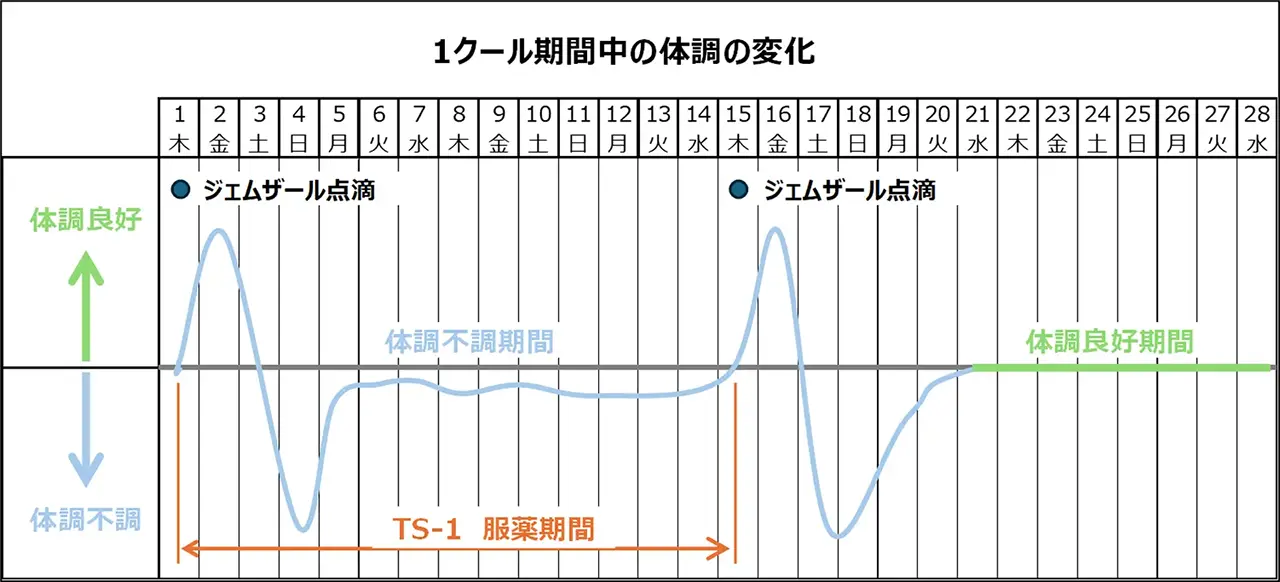
To explain chemotherapy a little more: on Day 1 of each cycle, blood is tested, and if there is no problem, I receive an infusion. From that evening after dinner I begin oral medication, continuing until after breakfast on Day 15. I take it twice a day. On Day 15 I receive another infusion and the cycle ends. On Day 8 I also go to the hospital for tests. The main purpose seems to be checking immune function through white blood cell counts. The normal range is apparently 4,000 to 8,000 per microliter, but mine can fall into the 1,000s. In that case, the oral drug is stopped for about three days to let the number rise.
Within each cycle my condition changes. After infusion, the steroid anti-nausea medication makes me high. When it wears off on Friday, Saturday, or Sunday, my mood drops, everything feels bothersome, I sleep more, and my appetite falls. Even so, the rest of the time I am almost unaffected. There are hard days, but otherwise I can live quite normally.
Living with Chemotherapy
Work
The basic agreement with the company was this: they expected advice and support, I could work from home, and I would attend necessary meetings. Many people might think it is a wonderful company. In fact, since my mid-fifties I had wanted to step back from the front line, and I had been discussing something similar with the president for several years. This illness simply became the trigger.
So I have been able to live free from work stress. Not zero stress, of course. I am still a worrier.
Party
Soon after discharge, a small private drinking party that had been promised just before my September admission was finally held in mid-December. It was meant as a six-month gathering for new employees. The new employees arranged it. I expected a small group, since there were fewer than ten of them, but they invited seniors as well, and in the end more than thirty people gathered for a private party at the restaurant.
That party gave me confidence that I could take part in social gatherings. Since then I have tried to join alumni meetings I had avoided for years, and even on days I do not go to the office, I attend social gatherings when invited.
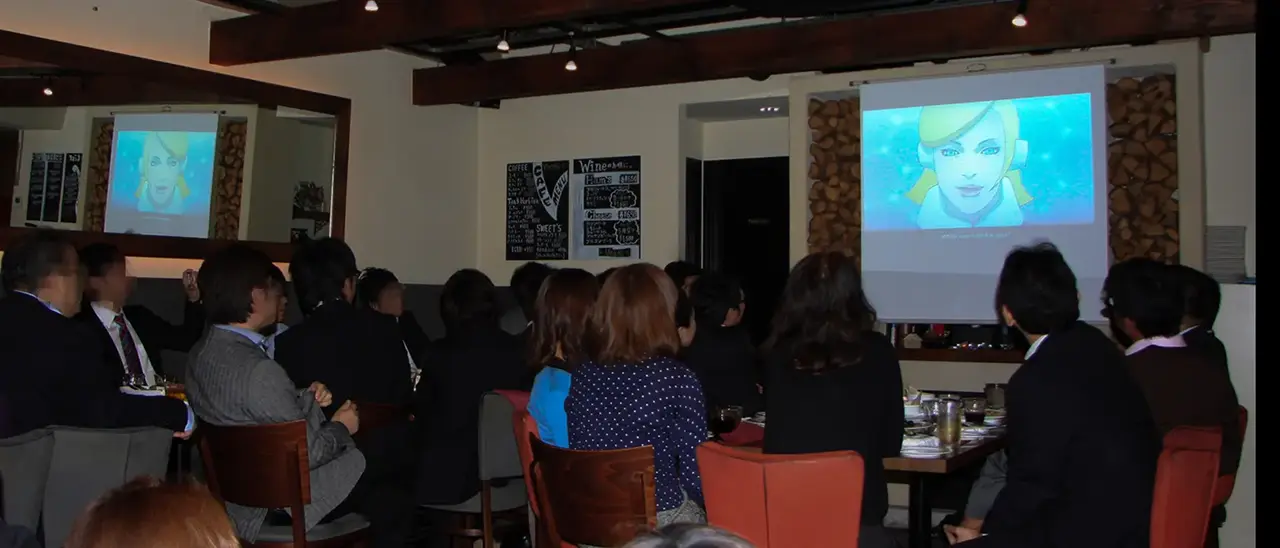
Party at VESTA Azabu, which closed in 2016.
Travel
I had always wanted to travel once I stepped back from the front line. Business trips were not rare, and I had continued one or two private overseas trips a year. But there were many places I still wanted to visit, especially in Japan.
Once a month there is a period when my condition is good, so I decided to go somewhere during that window. A hot spring trip at the end of December 2013 became the trigger, and I have continued from January onward, though I skipped August 2014.
I may write about those trips and events somewhere on the blog when I feel like it. This record currently covers events up to August 2014. I plan to update it from time to time, though I do not know when.