I came up with the idea for a short animated film set twenty years in the future for a company anniversary event.
I knew almost nothing about animation production, but I developed the concept, assembled the production team, cast the voice actors, and eventually saw the project through to completion. Looking back, it feels less like a company event and more like a project where I managed to realize something I had simply wanted to create.
Imagining the World Twenty Years Ahead
The company I worked for was planning an anniversary celebration. That was when I came up with the idea of producing an original animation that would imagine the world twenty years ahead.
The first question was simple: what kind of animation should it be?
After repeated brainstorming, we arrived at a story set during an event held twenty years later inside a prototype closed-loop environmental unit developed by the company. We began by building the basic framework of that animated world.
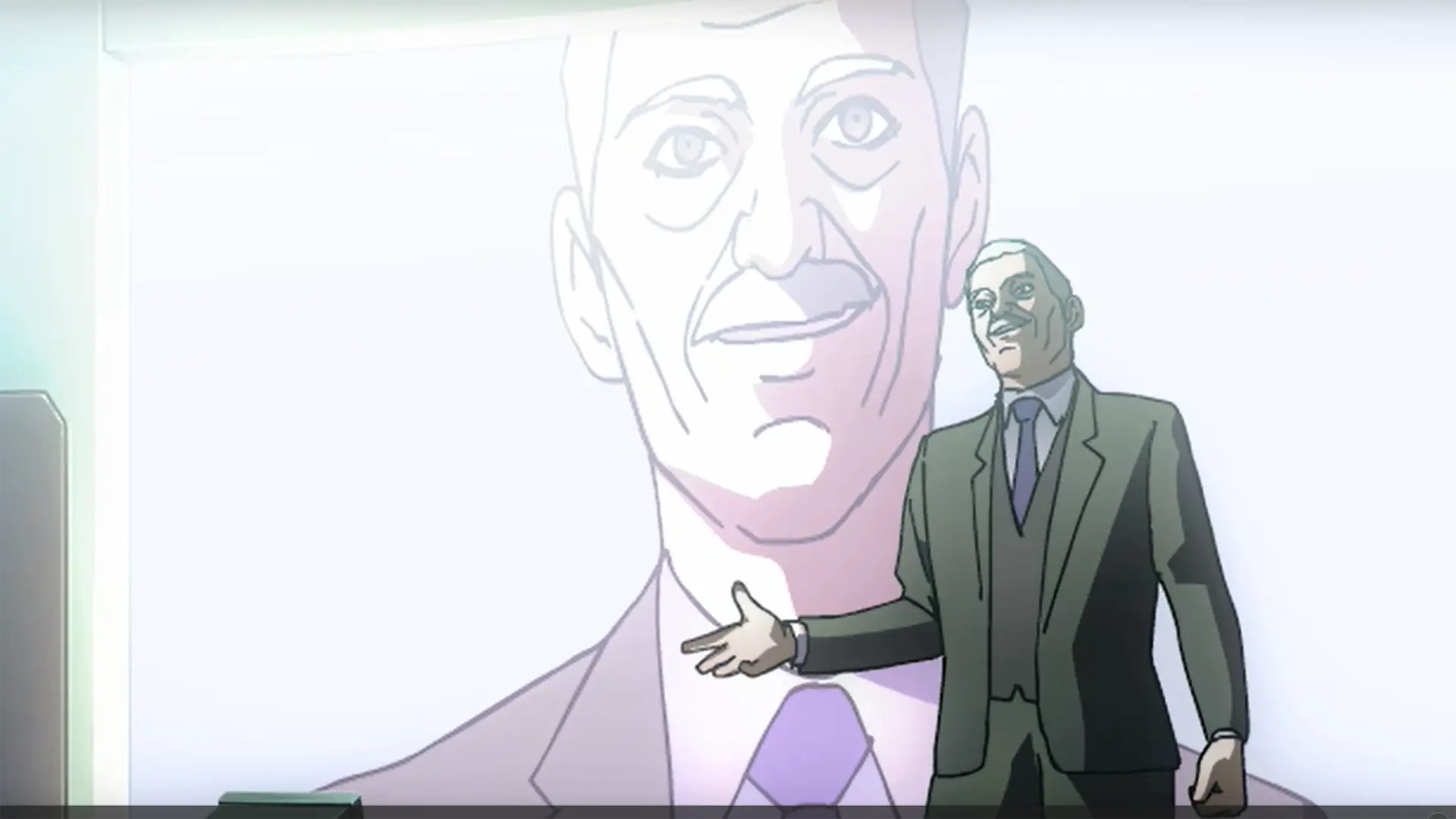
It would serve as a prelude to the president's appearance and speech.
Many guests would be connected to the mobile-phone industry, so that world should be reflected in the story.
We wanted to use the newly released iPhone as a prop.
The story should incorporate projects in which the company was already involved, or might plausibly become involved.
Environmental issues should also be included.
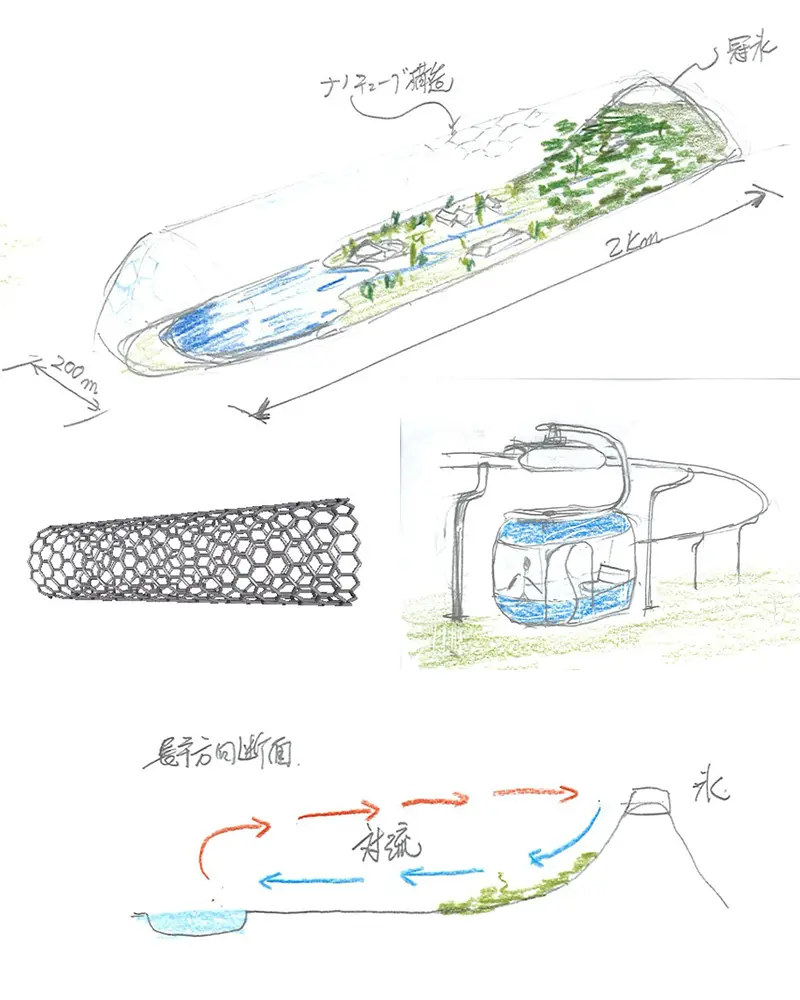
Concept sketch for the facility
We then began to define the world of the closed-loop environmental unit in more concrete terms.
Building the facility would be difficult, but building a society inside it would be harder still. Should it accommodate the minimum population considered necessary for long-term human survival? As a reference, Aogashima, one of Japan's smallest isolated villages, had roughly 200 residents living within 5.98 square kilometers. This line of thought was suggested by Masaru Nishio, Professor Emeritus and political scientist (1938-2022).
How much forest would be required? How large an area of phytoplankton would be needed?
Transportation would rely entirely on a suspended monorail. Each cabin would be about the size of a six-passenger car, with separate passenger and freight versions. Operation would be automatic, and passengers would summon a cabin and enter a destination from a mobile phone. There would be no roads; the grounds around the facility would use gravel or similar paving.
Why not use the former site of Kadena Air Base? Its twenty square kilometers would easily contain the whole of Aogashima.
Little by little, the outline of this future society emerged. One rule remained throughout the process: nobody was allowed to say, "That could never happen."
Producing the Animation
Deciding to make an animation was one thing. The problem was that I knew absolutely nothing about how animation was actually made. The first person I consulted was the owner of a bar I frequented at the time. He was an animation enthusiast and knew people connected with the industry. The first person he introduced me to was a Flash evangelist, who in turn introduced me to several pioneers of Flash animation. Eventually, I asked Ryosuke Aoike to write and direct the piece, design the characters, and create the animation. He later became known as the director and writer of Kamiusagi Rope. Mr. Hirasawa of Creative Artists served as producer.
Once the two of them were on board, we brought together the fragments of the setting and story we had imagined and held a series of meetings. What those meetings taught me was that animation is created not by addition, but by subtraction.
We wanted to explain the chain of events that had led to the closed-loop environmental unit and the social systems behind it. Those ideas were firmly dismissed as "not central to the story" and "too long-winded." In retrospect, the judgment was perfectly reasonable, though at the time it was a little disappointing. By contrast, we spent a great deal of time discussing the facility itself and the world around it. At one point, our concept looked so much like Island 14 from Macross Frontier, then airing on television, that we agreed we should avoid showing it too explicitly. The characters, meanwhile, should feel futuristic rather than merely cute, and we did not want to depict a world populated only by Japanese people. Gradually, the direction became clear.
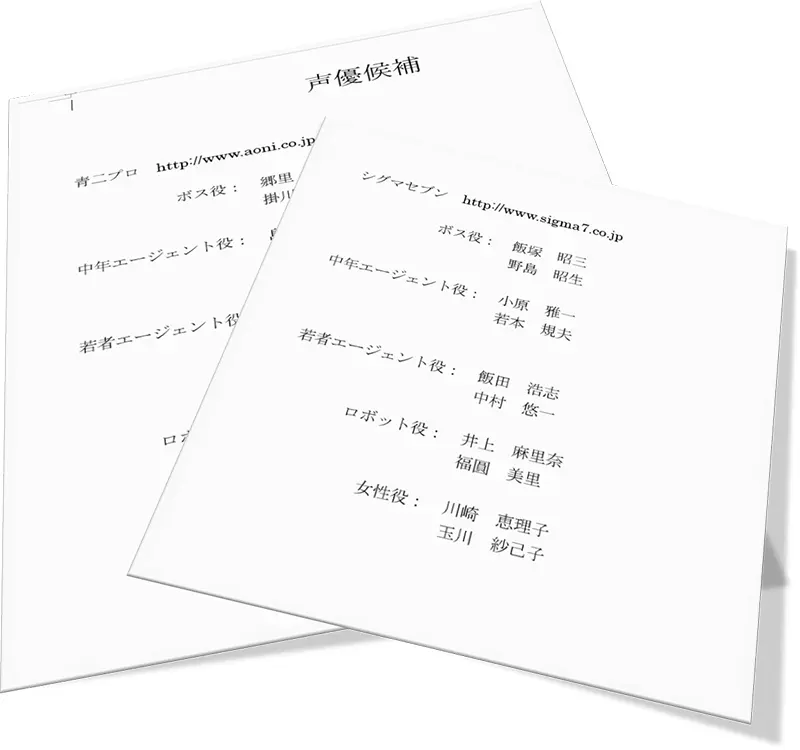
A rough script eventually took shape, and Mr. Hirasawa began assembling specialists in each field. We were amateurs and hardly qualified to judge the process, yet the production team came together with remarkable assurance. The final structure looked like this.
Looking back at the names now, I am struck by how extraordinary the list was. In the end, Yukana joined the project. At the time she was playing C.C., a major character in the popular television series Code Geass: Lelouch of the Rebellion, and she had already appeared in many other productions, including as Cure White in Pretty Cure. We had jokingly talked about casting "Tachikoma," "Misato," or "Lacus." Then we somehow ended up working with the voice of C.C. from Code Geass. We were probably the most surprised people of all. The male characters were voiced by Kosuke Meguro and Go Inoue. Meguro, a veteran who had played the memorable Kamjin in Macross, brought that experience fully to this production. Inoue later became known for roles including Sky High in TIGER & BUNNY. All three performers were represented by Sigma Seven.
The Story
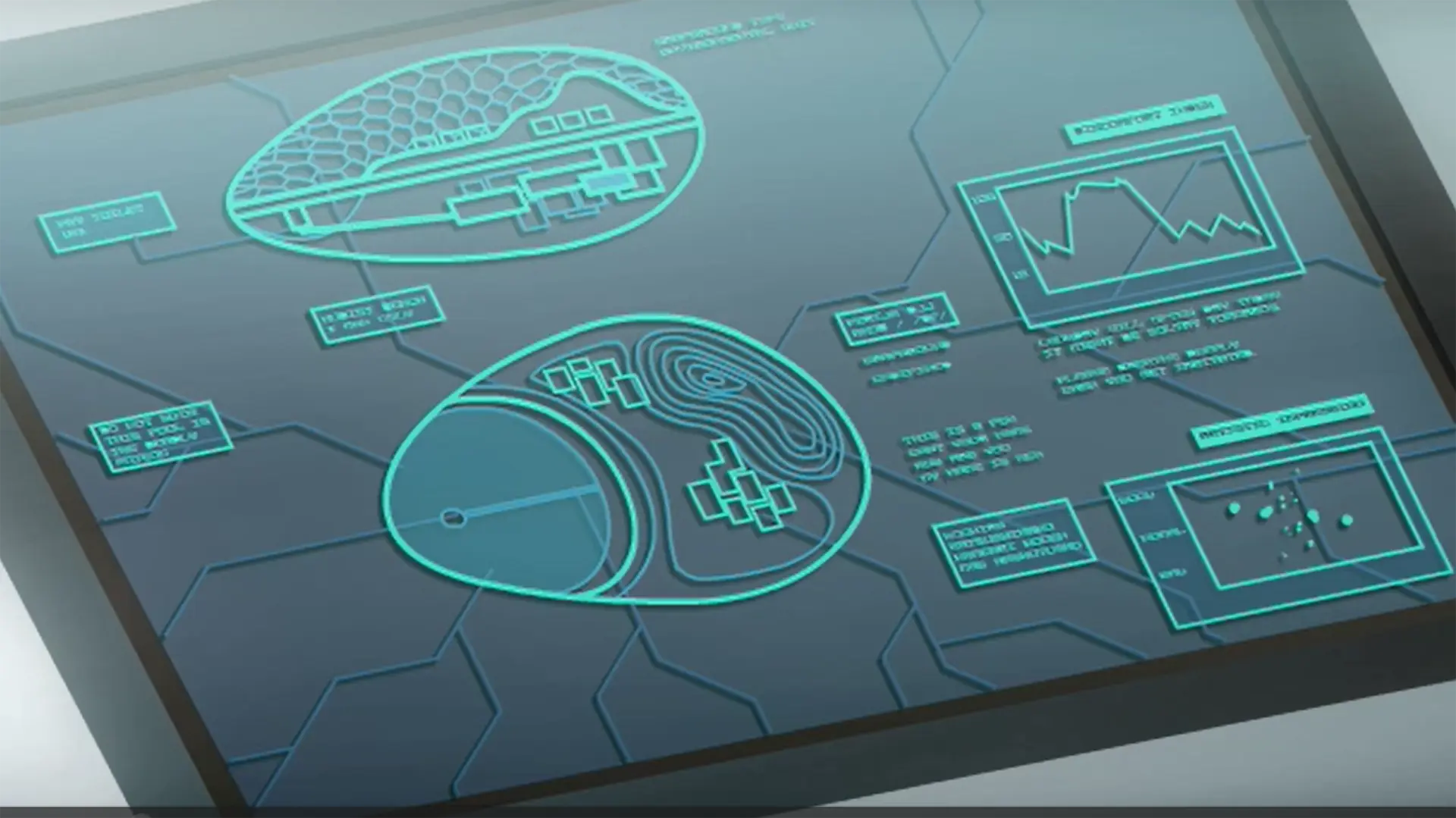
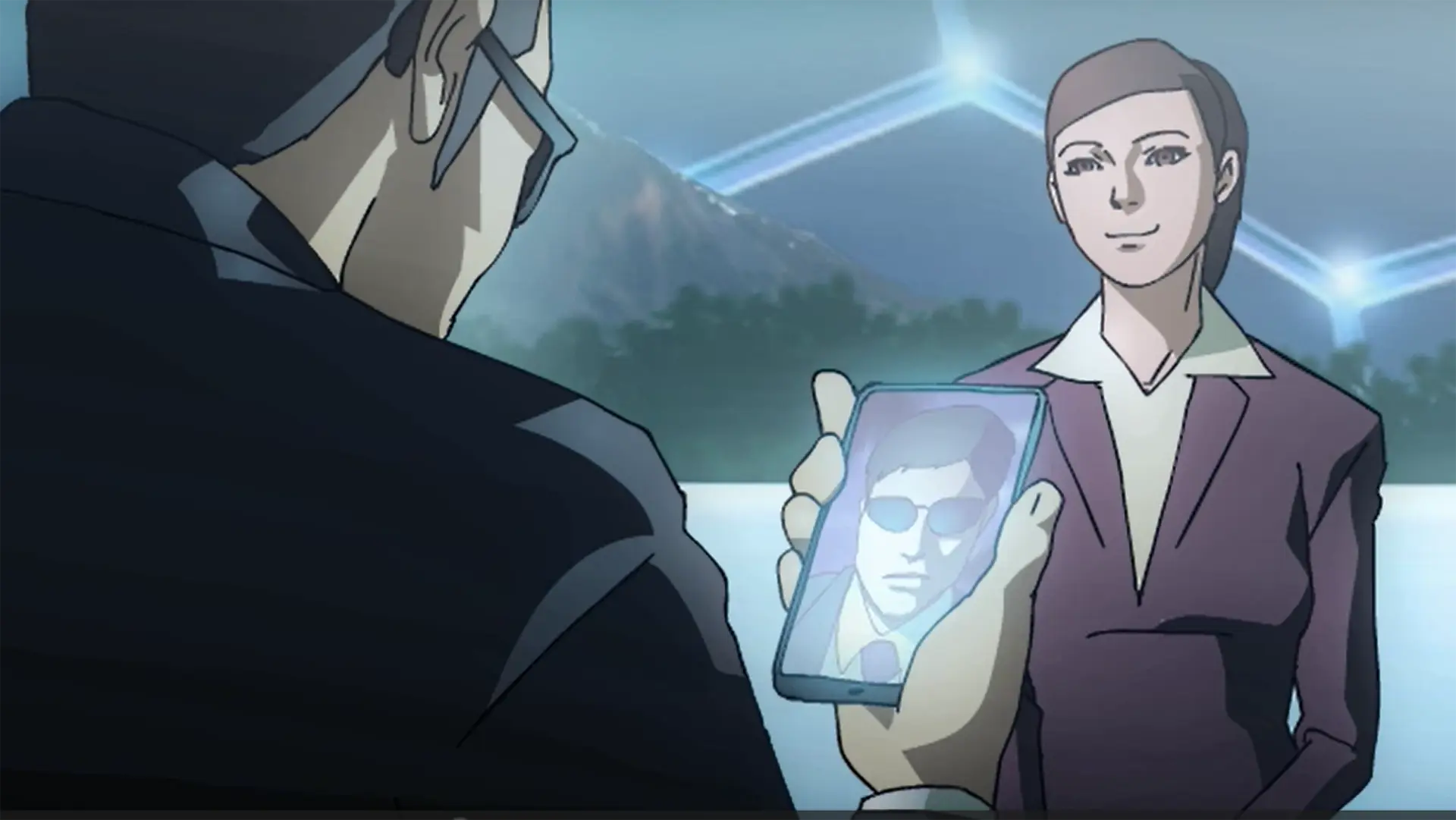
The animation takes place twenty years in the future, during another anniversary celebration held inside the prototype closed-loop environmental unit. The company president is to be introduced as the final speaker. Before that moment, the story follows a pair who infiltrate the venue in an attempt to scoop a major announcement due to be made at the party. Their journey to the venue serves as the opening narrative. One of the gadgets is a full-screen mobile device resembling an iPhone. Fewer than twenty years have passed since the event, yet real devices have already advanced far beyond what we imagined in the animation. That is often the fate of fictional futures.
I still watch the film alone from time to time and enjoy the memories it brings back. Whenever I meet someone who is interested, I am quick to show it to them. Unfortunately, our agreement with the cast allowed the animation to be published online for only one month, so I cannot share the full animation here. Instead, I have included three screenshots from the film.
I can still vividly recall the intensity with which we immersed ourselves in producing the animation. I only wish I could convey more fully how enjoyable that time was.
Afterword
Although the animation was created as part of a company event, looking back, I think it was ultimately something I made for myself. I remain grateful to the company for allowing me to make it.
After the event, everyone involved gathered for a celebration. Yukana joined us, and it became a wonderfully lively evening. The one miscalculation was discovering that she did not drink alcohol.
Perhaps, right to the end, I was doing it for myself after all.