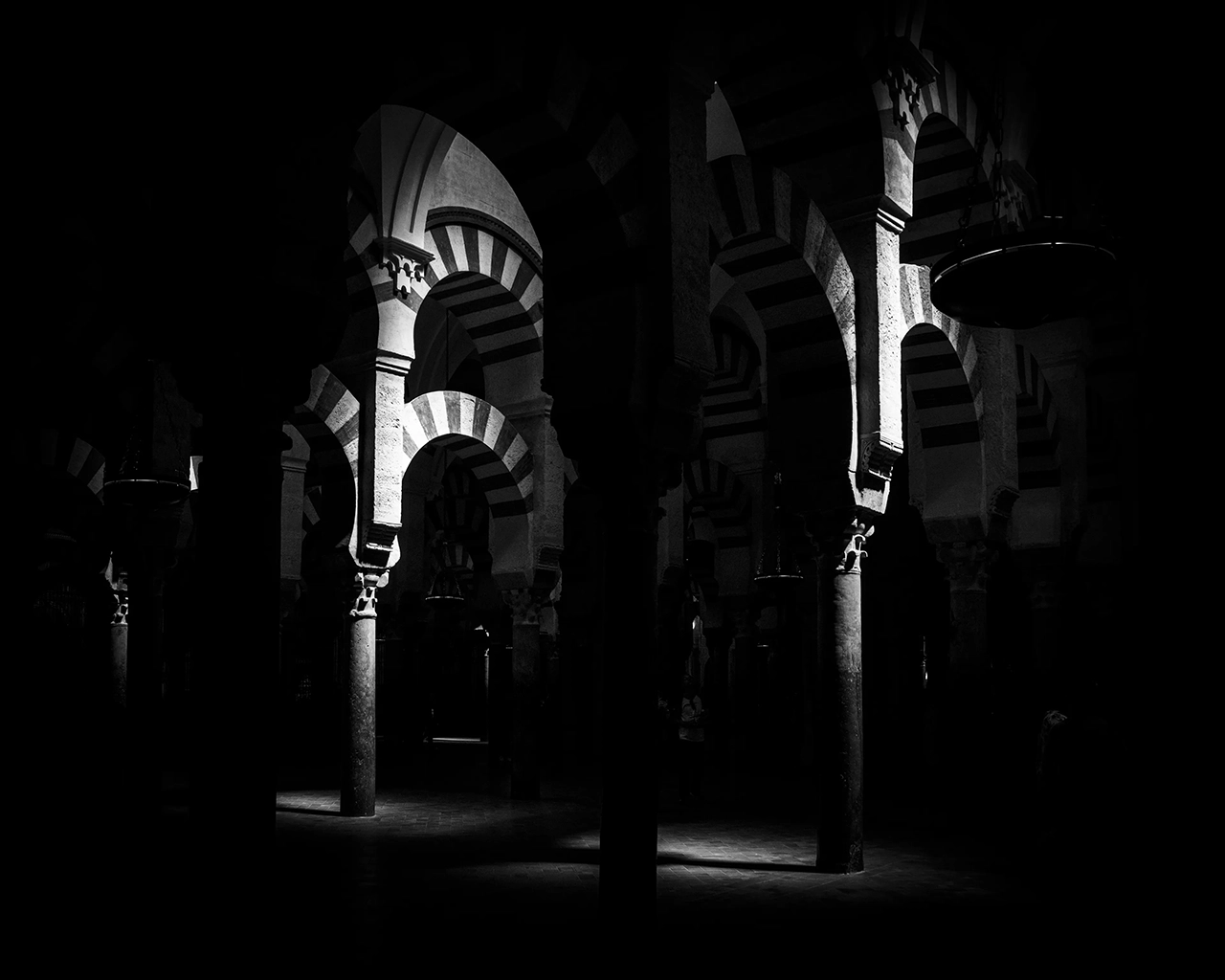
Islamic and Christian cultures coexist in the Mezquita. Its layers of arches, delicate ornamentation, and interplay of light and shadow create a space both splendid and solemn.
Islamic and Christian Cultures Side by Side
Mezquita, Córdoba
Powered by Google Translate
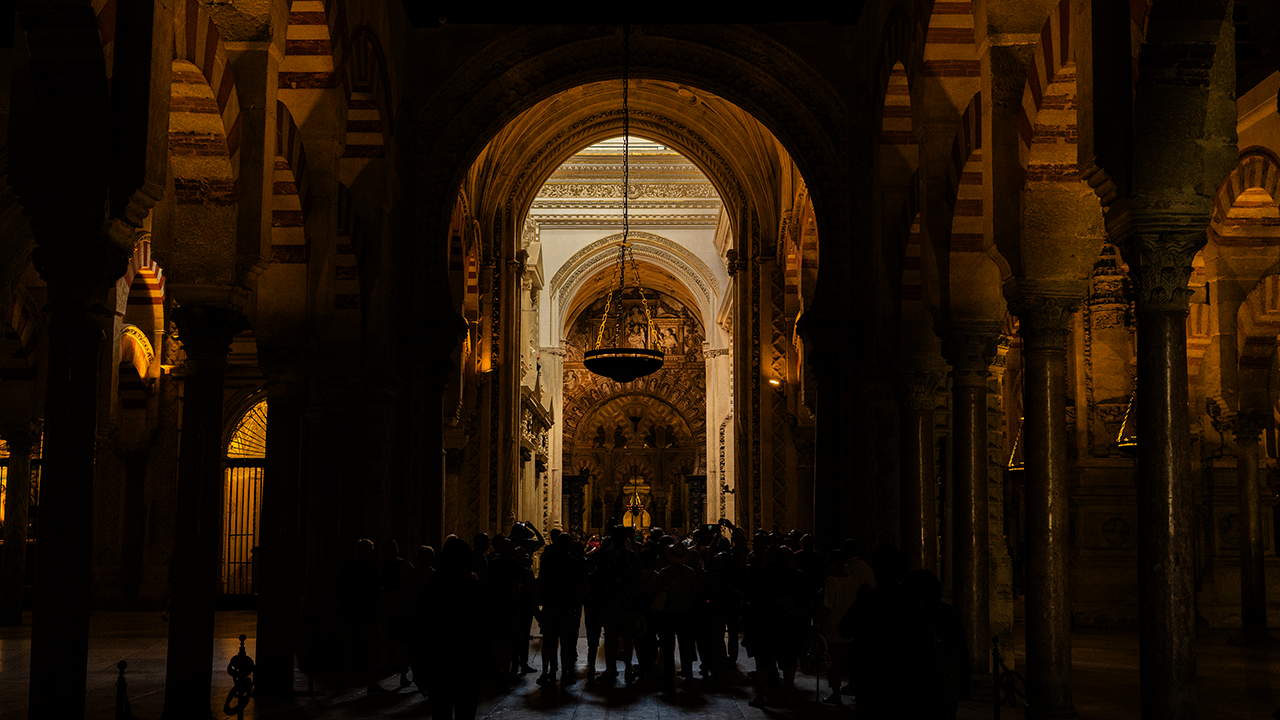
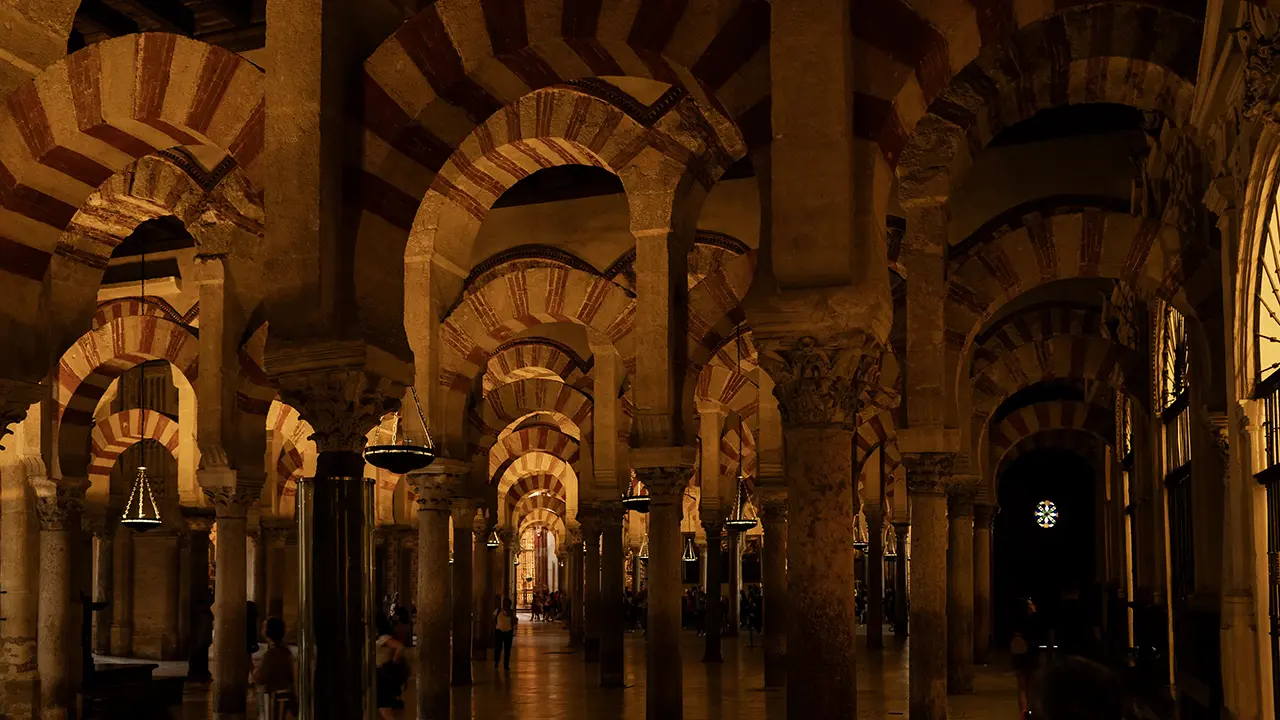
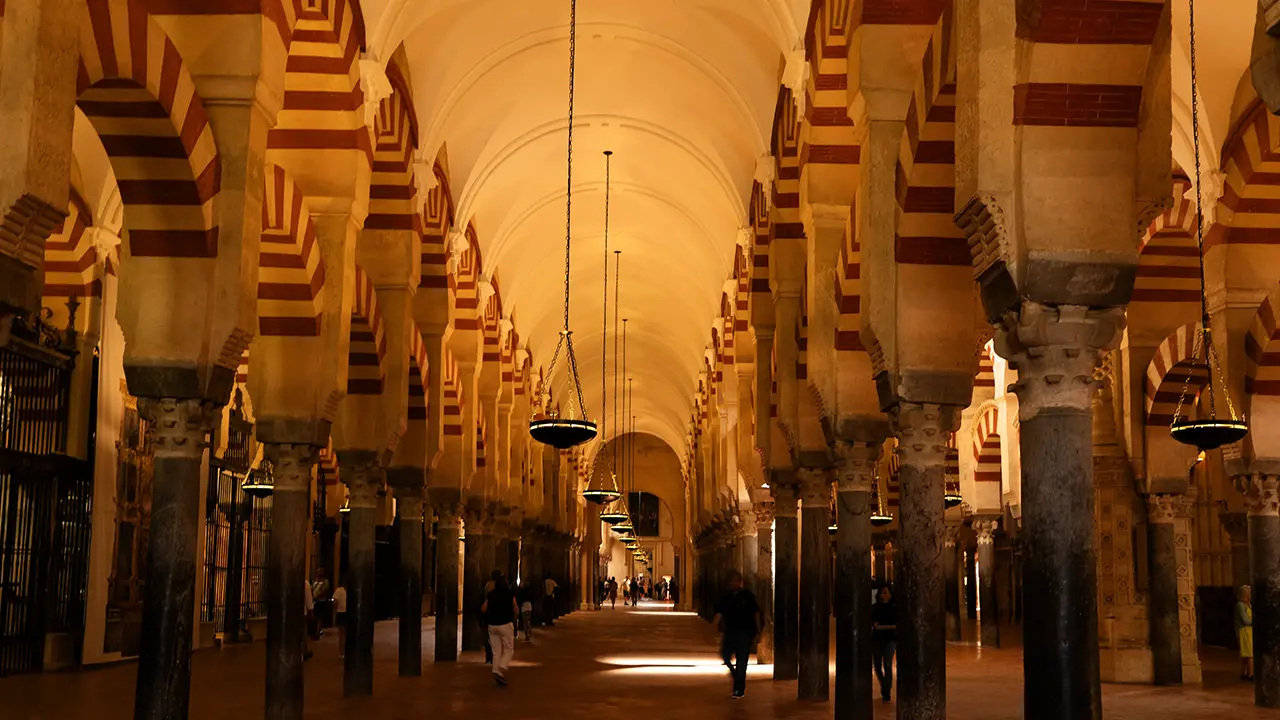
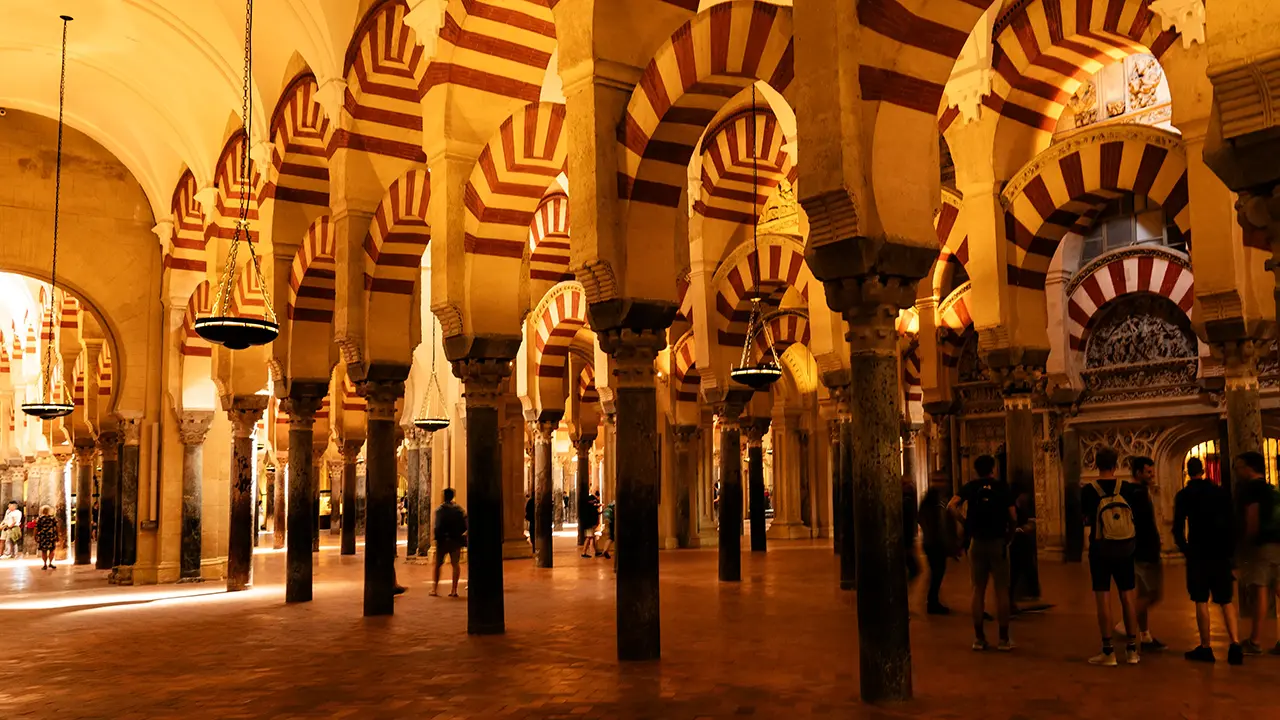
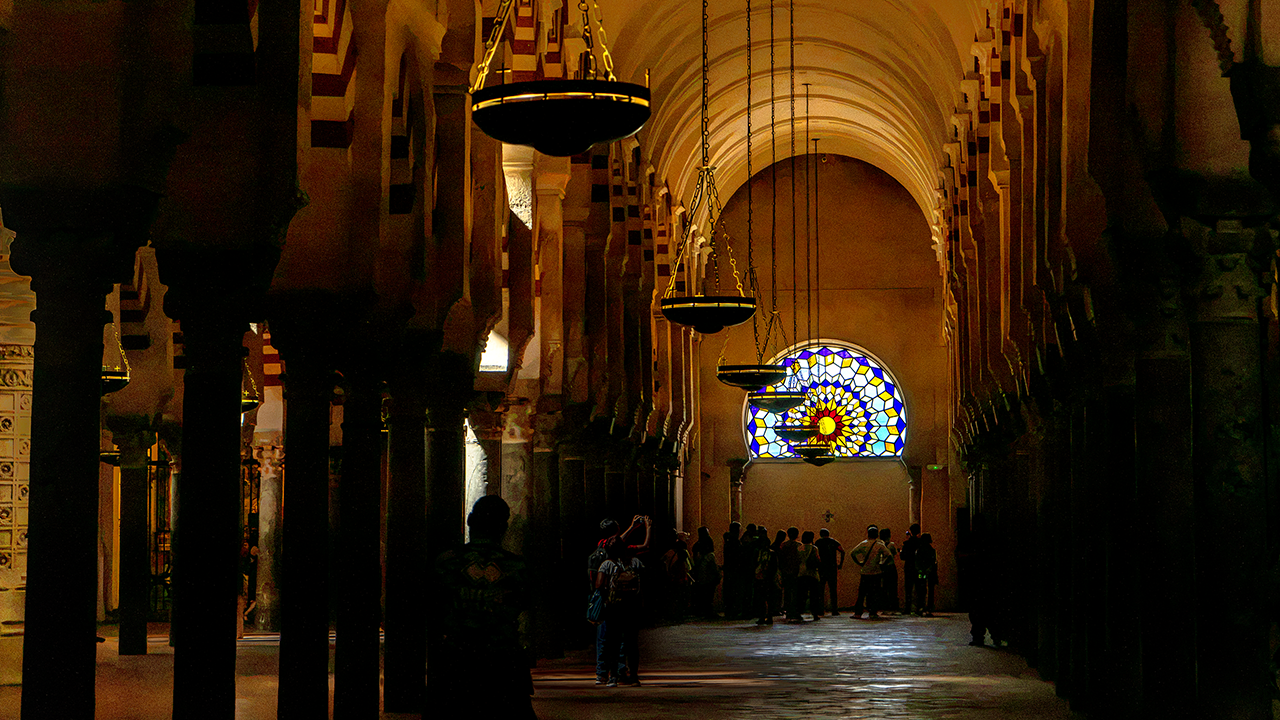
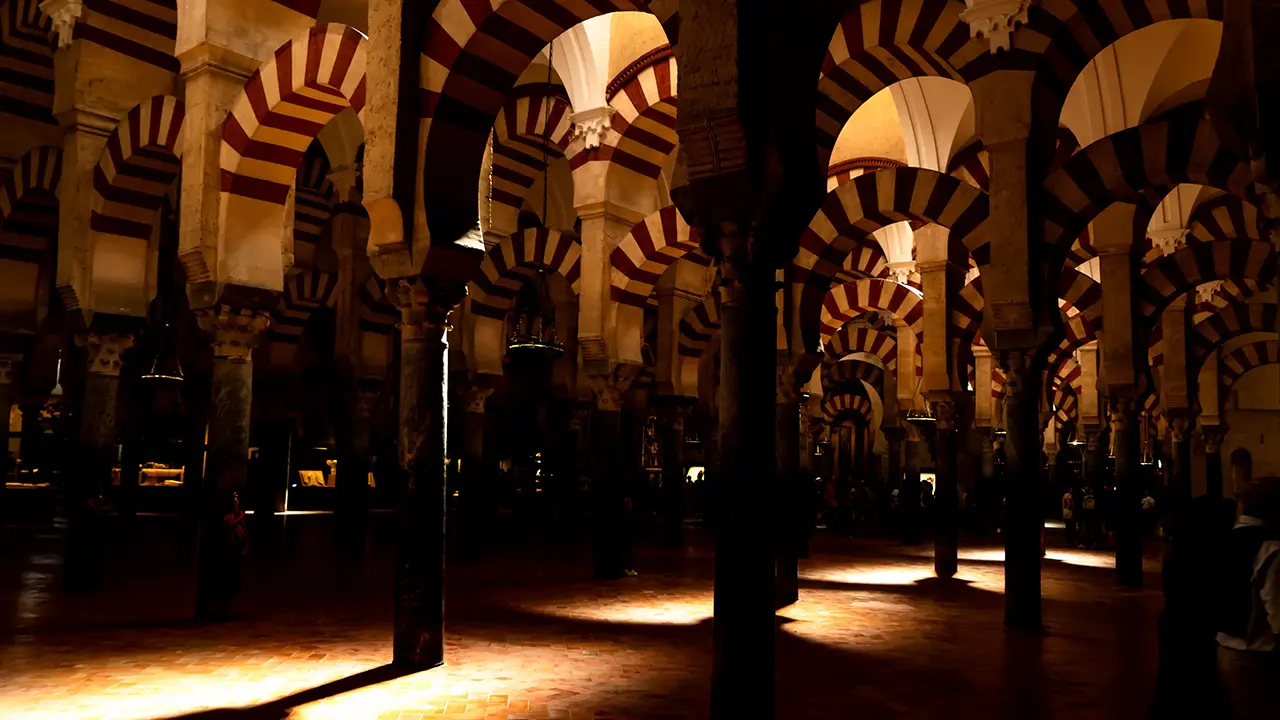
As I stepped inside, rows of columns filled the space before me. It is known as the “Forest of Columns” (Bosque de Columnas), and that is no exaggeration. It is a forest. Construction began in the late eighth century, and successive rulers expanded the building over time. Styles and materials differ according to when each section was built, yet the result is anything but disorderly. If anything, the differences in religion and architectural periods seemed to create a sense of harmony.
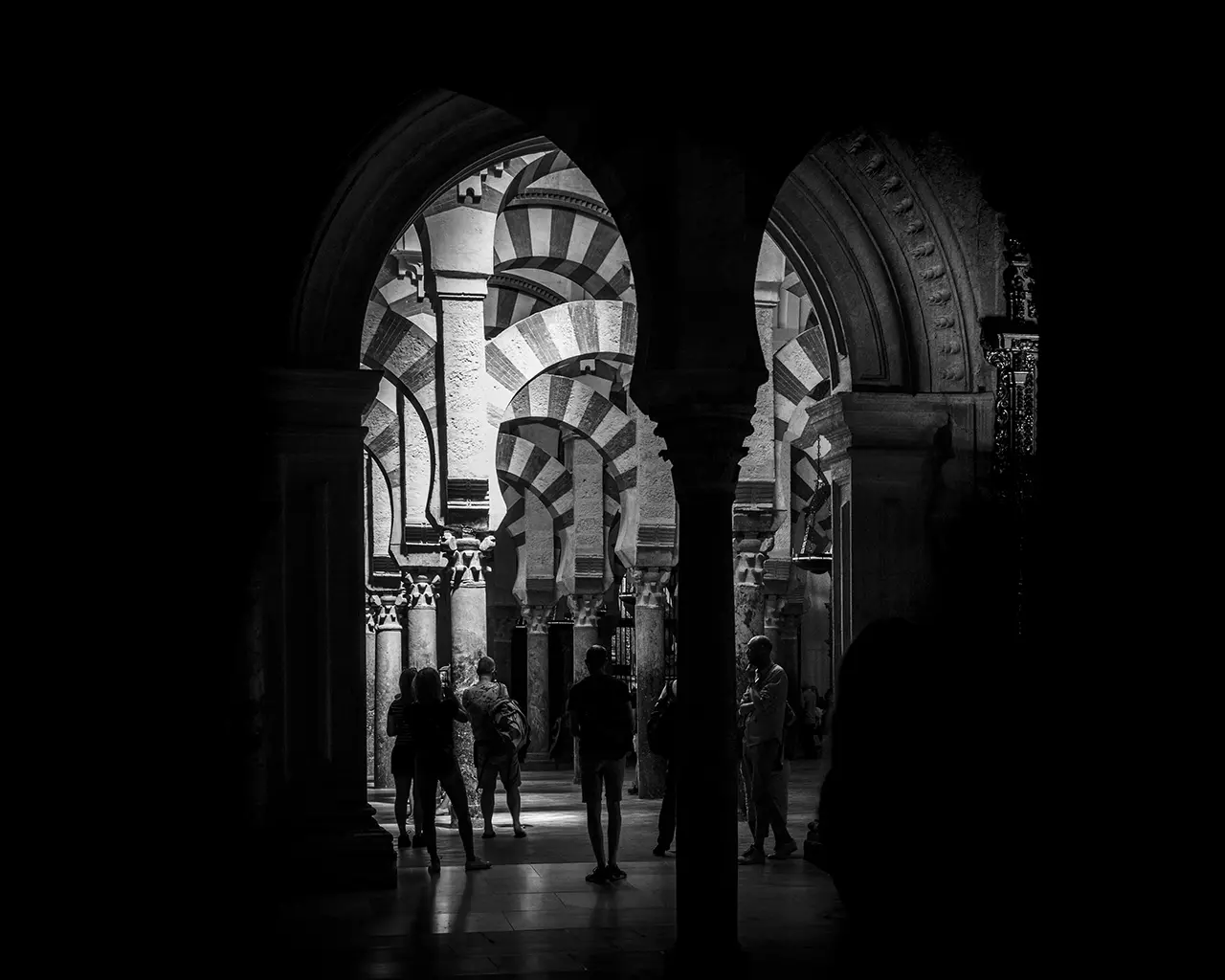
Two tiers of arches rise above the columns, an ingenious way of achieving a high ceiling with relatively short columns. Red brick and pale stone create a distinctive rhythm. In some of the later extensions, the red and white bands are painted, yet they do not look cheap at all. I found that intriguing.
I took the first photograph just after entering, overwhelmed by the space. As I moved on, the orderly rows of columns and arches took on a different character from every angle, and I could not stop taking photographs. The layers of arches receding into the distance seemed to go on forever. The aisles lit by light filtering through stained glass are beautiful too.
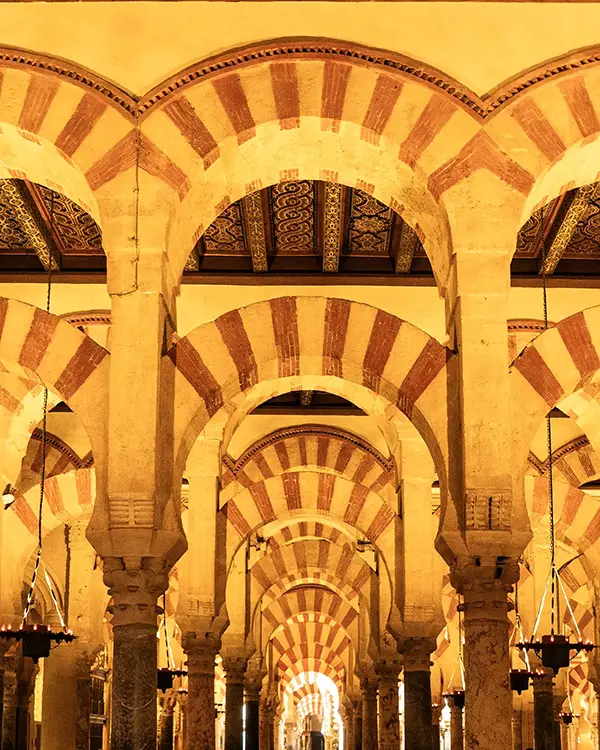
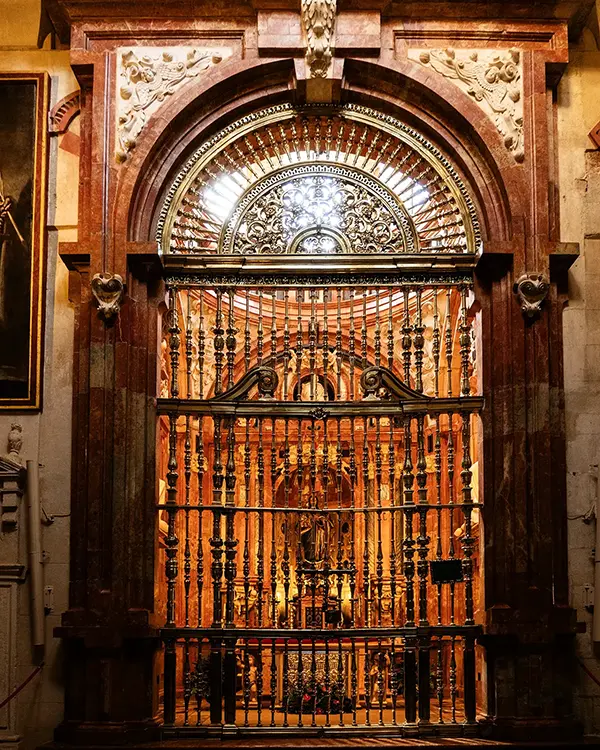
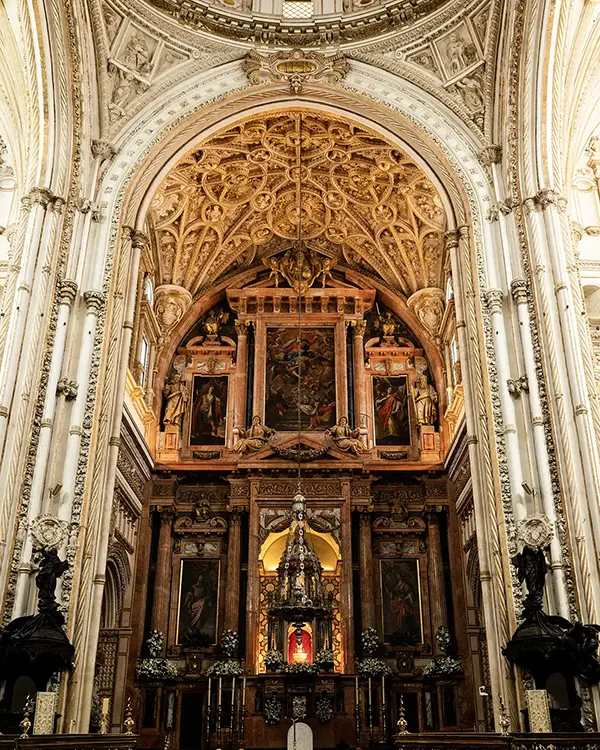
Every arch catches the eye. Islamic and Christian architecture seem to rival each other in the delicacy of their ornamentation.
The space formed by the columns and arches fascinated me most, but I could hardly take my eyes off the smaller spaces scattered throughout this vast interior and their intricate decoration.
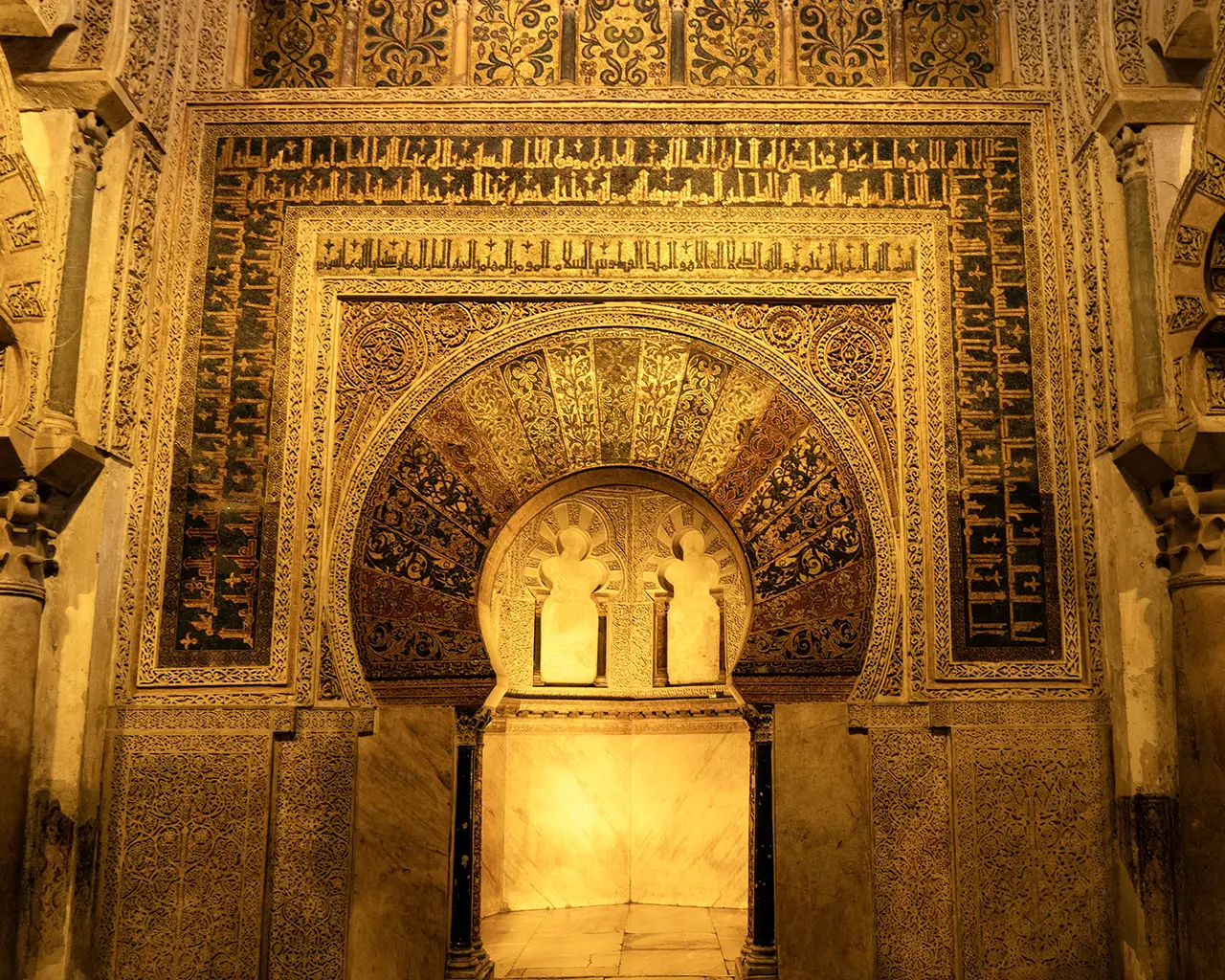
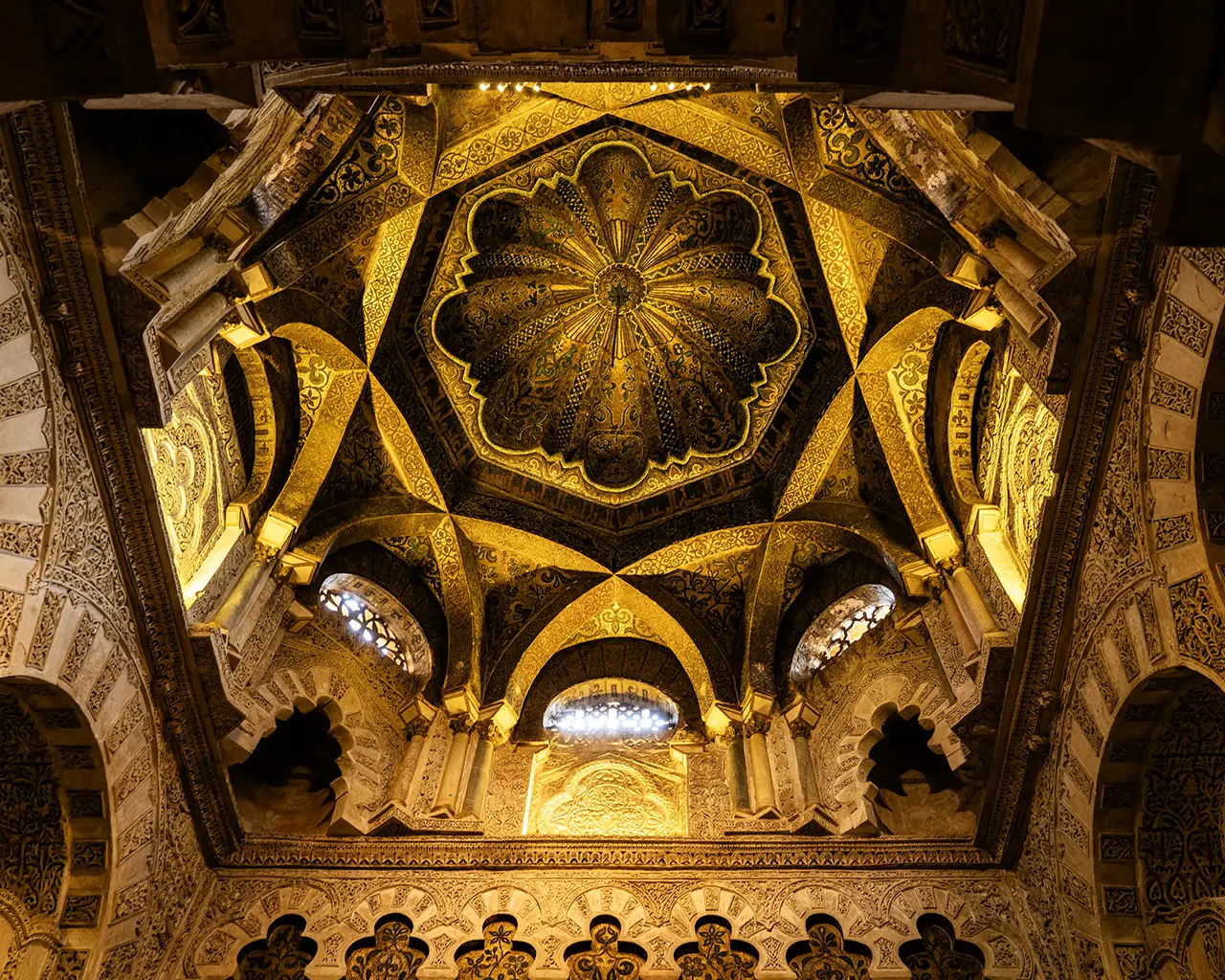
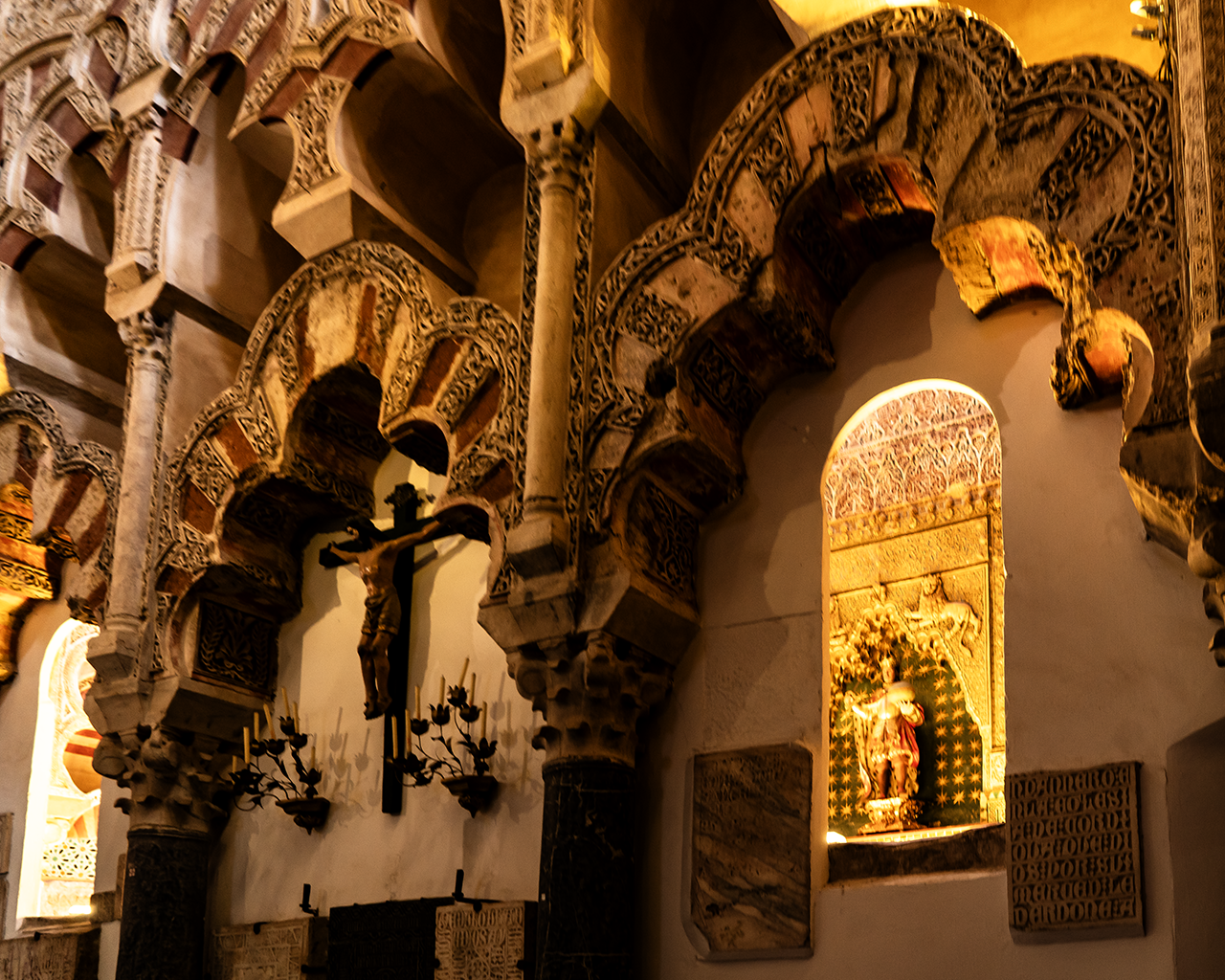
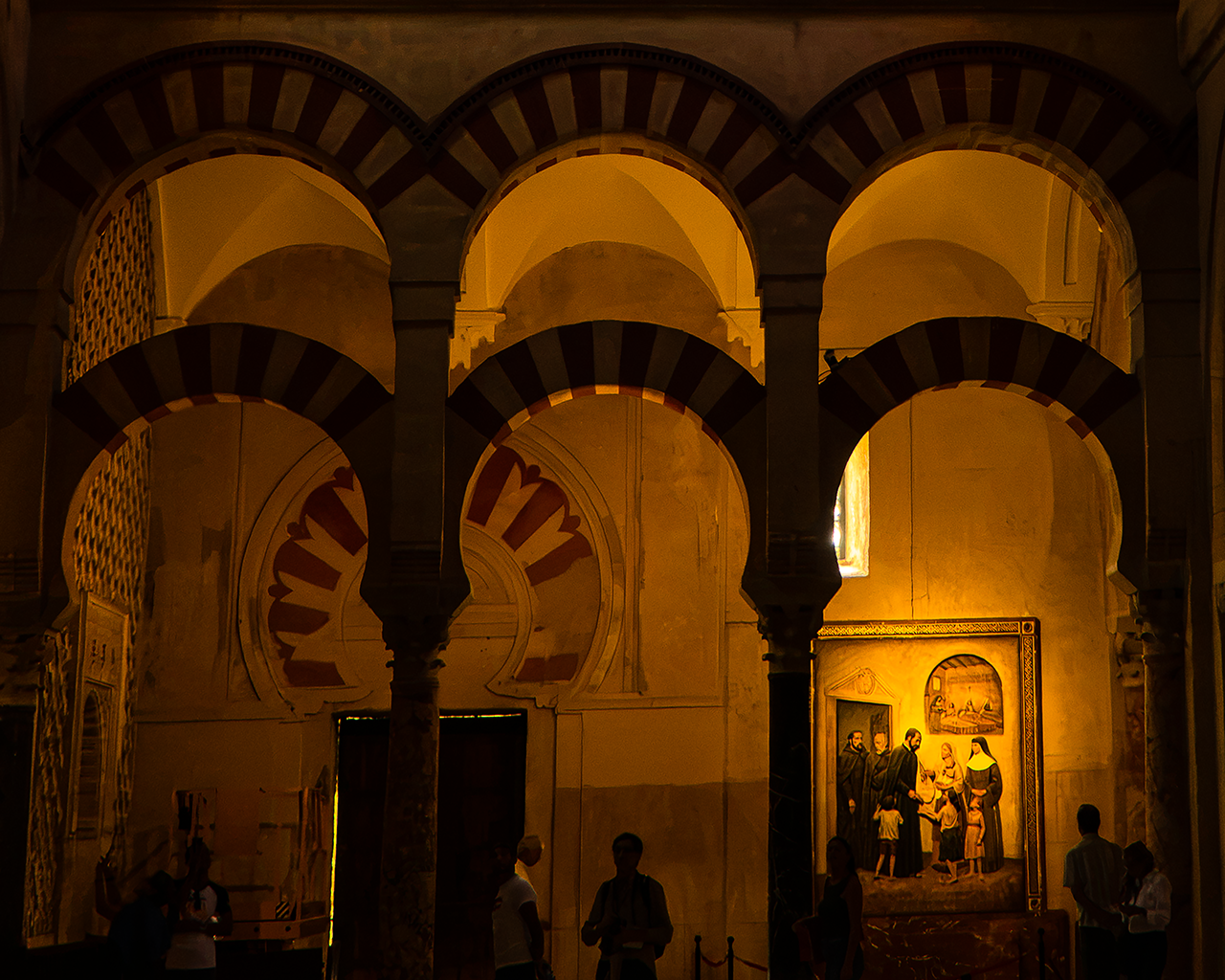
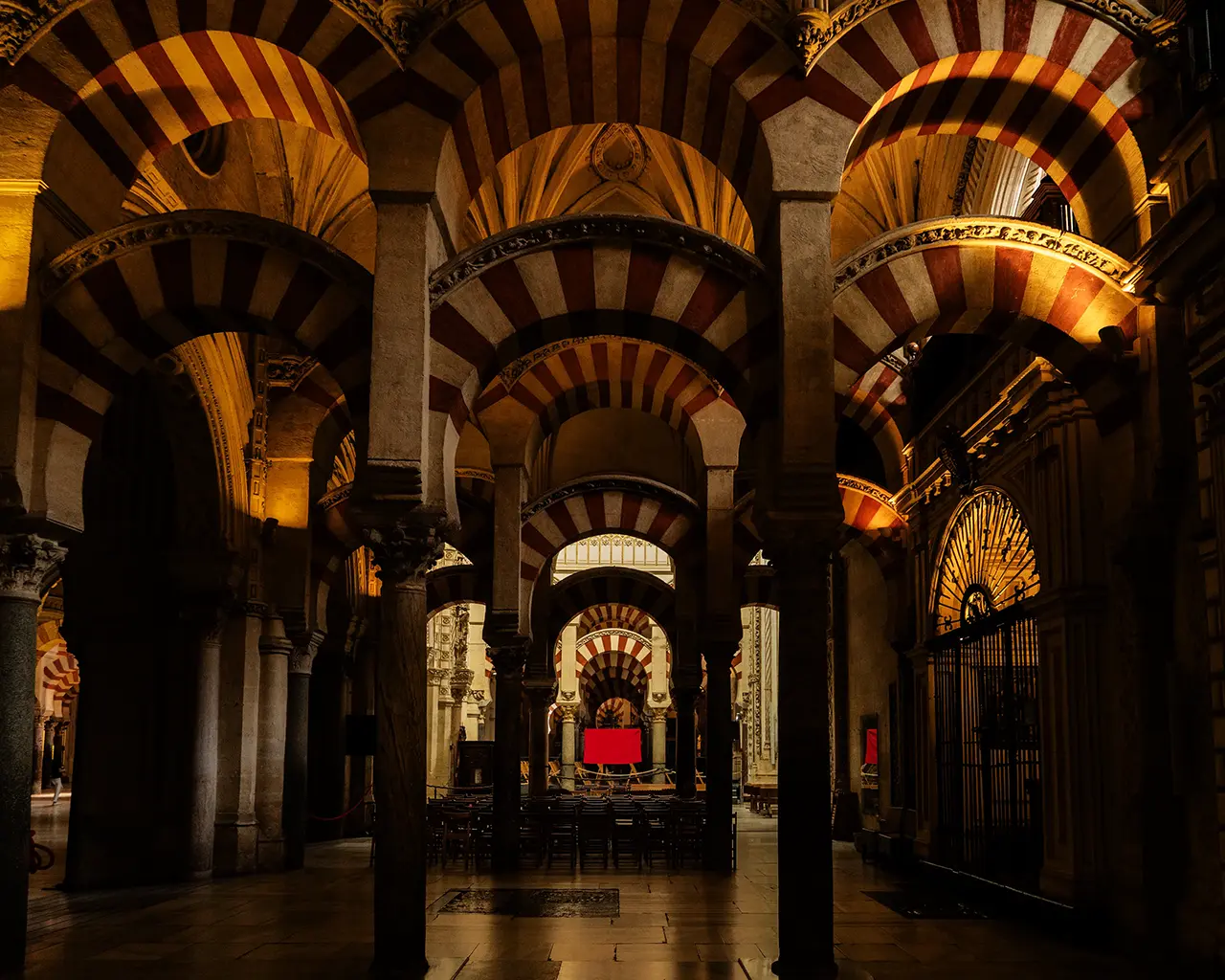
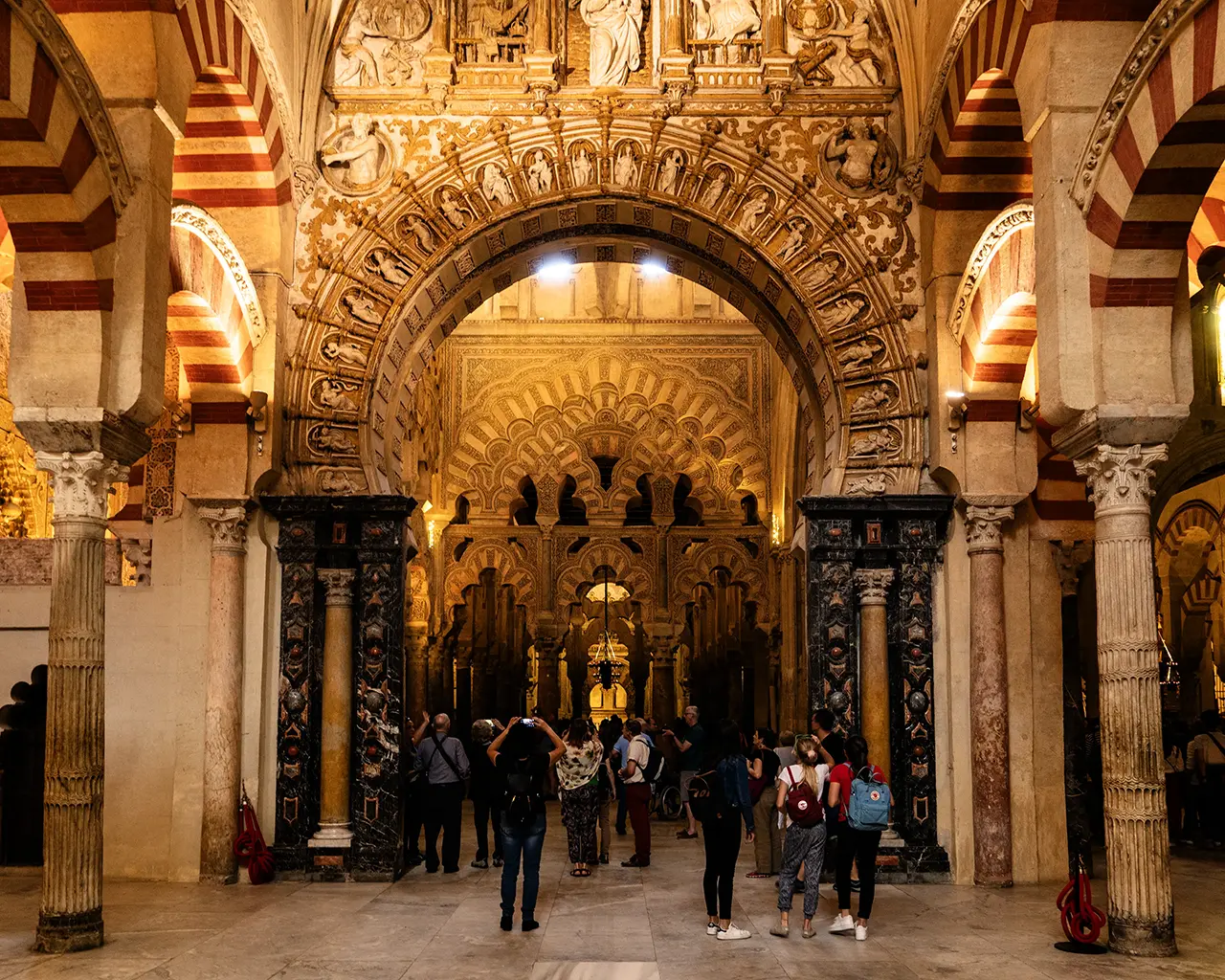
The first photograph shows the mihrab, a niche indicating the direction of prayer. Its golden mosaics, Arabic script, and vegetal patterns are magnificent. The second shows the elaborately decorated ceiling in front of the mihrab. The third shows the Villaviciosa Chapel (Capilla de Villaviciosa), where Islamic architecture bears the traces of later Christian alterations. The fourth shows an altar with a polychrome relief honouring Blessed Cristóbal de Santa Catalina, a seventeenth-century priest who devoted himself to helping the poor and the sick. It was installed in 2016. The Mezquita is a historic building, yet it continues to change. The fifth photograph looks east from near this chapel. Beyond the arches in the foreground, light pours into the Main Chapel (Capilla Mayor). The Islamic colonnades and the Christian architecture built at their centre overlap, as though the two cultures were merging. The sixth photograph looks south from near the entrance, through finely decorated arches towards the Villaviciosa Chapel and the mihrab. This is the view that unfolds as one moves through the overwhelming forest of columns.
A mihrab generally indicates the direction of Mecca, but the prayer axis of this mosque points almost due south, rather than towards Mecca itself. Several explanations have been proposed, including the alignment of earlier buildings, the Guadalquivir River immediately to the south, and the Roman street plan. Christian churches, meanwhile, traditionally favour an eastward orientation. In this case, the directions emphasised by the two religions are almost at right angles to each other. That seems to hold some deeper meaning...
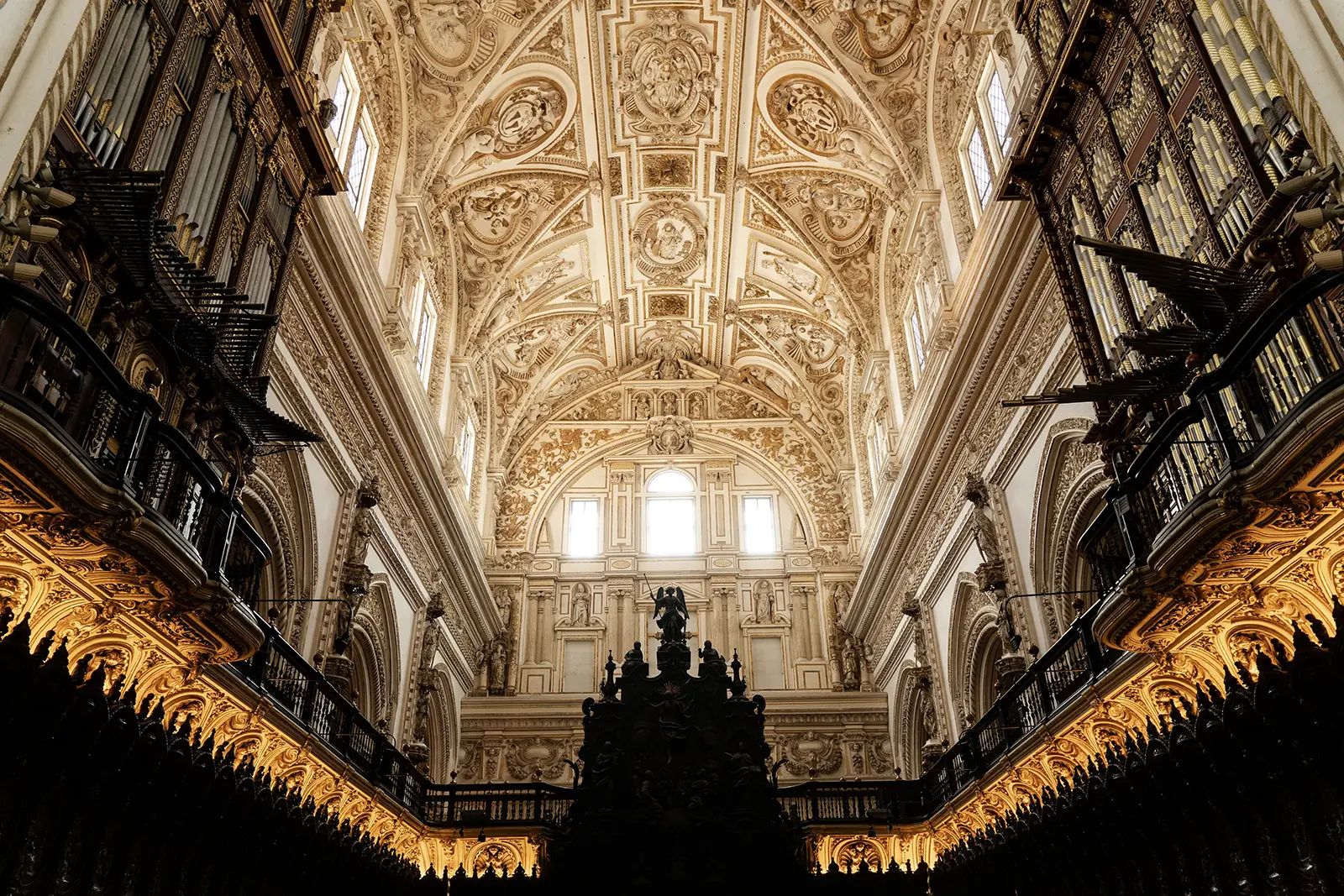
The cathedral choir (Coro) and the ceiling soaring above it are beautiful too. Light streaming through the windows creates a space entirely different from the forest of columns. Intricately carved wooden choir stalls line both sides, with large pipe organs above them.
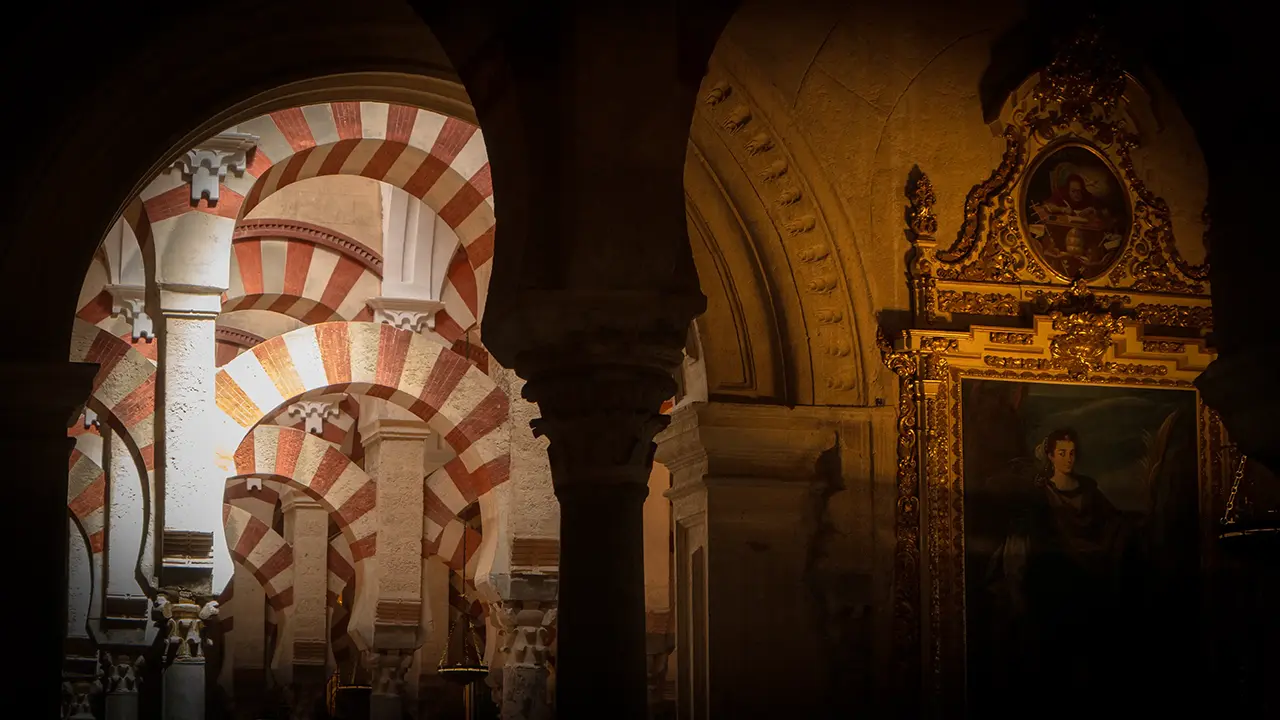
The shadowed column in the foreground divides the view: to the left stretch the red-and-white arches of the Islamic period, while to the right a Christian altarpiece comes into view. This angle seemed to capture how two distinct religious traditions coexist within a single building.
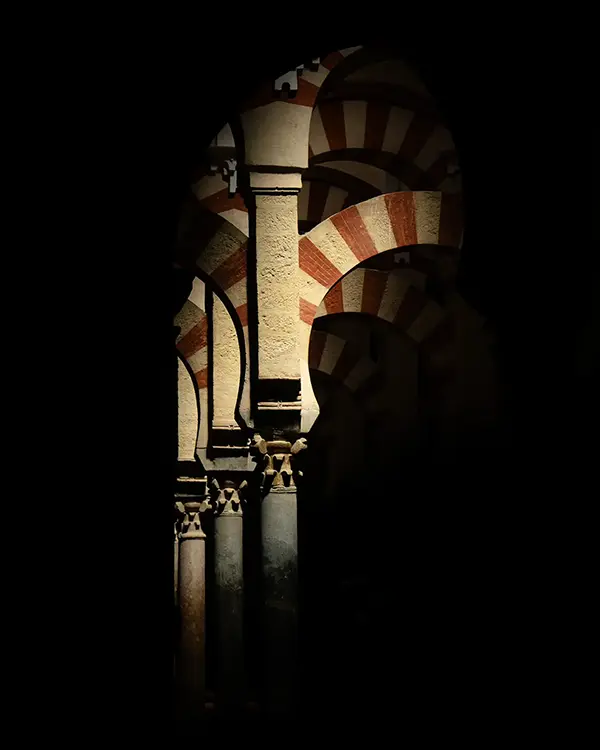
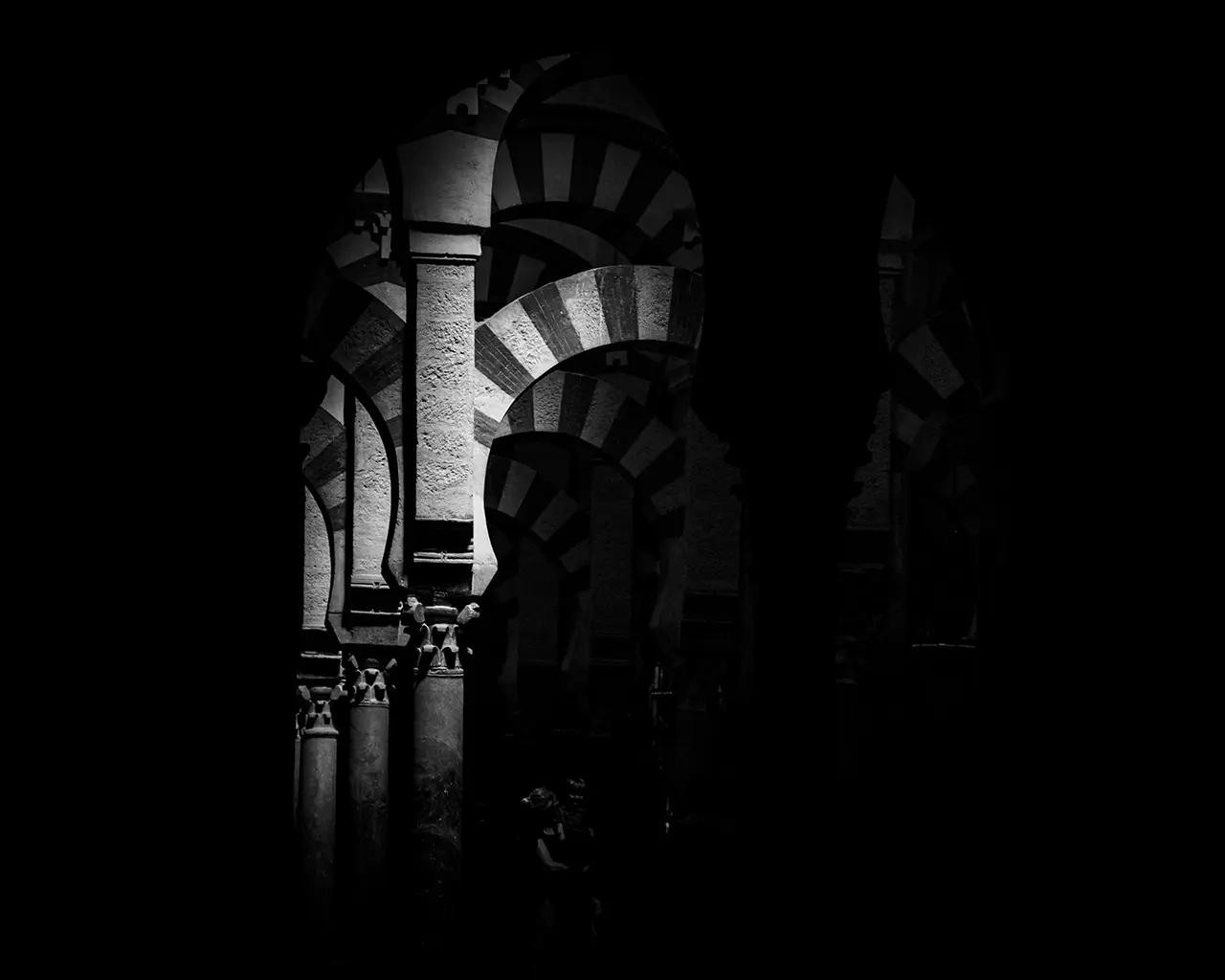
The photograph on the right captures a particularly memorable play of light on the column capitals in the Islamic part of the building. I tried converting it to black and white. Perhaps it is just my own preference, but I think it has gained a richer atmosphere.
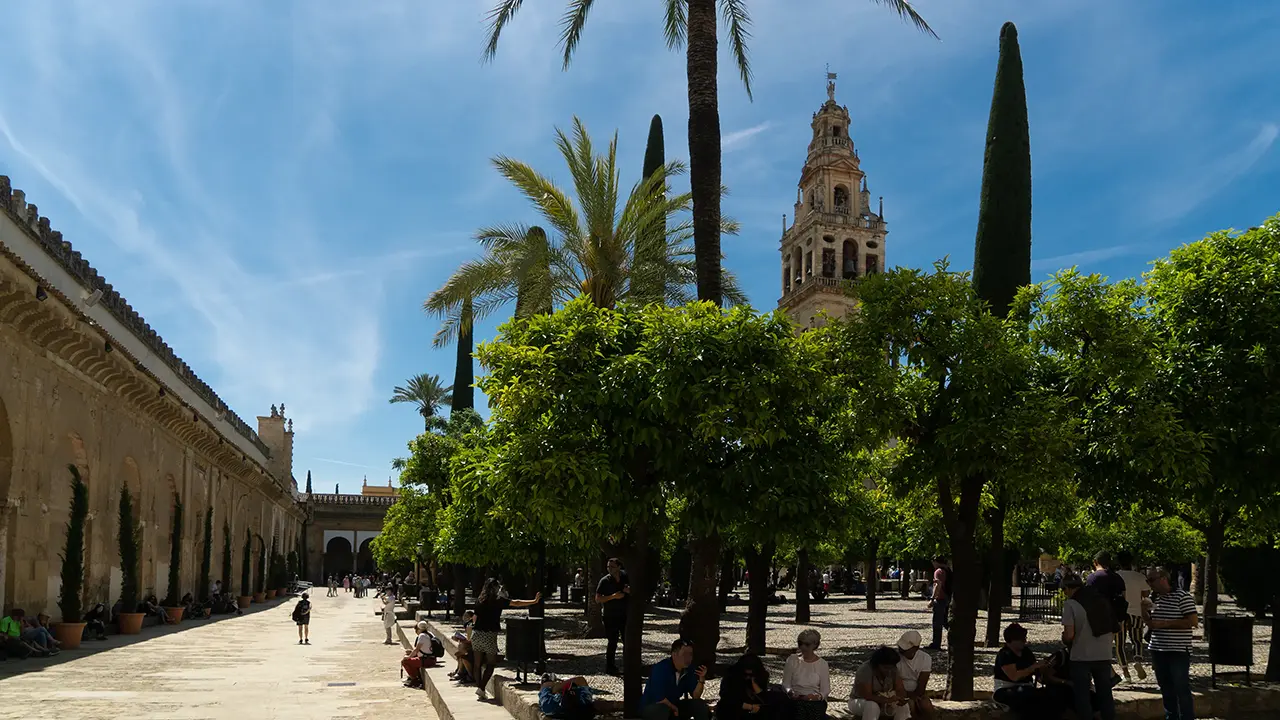
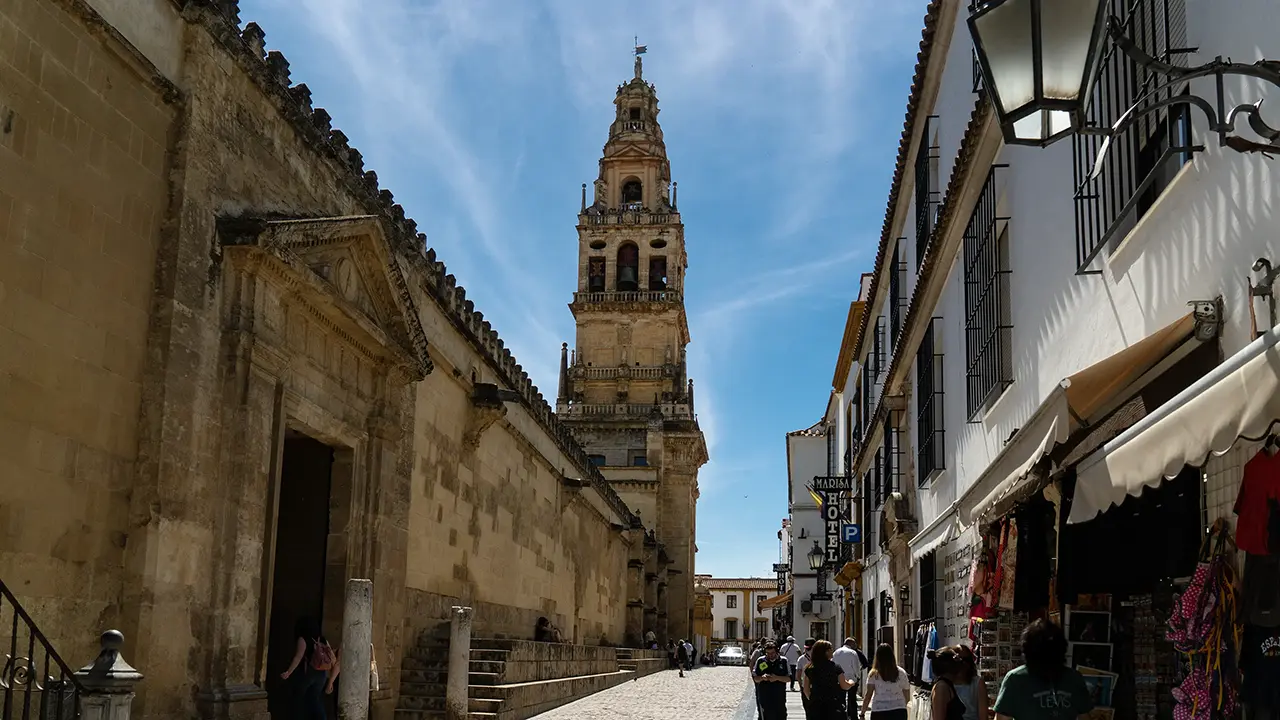
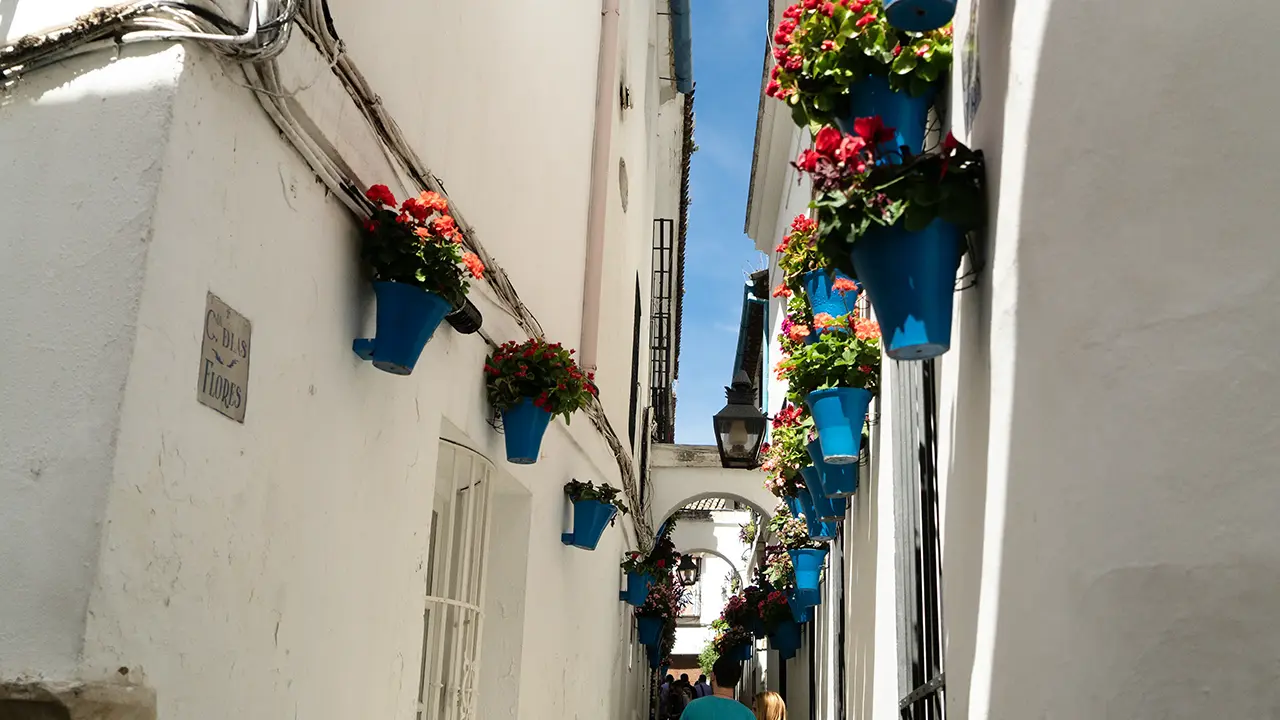
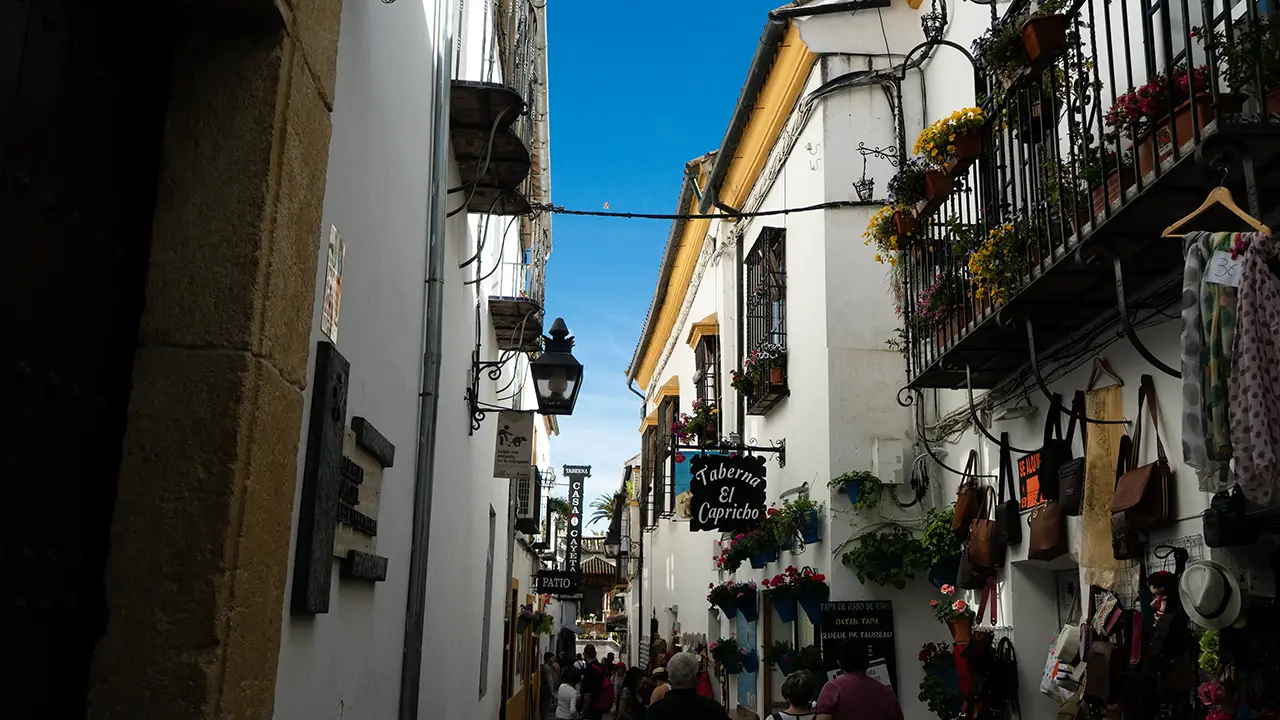
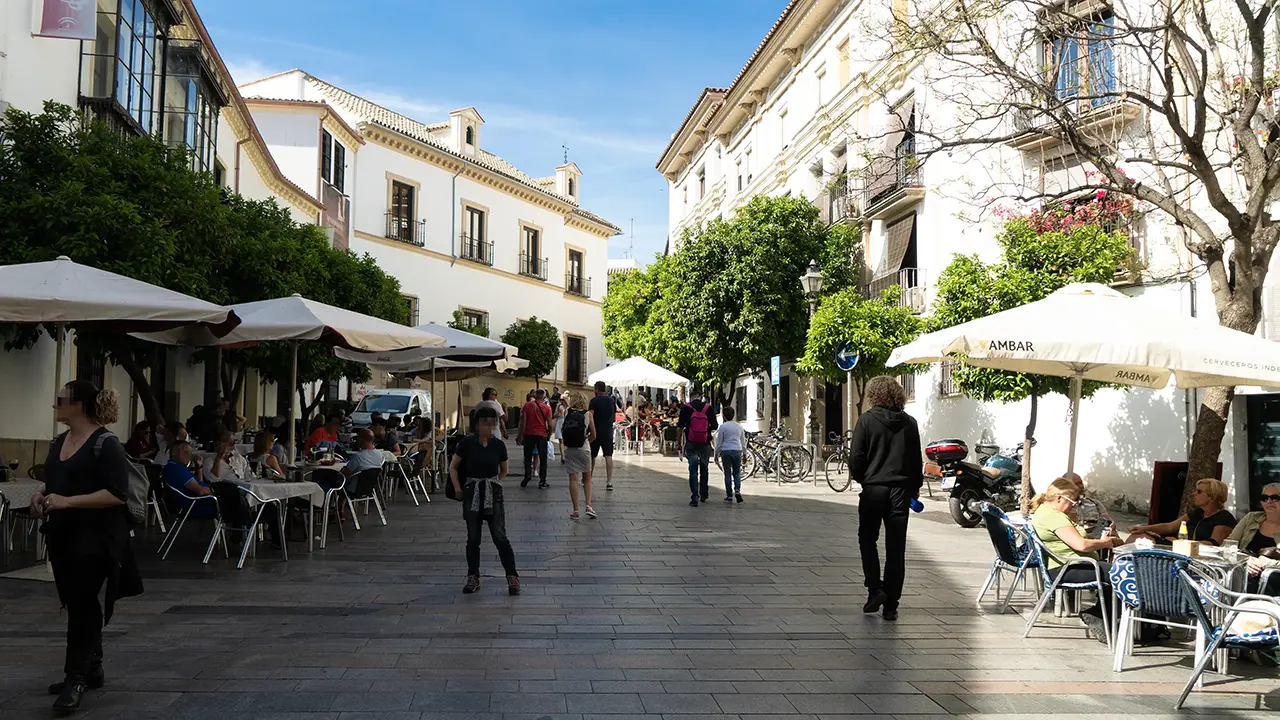
After exploring the interior, I emerged into the Courtyard of the Orange Trees (Patio de los Naranjos), where I could linger briefly and savour the experience. The second photograph looks east along the street on the north side, after leaving the courtyard. The tower ahead is the bell tower (Torre Campanario), built around the minaret from the Islamic period. I then explored the surrounding area a little. The narrow lanes have a distinctly Moorish feel, though I wondered how much of it was intended for tourists. The well-kept streets, with their pavement cafés, had a relaxed air.
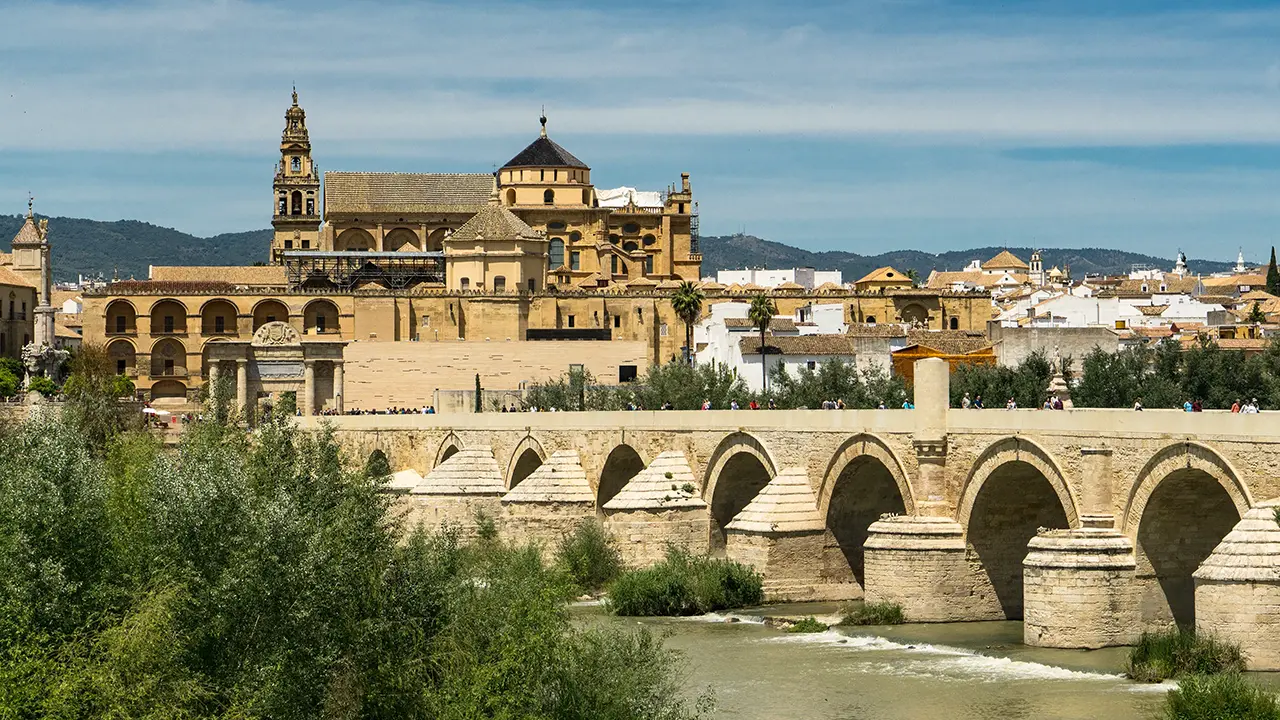
The last photograph is a distant view taken from the opposite bank of the Guadalquivir. The Mezquita is taller and larger than I had imagined. The bridge in the foreground is the Roman Bridge of Córdoba (Puente Romano de Córdoba), included in the World Heritage site. It dates back to Roman times and has undergone numerous alterations since.
The river's name comes from Arabic and means “the great river.” Having studied a little Arabic, I suspected as much, and a quick check confirmed it. I am noting it here as a reminder to myself.
I visited the Mezquita in Córdoba during a trip to Spain in April 2019. My account of that journey appears in “Andalusia, Part 2” on 4travel.jp (in Japanese).
The official Mosque-Cathedral of Córdoba website, managed by the Cathedral Chapter, provides a detailed account of the building and its history, so I have not repeated that information here. Although it is not the latest edition, this visitor guide and map was very useful during my visit, and I include it here for reference.