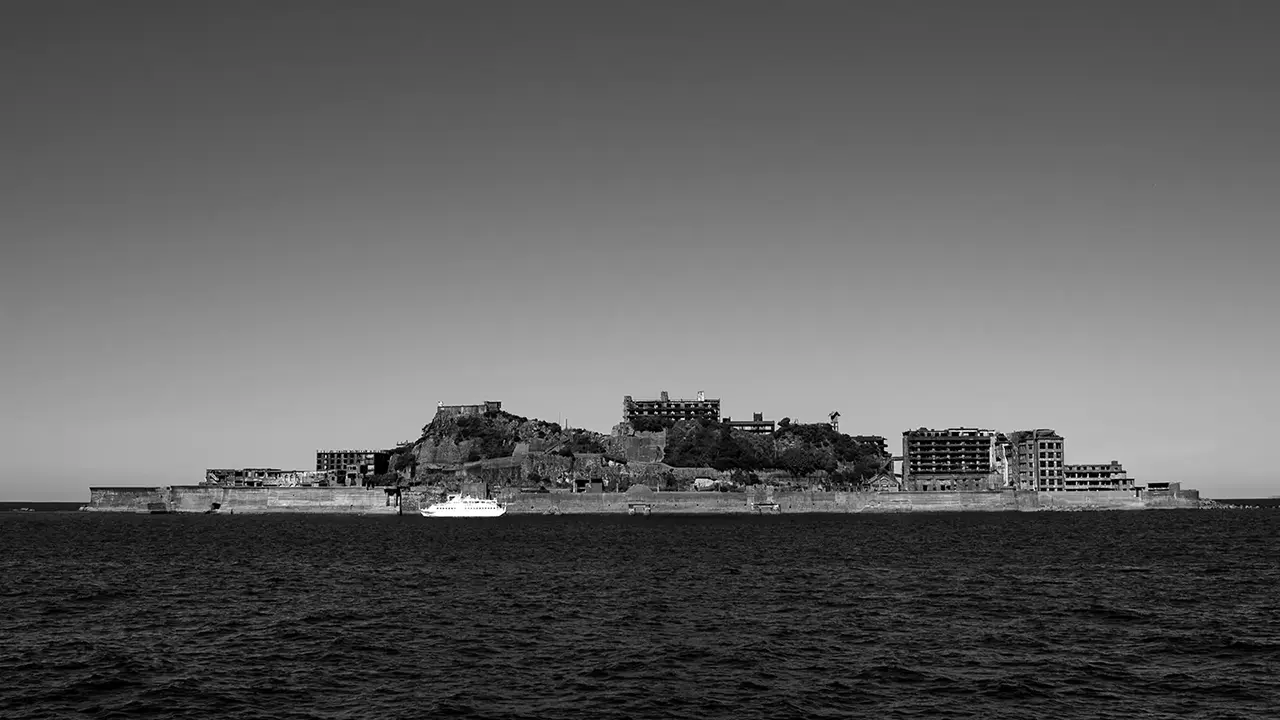
Hashima, an island off the coast of Nagasaki Prefecture, once flourished as a coal mining community, with mines extending beneath the seabed. Its resemblance to a battleship earned it the nickname Gunkanjima, or "Battleship Island." In fact, that name is probably better known than Hashima.
The deterioration of this World Heritage site and the challenges of preserving it were featured on the Japanese television documentary series Gaia no Yoake. The buildings shown in the program seemed to have deteriorated further since my visit in 2015. My photographs preserve the island as it was then, but the buildings have remained exposed to wind and rain ever since. What should be passed on to future generations of this World Heritage site, and in what form? The buildings themselves? The island's battleship-like silhouette? Or the memories of the people who lived and worked there? Watching the program made me reflect on just how difficult preservation can be.
When I visited, only a very limited area was open to visitors. I had hoped to look up at the buildings from the narrow passageways in the residential area and see the elevated walkways connecting them, but that was not possible. If the proposed tours featured in the program become available, opening up more of the island to visitors, I would like to return.
I sorted through the photographs I took in October 2015. It was a clear autumn day, and the dazzling sunlight produced strong contrasts. Still, I feel that presenting them in black and white better conveys the impression the place left on me. The names and descriptions of the buildings below are based on sources I found online.
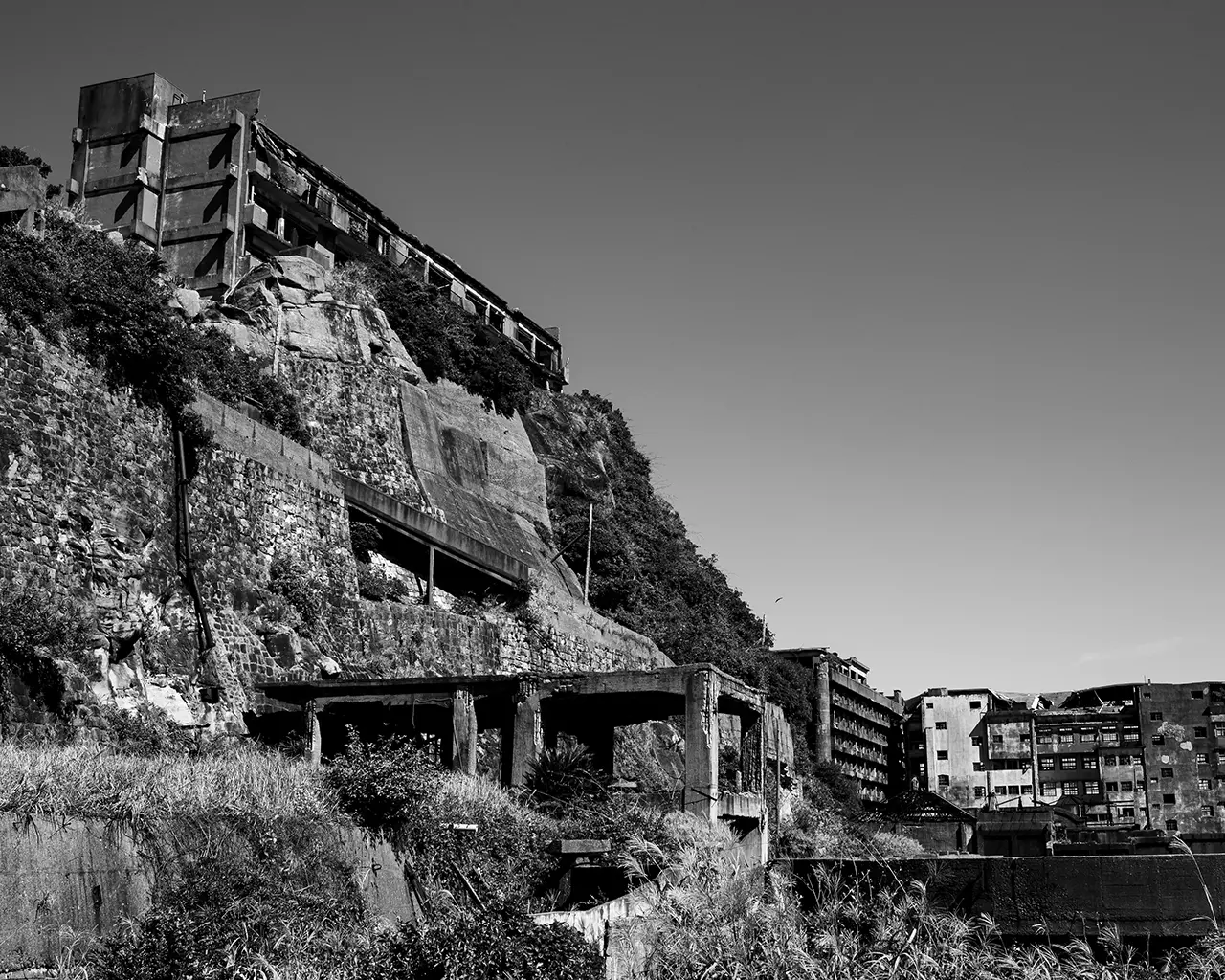
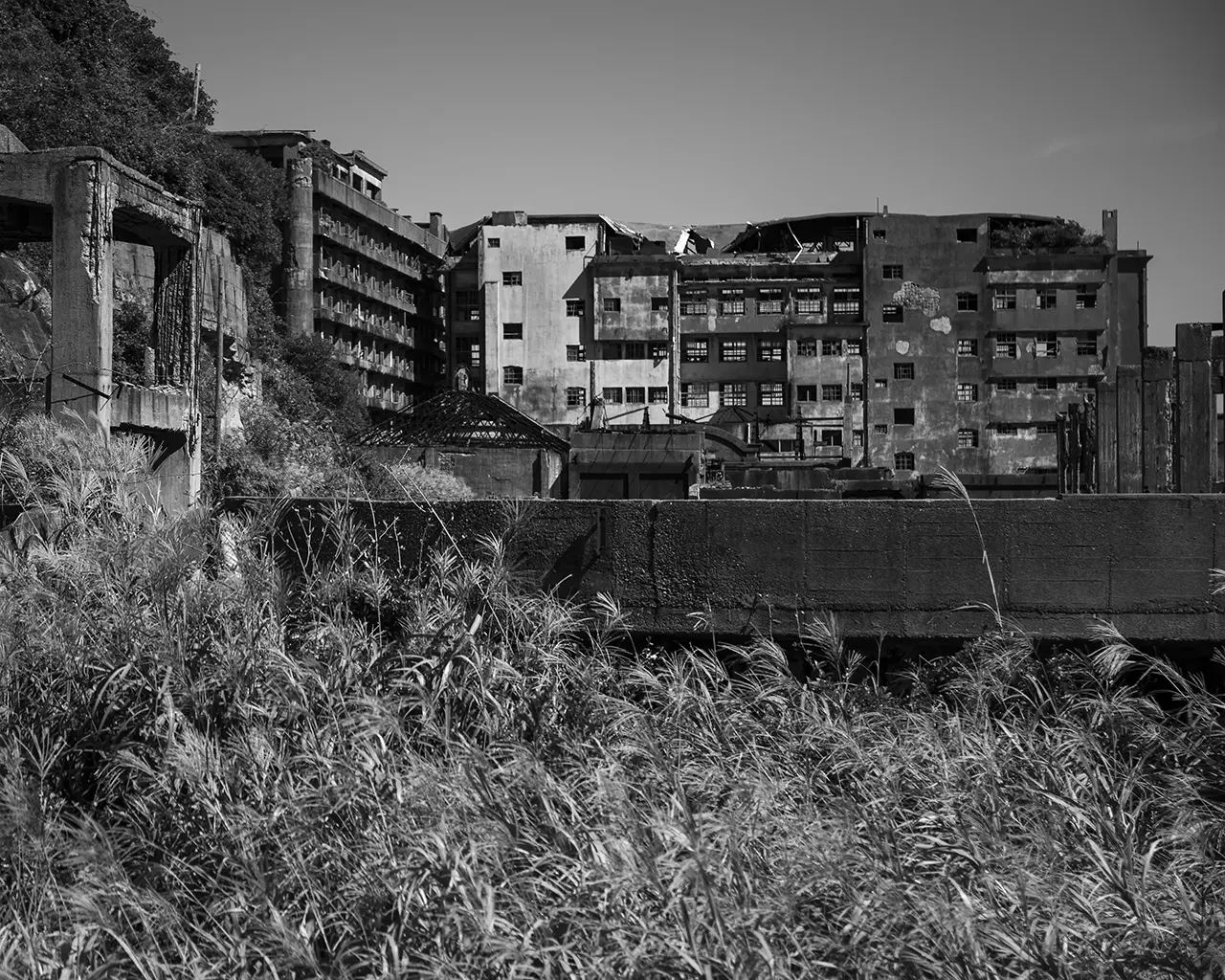
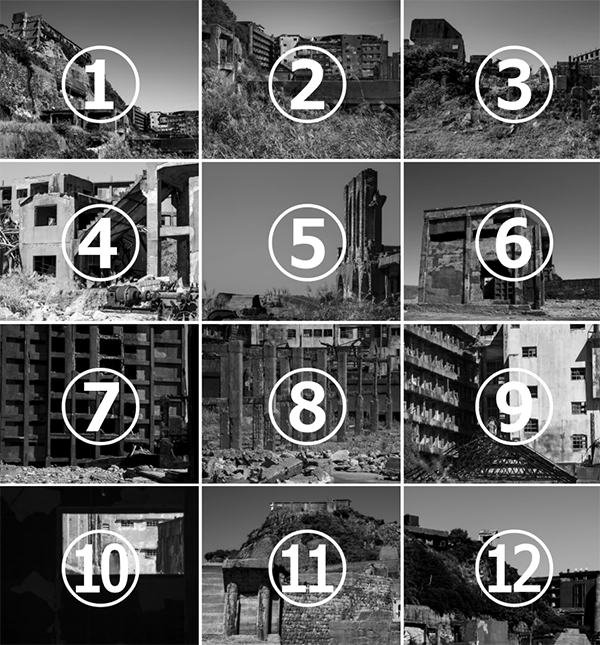
①Looking north-northeast from the first observation area, the first stop after landing. Building 3, which housed senior staff, stands on the hill, with the flotation plant below the cliff. Farther back are Hashima Elementary and Junior High School (Building 70) and Building 65, which also housed a kindergarten.
②Hashima Elementary and Junior High School (Building 70) and Building 65.
③Looking southwest from the first observation area. The structure at the upper left appears to be a water tank near the coal preparation facilities. In the foreground are what seem to be the remains of a compressor room.
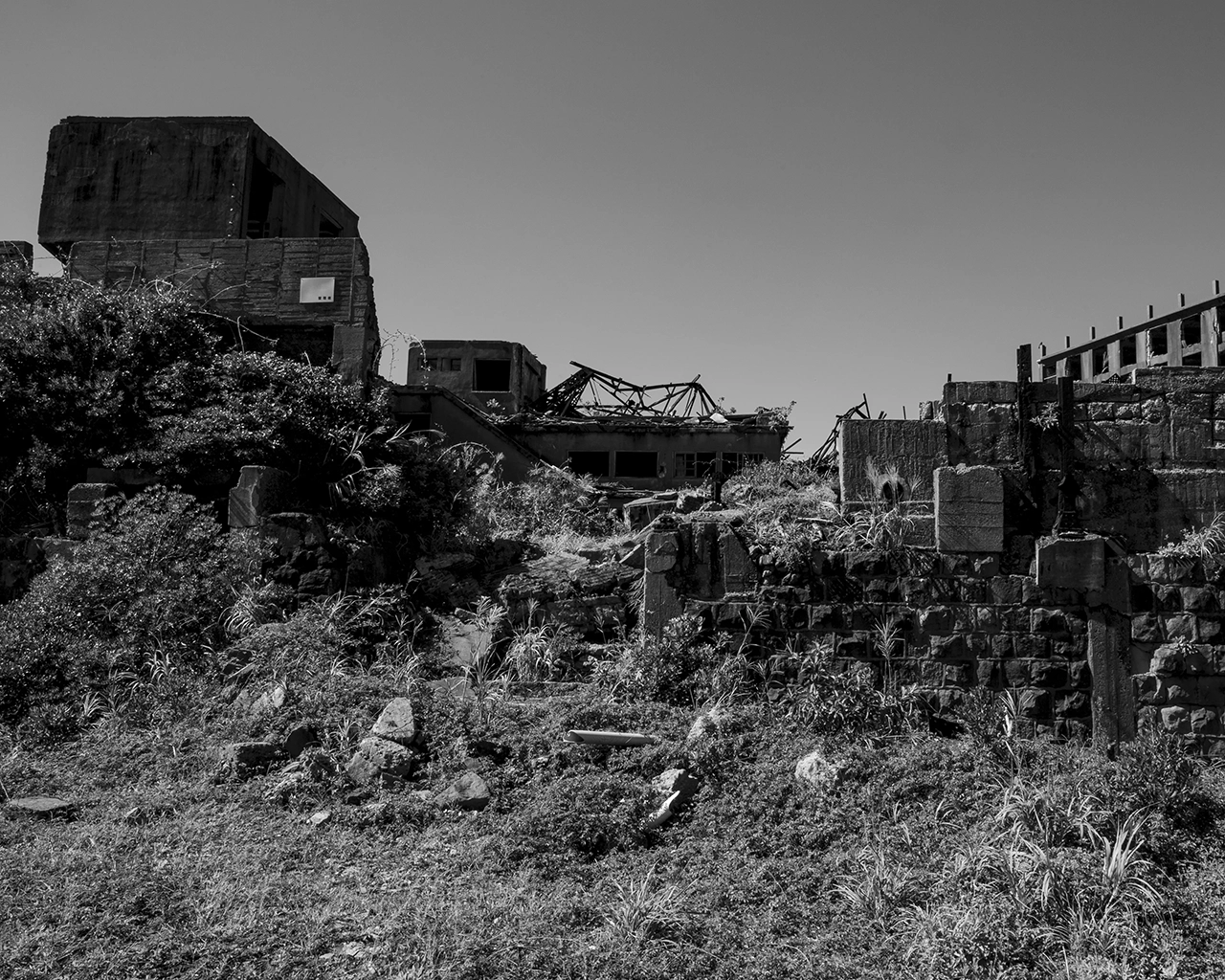
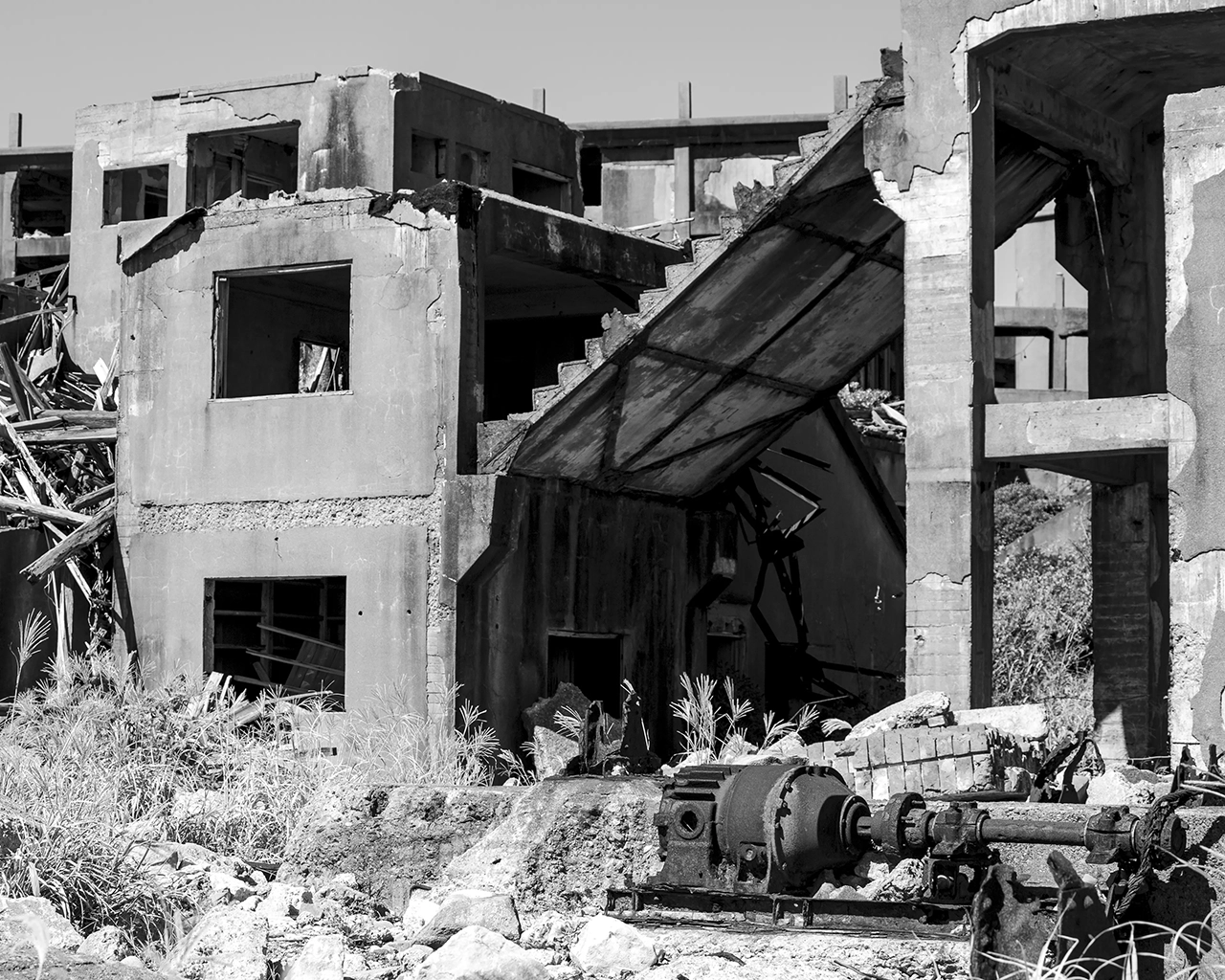
④The remains of the access platform for Shaft No. 2 and its stairway. The stairs looked as though they might collapse at any moment. Both the stairway and what appeared to be an abandoned winch motor in the foreground left a strong impression on me.
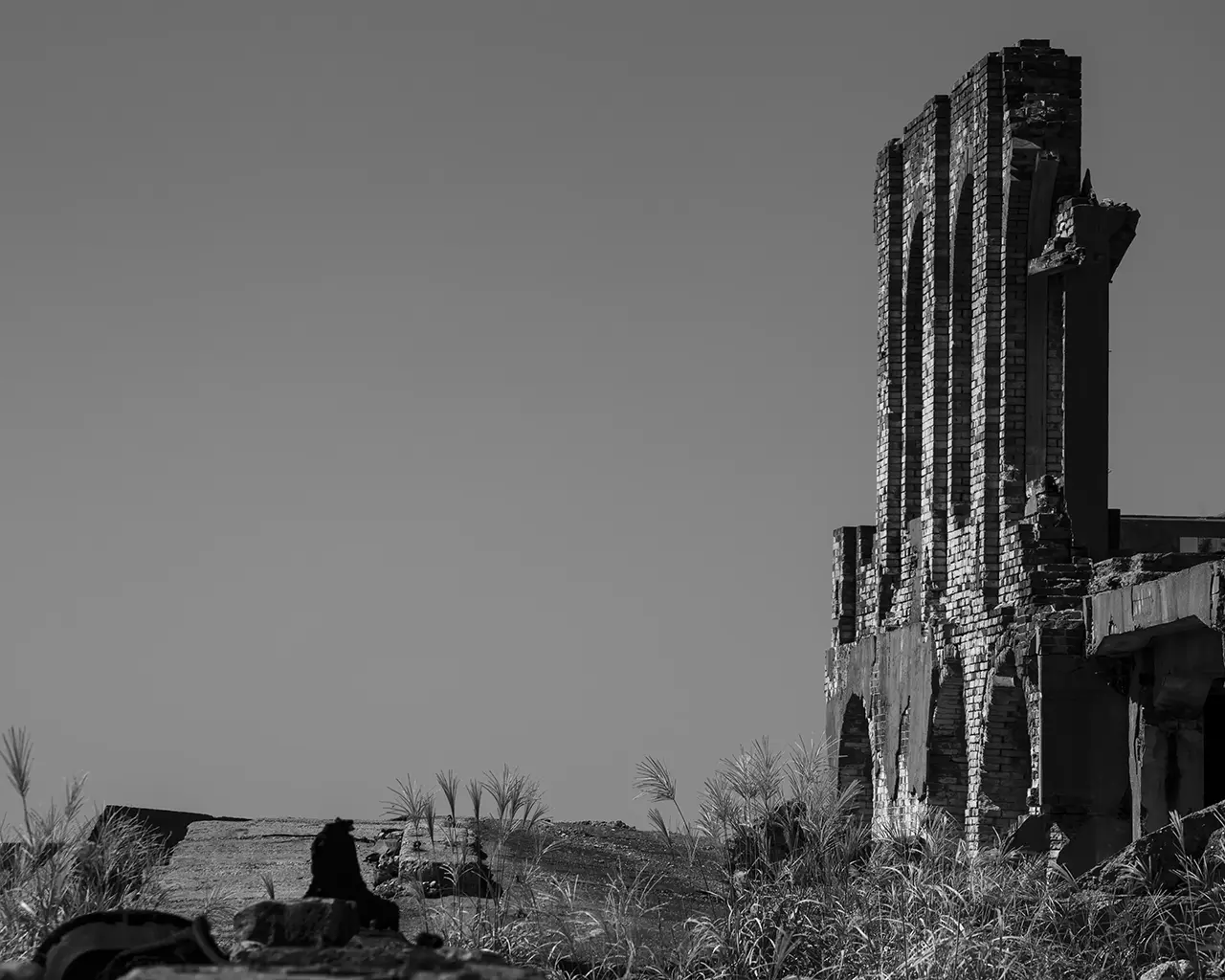
⑤The brick wall of the winding house for Shaft No. 3. The red of the brick was particularly striking when I saw it in person.
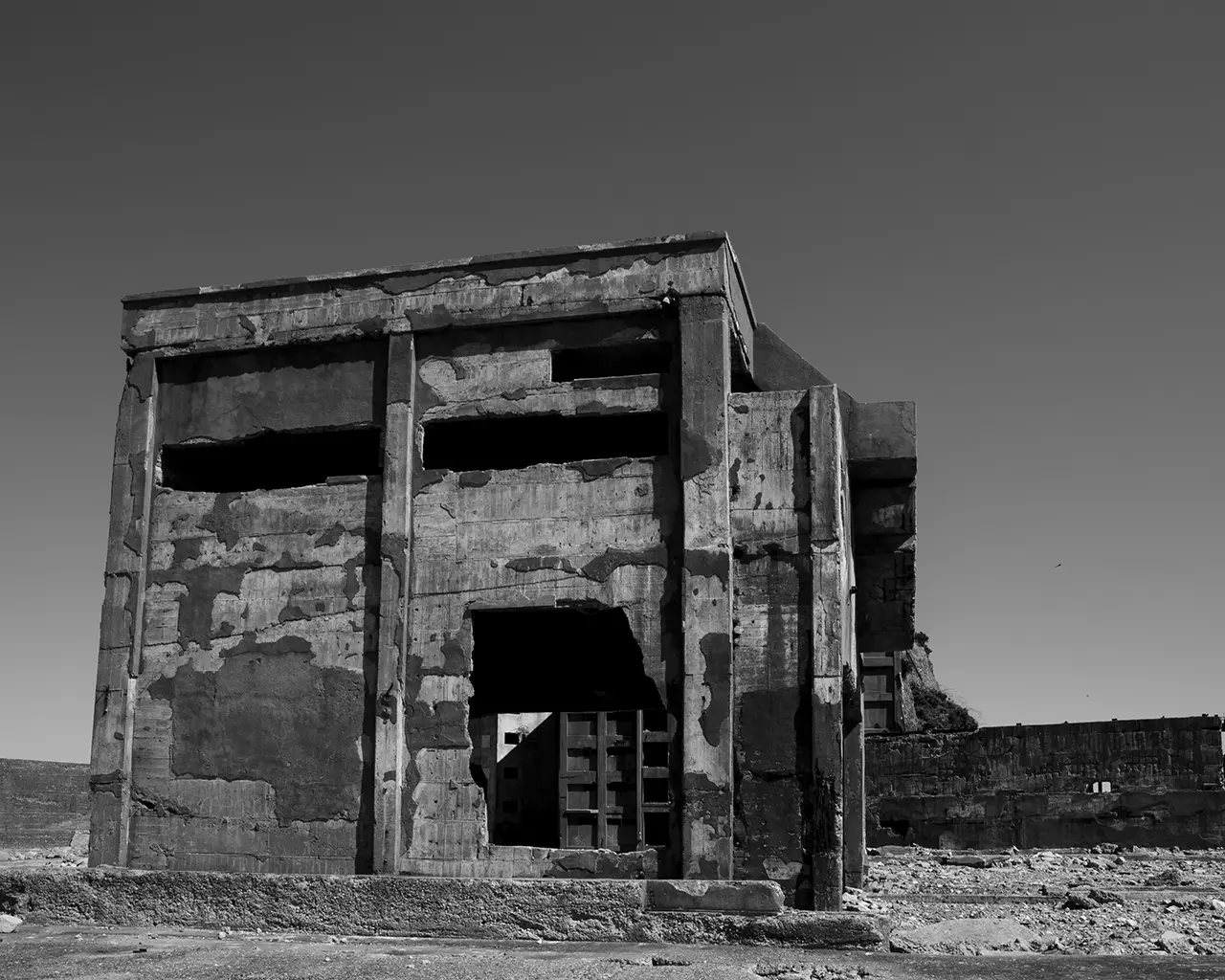
⑥The machine shop building in front of the third observation area.
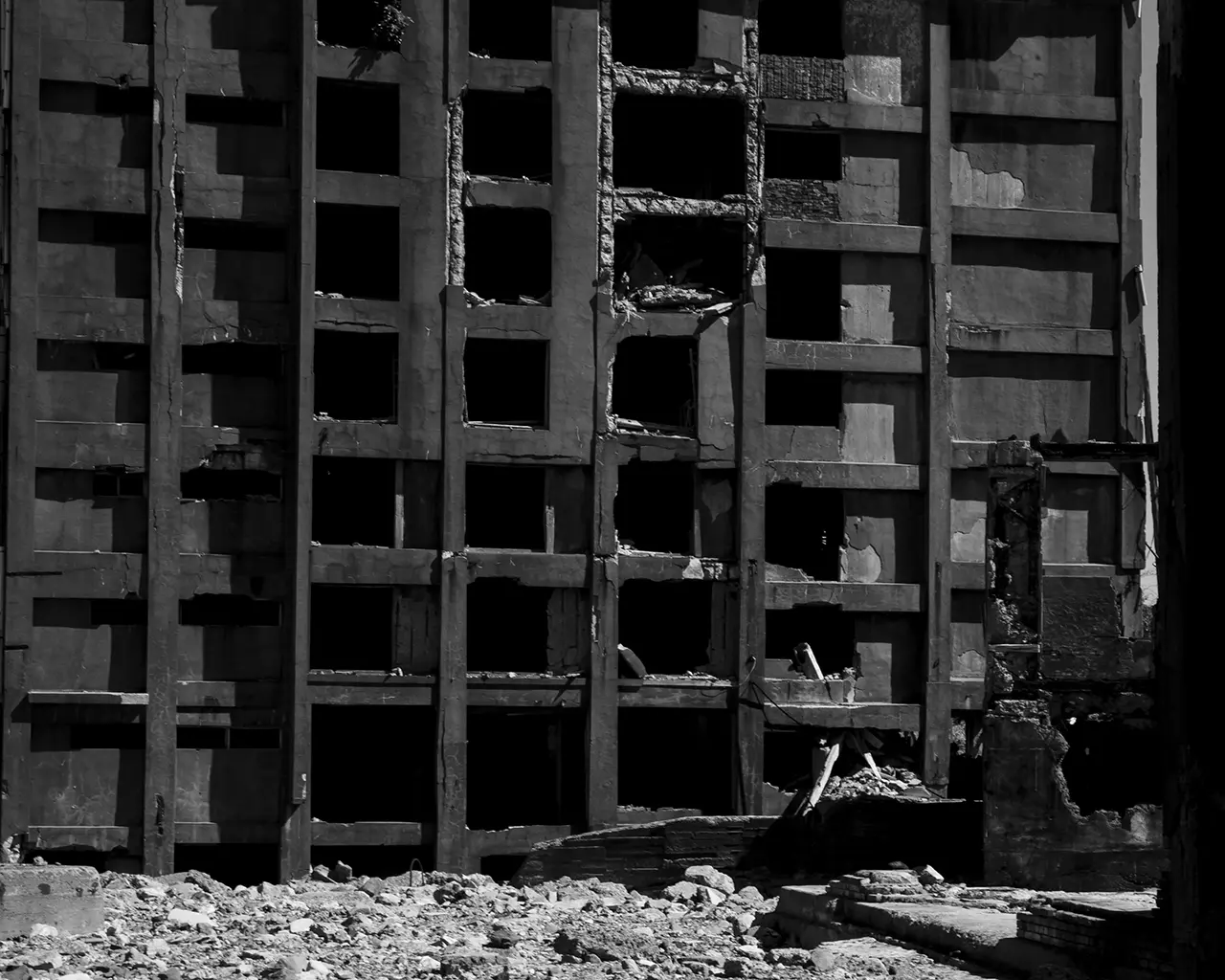
⑦Building 30, which housed miners. With the window frames and other elements gone, the geometric pattern of the exposed columns and beams caught my eye.
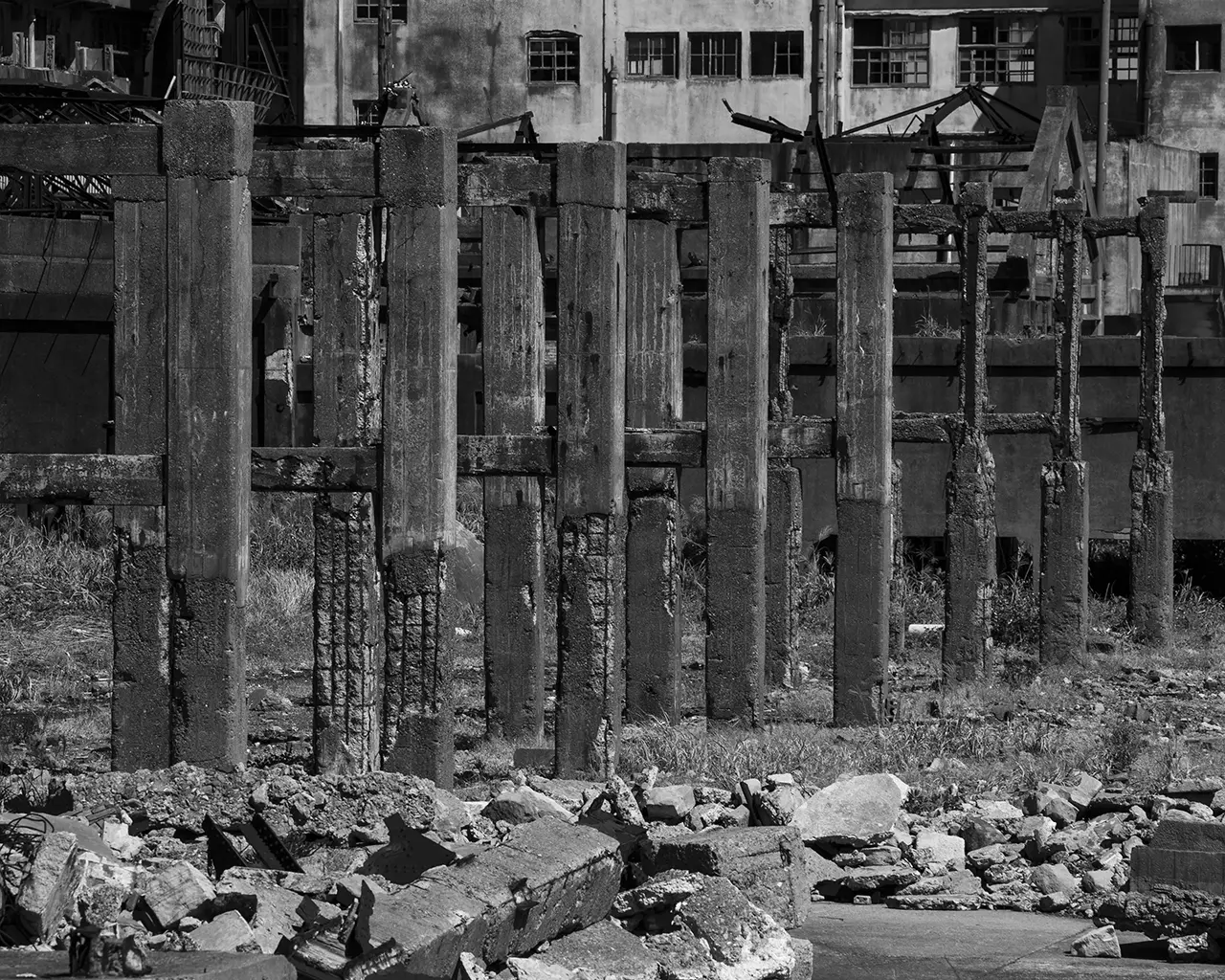
⑧The rows of columns that supported the coal stockpiling conveyor also caught my eye.
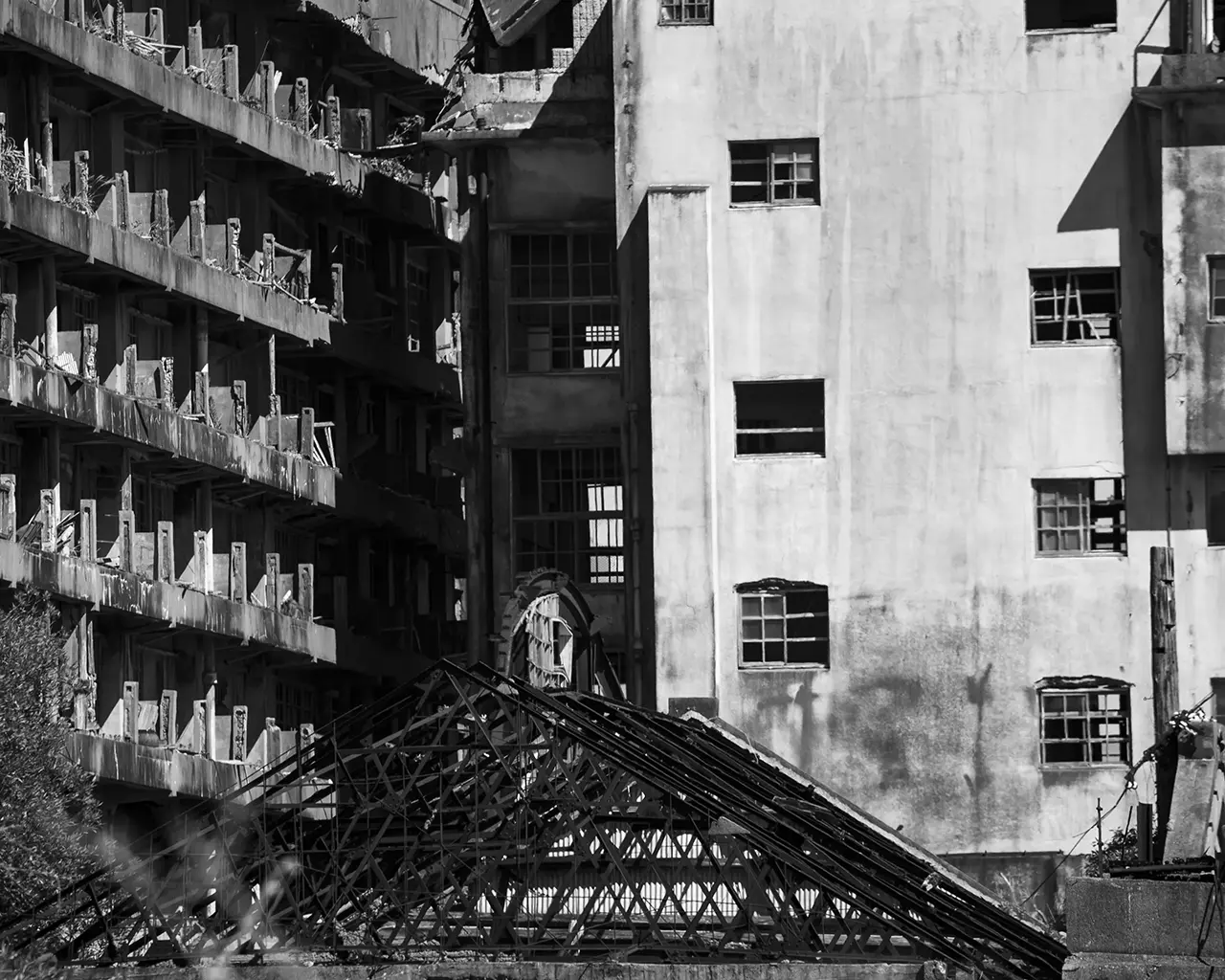
⑨Looking north-northeast from the first observation area. I could not tell which building the roof trusses in the foreground belonged to. The school is visible behind them.
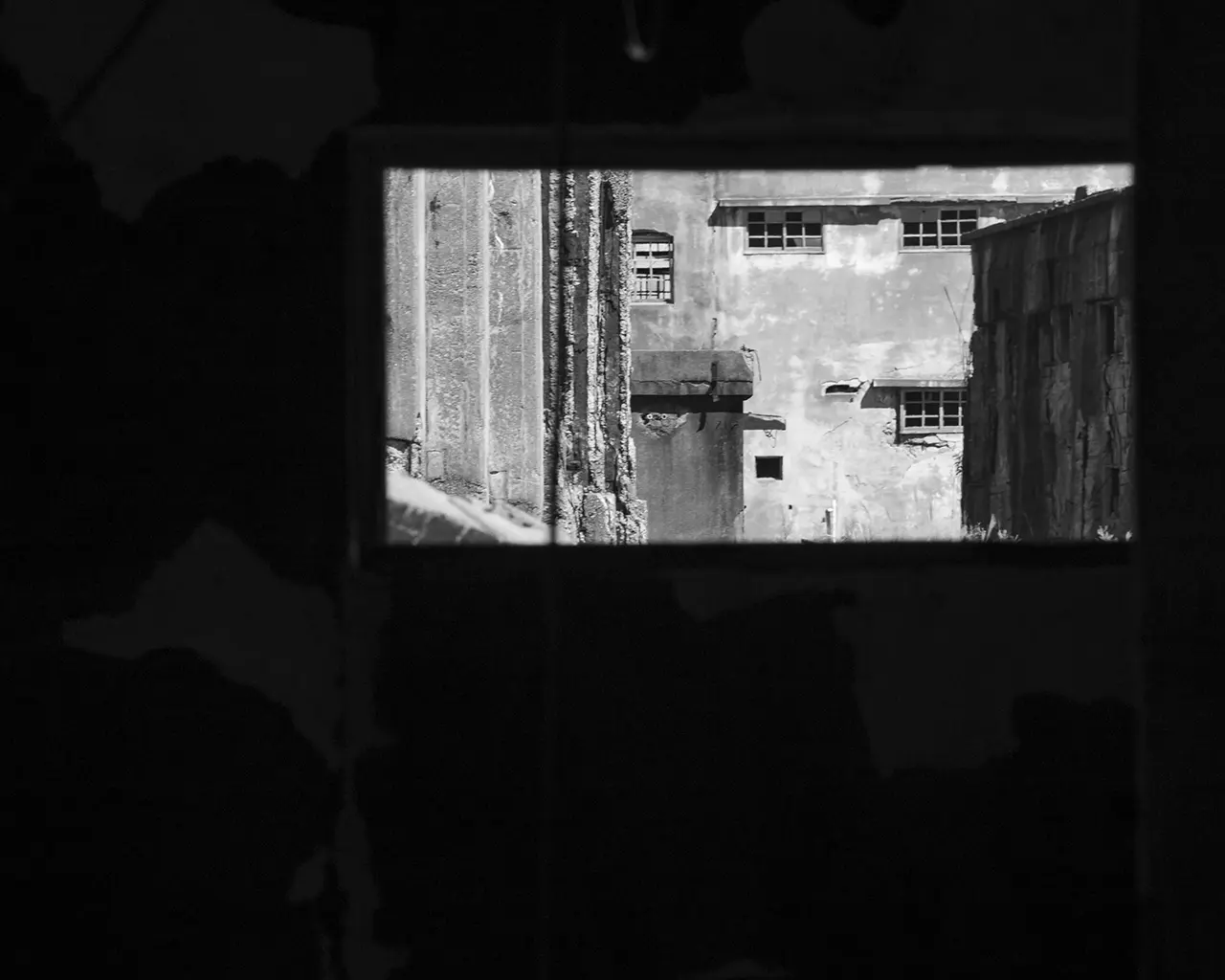
⑩Through a window in what I believe was the blower room for the coal preparation facilities.
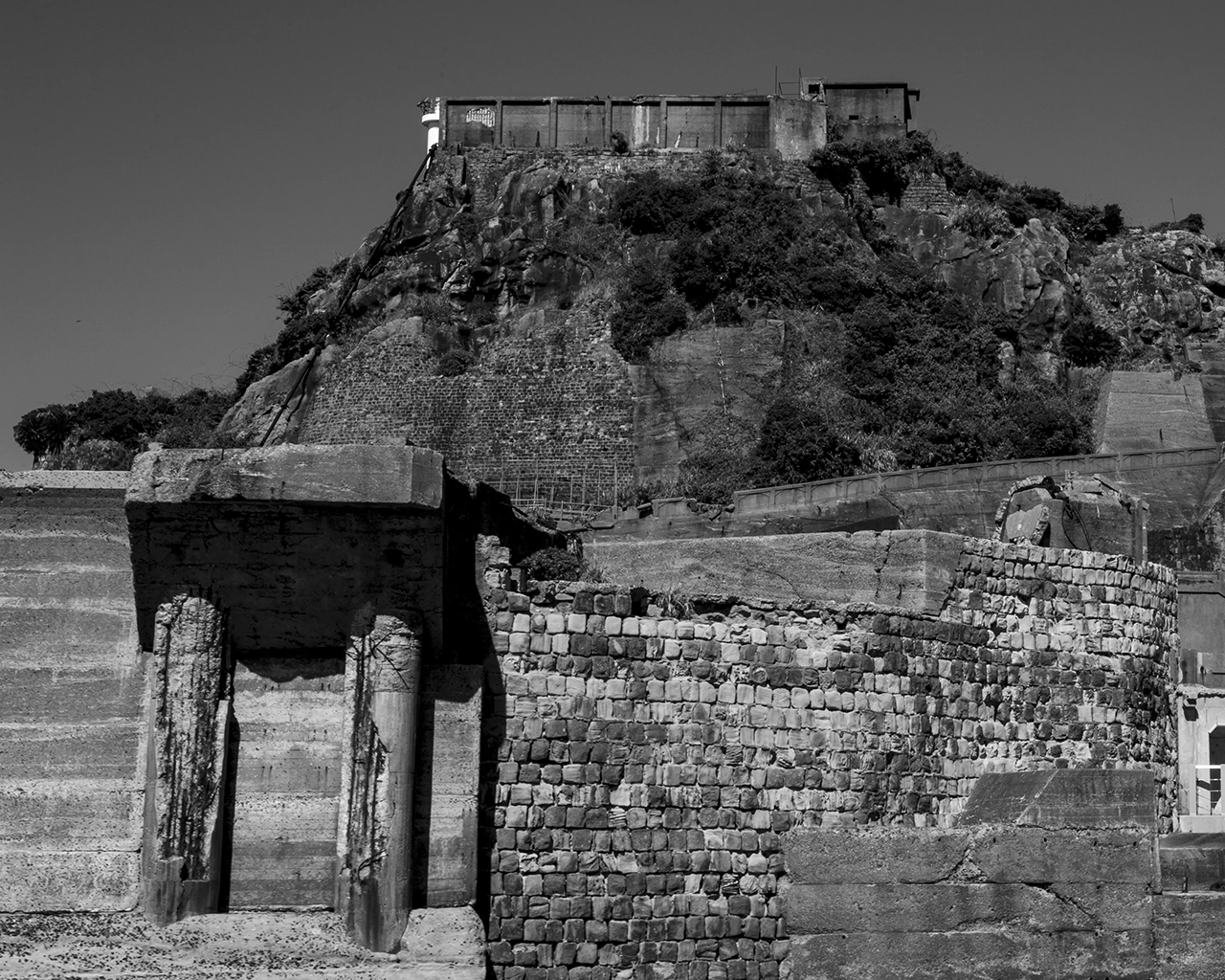
⑪A crane base on the waterfront. A water reservoir stands on the hill behind it, with what appears to be a water supply pipe running along the left side.
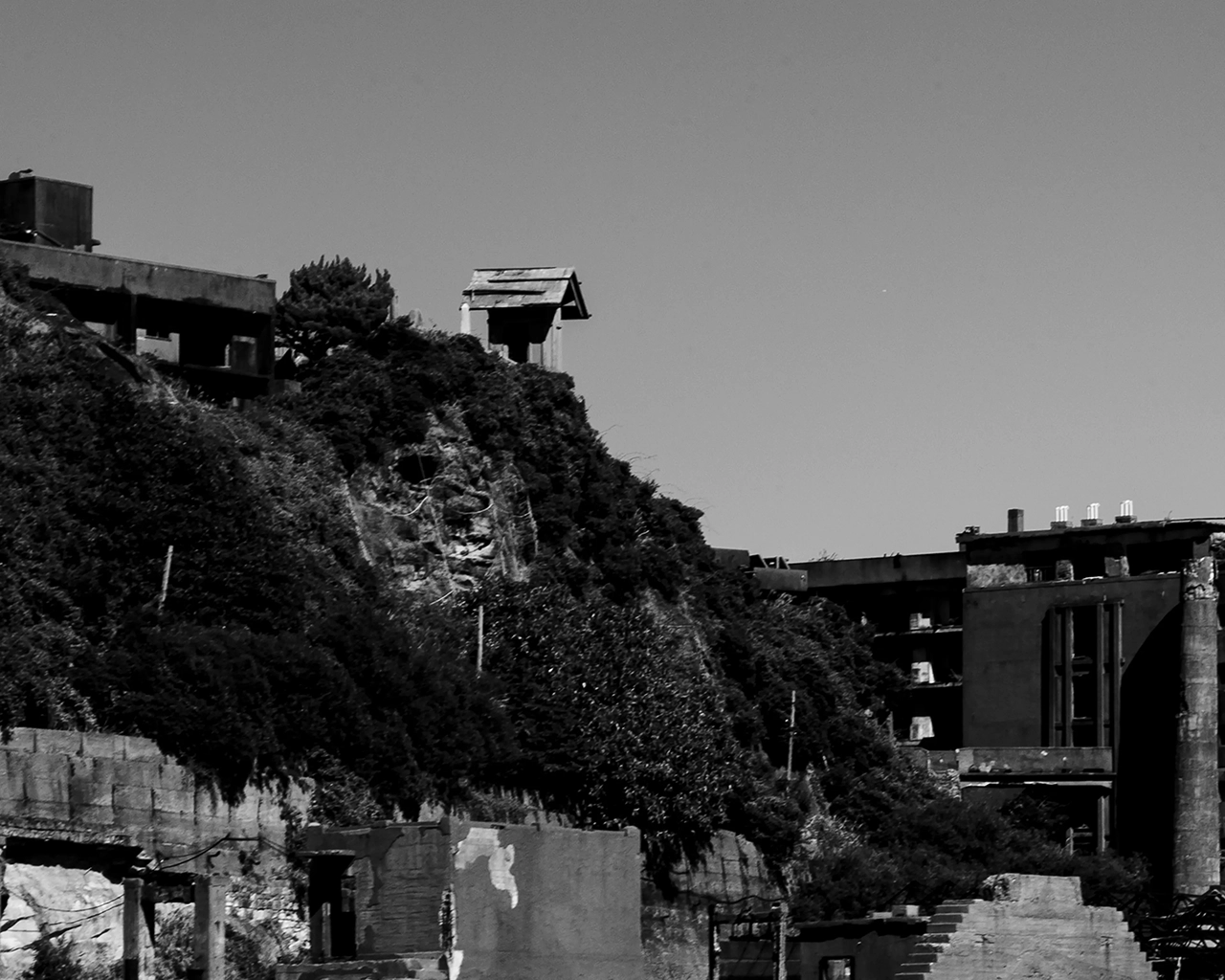
⑫The main sanctuary of Hashima Shrine, seen from the boat. I did not notice it during my visit and only spotted it while looking through these photographs.
Building 30, shown in photograph ⑦, was built in 1916 and is Japan's oldest surviving reinforced concrete apartment building. As someone who works in the construction industry, I am drawn to its historical significance. Having regretted the loss of the Dojunkai apartments, I also feel a desire to see this building preserved.
When I look at my photographs of Gunkanjima, they sometimes bring to mind images of cities destroyed by war in Gaza and Ukraine that I see in the news. Buildings that have slowly decayed over the years after their inhabitants left are very different from homes destroyed by war while people were still living there. Yet the broken walls, exposed columns, and openings where windows once stood make me think of the lives once lived in both places. On Gunkanjima, I was drawn to the forms of the buildings and photographed them. Now, the resemblance also leaves me with a sense of sorrow and helplessness.
How, then, should Gunkanjima be preserved? Although I would like to see its buildings survive, I cannot support spending vast sums to restore them or keep them indefinitely in their present state. I think there is a place for repairs, such as waterproofing, that slow deterioration and help the buildings last a little longer. But what stands today is already different from the island as it was when people lived there. Which stage of its history should we preserve, and to what extent? The program mentioned that repairing the entire island could cost around 100 billion yen. I do not know exactly what work that figure includes. But even if the missing parts were rebuilt to recreate the island's former appearance, I doubt that it would bring back what I felt there. There must also be a limit to how far we go with extensive reinforcement simply to maintain its present appearance.
Gunkanjima is certainly an iconic industrial heritage site. Even so, I do not believe that its preservation should receive unlimited funding. If that much money is to be spent, I would rather see it go toward disaster preparedness and other measures that protect people's lives and livelihoods in the years ahead. My wish to preserve these buildings and my judgment about how the money should be spent did not lead me to the same conclusion.